

New insights into multi-species households, consumer spending and shopping behaviour
18th August 2026
The Great British Small Animal Census ran from February to the end of May 2026 and was promoted through trade and social media channels across the UK. In total, we received 958 responses from small animal owners across the country.
The aim of the census was to build a better understanding of UK small animal owners, including how they care for their pets, their behaviours and their needs.
The results are indicative of the people who took part and should not be considered representative of the entire UK small animal owner population. However, the findings provide valuable insights and important data points that can help us better understand our consumers and identify trends in small animal ownership and care.
Trend of multi-species households
One of the most interesting findings was the prevalence of multi-species households. When asked which small animals they own, respondents selected multiple species, resulting in a combined response total of 124%.
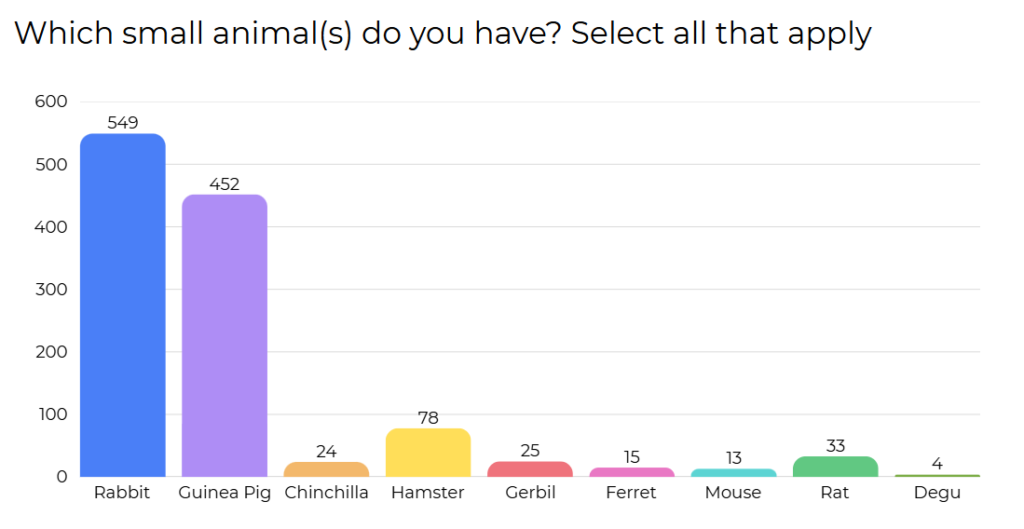
Looking specifically at rabbits and guinea pigs, 17% of rabbit owners also own guinea pigs, while 21% of guinea pig owners also own rabbits.
The crossover becomes even more striking when we look at less commonly owned species, including hamsters, mice, rats, gerbils, chinchillas, ferrets and degus. Although these species were represented by fewer respondents, there was a significant overlap with rabbit and guinea pig ownership.
For example, among hamster owners, 51% also owned rabbits and 51% also owned guinea pigs. Among mouse owners, 61% also owned rabbits and 53% also owned guinea pigs.
For international retailers and distributors, this highlights an important opportunity: small animal owners may not fit neatly into a single-species category. A consumer buying food for a hamster may also be buying food for rabbits or guinea pigs at the same time.
Offering a broader small animal range can therefore make it easier for multi-species households to purchase everything they need in one place. For retailers, this can help increase convenience, encourage cross-category purchases and potentially grow the overall basket value.
Understanding the value of the small animal consumer
The census also looked at how many small animals people own and how much they spend on their pets. The majority of respondents owned more than one small animal. 38.62% owned two, while 12.84% owned three, 10.13% owned four, 4.59% owned five and 15.34% owned more than five small animals. Just 18.48% reported owning one small animal.
There are many possible reasons for this, including the social needs of certain species, as well as individual circumstances such as owners choosing not to replace a companion animal after its death. However, the findings highlight the potential value of multi-pet households as an important consumer group.
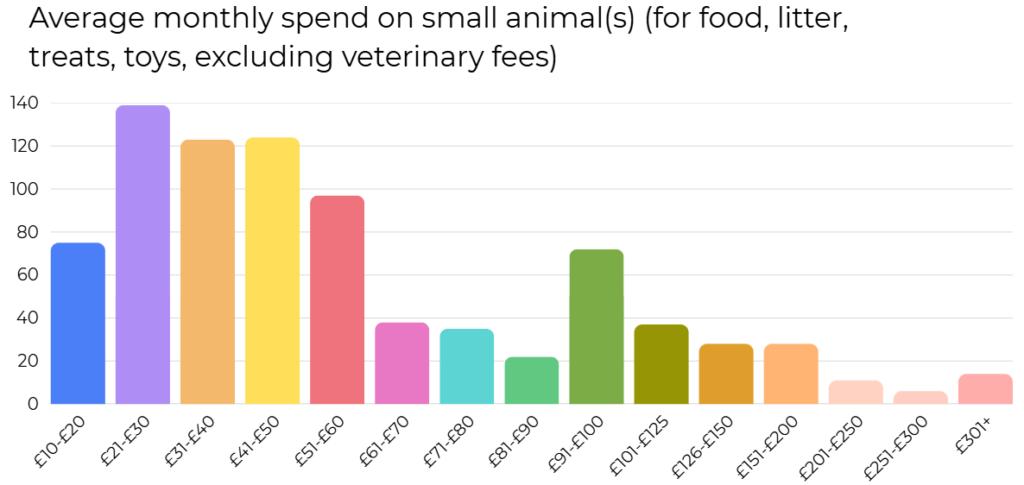
When it comes to spending, the majority of respondents reported spending between £20 and £60 per month on their small animals. However, some consumers reported spending significantly more, with the highest responses exceeding £300 per month.
Higher spending may be associated with owning multiple pets, as well as consumers choosing premium food, treats, hay and other products for their animals.
For distributors and retailers, this reinforces the opportunity to look beyond individual product sales and consider the total value of the small animal household.
Where are small animal owners shopping?
We also asked respondents where they regularly purchase hay, food and treats for their small animals.
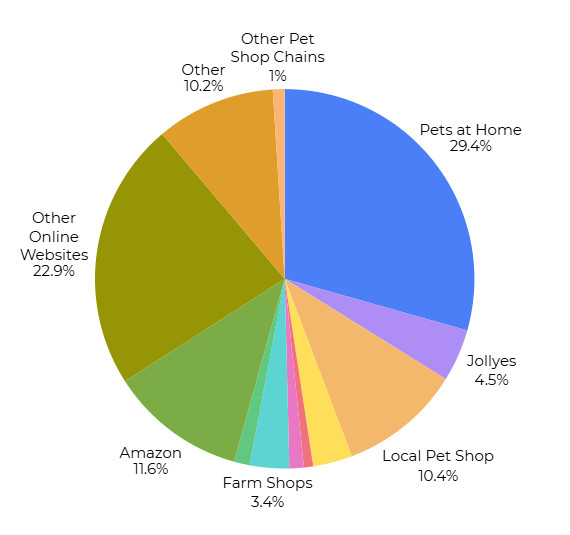
Pets at Home was the most frequently mentioned retailer, accounting for 29% of responses, followed by other online retailers at 22.9%, Amazon at 12% and local pet shops at 10%.
The results demonstrate the importance of having a presence across multiple channels. While physical pet stores remain important, online shopping represents a significant part of the small animal purchasing journey.
For distributors, this presents an opportunity to work with retailers to ensure that products are available wherever consumers choose to shop – whether that is in-store, through specialist online retailers or through major marketplaces.
Burgess Excel leads the brands fed by respondents
One of the strongest findings from the census came when we asked consumers which food they currently feed to their small animals.
Among our respondents, 74.2% reported feeding Burgess Excel, compared with 37.42% for Supreme Selective.
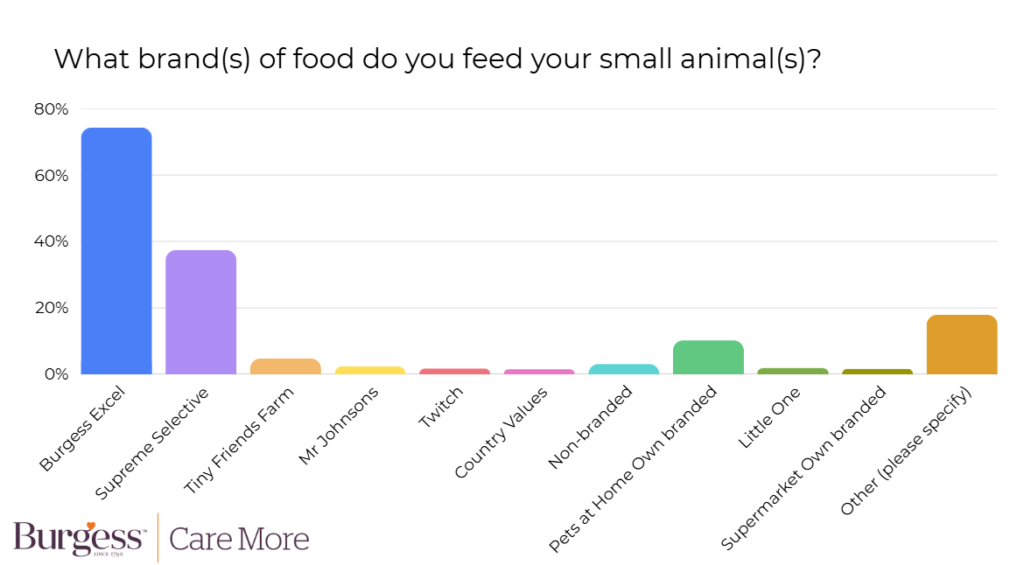
This gives us valuable insight into the strength of the Burgess Excel brand among the consumers who participated in the census and demonstrates the importance of a trusted, established brand within the small animal food category.
For international distributors, this is particularly relevant when considering opportunities to develop the category. A strong brand can help retailers attract consumers, build confidence in premium products and create opportunities to expand their small animal offering.
Are rising living costs changing small animal spending?
With the continued pressure on household finances, we also wanted to understand whether small animal owners were reducing their spending on their pets.
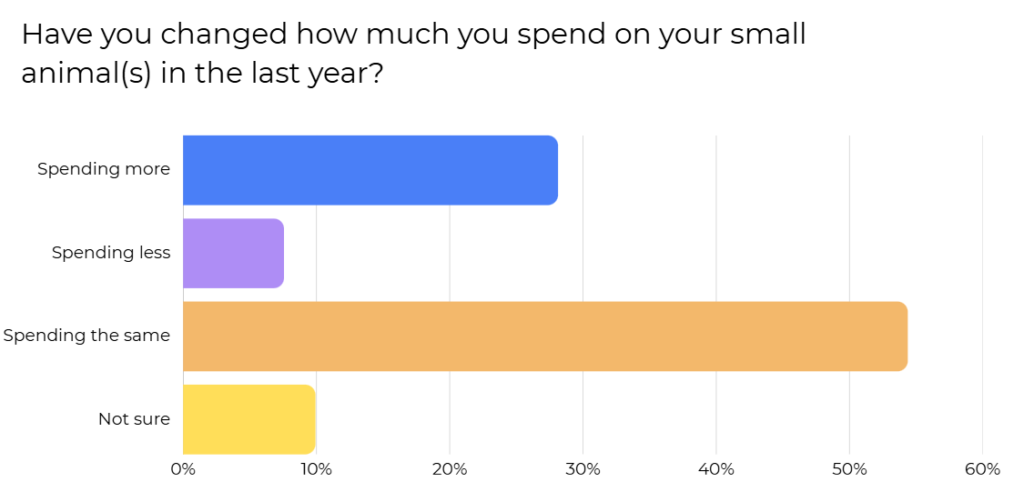
Interestingly, our data did not indicate that respondents were significantly cutting back on spending when it came to the wellbeing of their small animals.
While this should not be interpreted as evidence that the wider UK population is unaffected by cost-of-living pressures, it does suggest that, among our respondents, pet wellbeing remains an important priority.
This could present opportunities for brands and retailers to communicate the value and benefits of quality nutrition, rather than competing purely on price.
What does this mean for the small animal market?
The Great British Small Animal Census provides a fascinating snapshot of today's small animal consumer. From multi-species households and spending habits to shopping channels and food choices, the findings highlight several opportunities for the small animal category.
For international distributors and retailers, some of the key takeaways are:
- Multi-species households can create opportunities for cross-category sales.
- Consumers may purchase food for several species from the same retailer, making a comprehensive range more valuable.
- Online channels are an important part of the small animal purchasing journey.
- Multi-pet households can represent a higher-value consumer opportunity.
- Premium nutrition and pet wellbeing remain important considerations for consumers.
- A strong, trusted brand can help retailers build confidence and develop the small animal category.
These findings are just a small part of the research. The full Great British Small Animal Census contains 68 questions and multiple data sets, covering topics including welfare, housing, behaviour, purchasing habits, spending and the wider small animal market in the UK.
At Burgess Pet Care, we believe that understanding small animal owners is essential to developing products, brands and marketing strategies that meet the changing needs of consumers.
The Great British Small Animal Census is helping us build that understanding – and identify new opportunities to support the growth of the small animal category in the UK and beyond.
Blog categories

Dogs

Cats

Rabbits

Guinea pigs