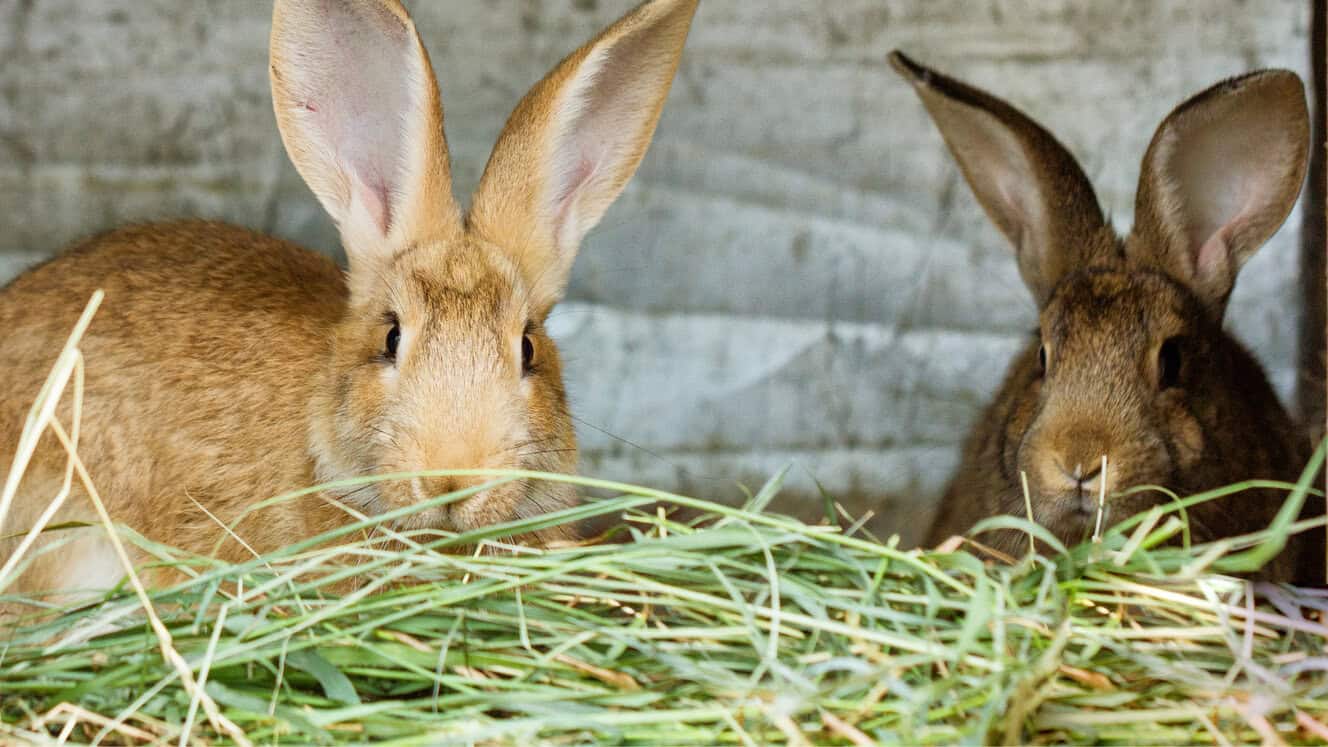
Did you know that for small furries such as rabbits, guinea pigs, chinchillas and degus, hay should be the BIGGEST part of their daily diet?
24th March 2025
Whether your small pet crew consists of rabbits, guinea pigs, chinchillas or degus, one of their favourite things to do is to chow down on some tasty, sweet smelling feeding hay. In fact, hay should make up the majority of their diet, and when it comes to safeguarding their health and wellbeing, it’s an essential.
However, you might be wondering ‘how much hay should a rabbit eat?’, or have similar questions surrounding any small pet you own. Luckily for you, the experts from Burgess Pet Care are on hand to give you their expert advice and recommend the best rabbit hay and guinea pig hay for your beloved friends.
Let’s dive into it!
What is the difference between feeding hay and bedding hay?
When it comes to feeding your small animals, not any old hay will do. To keep your discerning dry grass nibblers happy and healthy, it has to be high quality feeding hay that’s been especially grown for eating.
DID YOU KNOW? According to Burgess Pet Care’s recent Small Animal Census – which surveyed 6,514 owners and 20,915 small animals – almost a quarter of small pet owners – 24% – aren’t aware that there’s a difference between feeding and bedding hay.
If this sounds like you, here are some of the key differences between the two:
Bedding hay is only suitable for small pets to sleep on and can be:
- Cheaply manufactured
- Of unknown nutritional value
- Less tasty
- Yellow or brown in colour and dusty
Feeding hay, on the other hand, is grown specially for eating and is:
- Fresh and fragrant, barn dried and dust extracted
- Much more tasty
- Nutritionally rich and laboratory tested
- High in fibre for gut health
Burgess in-house vet, Dr Suzanne Moyes MVB, MRCVS, explains: “While bedding hay is fine for sleeping on, it’s likely to have poor nutritional value and really doesn’t make good eating. For rabbits, guinea pigs, chinchillas and degus to be healthy, it’s vital that you choose hay that’s specially grown for small animals to feed on, cut at the right time to capture all the natural goodness, so your small pets enjoy eating it.”
Discover the best bedding for small pets by reading our handy guide!
How much hay for guinea pigs? (& other small animals)
So, how much hay should a rabbit, or your other small animals, eat? Around 85-90% of a rabbit's or guinea pig's diet should be high-quality feeding hay and grazed grass. Astonishingly, that’s equal to their body size in hay every day!
Hay plays a critical role in rabbit and guinea pig health, leading to healthy teeth and proper digestive function. Rabbits, guinea pigs, and other pets that fit into the small animal category should have access to an unlimited supply of hay daily, with the freedom to eat as much as they need. As soon as you notice your pet’s supply running low, it should be replaced.
Find out how much hay your small animal needs by reading our relevant feeding guides:
The best quality feeding hay should be naturally barn-dried and have any dust extracted. Dr Moyes advises: “Guinea pigs in particular are severely affected by dust, and dusty hay can cause serious respiratory problems. Always look for high-quality hay which states it’s ‘dust extracted’, to protect your guinea pigs’ respiratory health.”
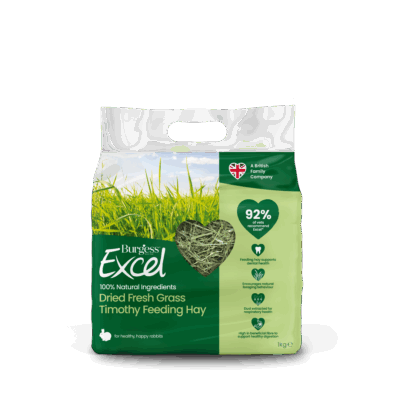
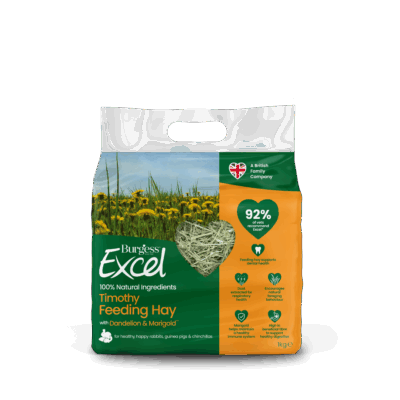
We recommend our Excel Timothy Hay Box, made from 100% natural ingredients! Find plenty of 5-star reviews among our hay products and discover the Burgess Pet Care difference today.
What’s the best type of hay to feed small animals?
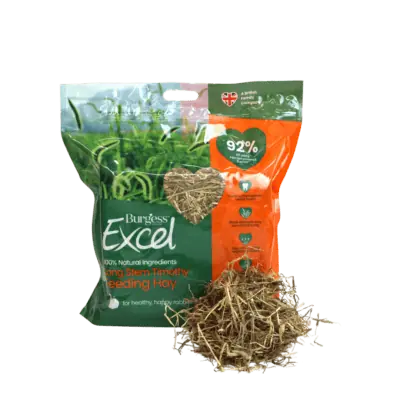
Now you know how much hay to feed your small animals, what should that look like? Timothy hay is always a good place to start, and we stock a premium selection here at Burgess Pet Care! It encourages natural chewing and foraging, and should make up the large bulk of your rabbit or guinea pigs' diet, feeding them daily.
Other recommended hay types include:
- Meadow hay
- Oat hay
- Alfalfa hay
Why is hay so important for small animals?
Hay is actually an important part of your pet’s health, offering plenty of benefits that you might not have ever realised. Let’s take a look at some of the most important functions of feeding hay:
- It provides vital fibre - High-quality feeding hay is the foundation of a healthy gut. That’s because it contains plenty of fibre, which plays a big part in digestion for your small animals.
- It keeps teeth in great shape - Munching on delicious hay keeps small teeth in check, preventing the risk of dental issues.
- It promotes overall pet health! - Hay is great for physical health, but it can also be used for bedding, burrowing, bathroom time, and play time! Mental stimulation is crucial for small animals, as it prevents them from feeling lonely and bored.
Discover more by reading our ultimate hay guide for small animals.
Can rabbits and guinea pigs eat too much hay?
No, you don’t have to worry about overfeeding your small animals - just make sure you’re feeding them guinea pig treats or rabbit treats in small moderation! When it comes to hay, you can’t really put too much in your rabbit or guinea pig’s habitat. It’s not really possible for them to eat too much hay. In fact, the more hay they have available, the greater their opportunity is to constantly forage and graze, which is extremely important for their physical and mental stimulation!
Stock up on high-quality hay with Burgess Pet Care
Hopefully, we’ve answered your question: ‘How much hay should a rabbit eat?’ and cleared up any confusion when it comes to feeding hay for your small animals. All pets deserve to be given the correct amount of feeding hay and food, such as our Burgess Excel rabbit food, guinea pig food, or food for your other small animals.
Here at Burgess Pet Care, we genuinely care about you and your furry friends! All of our recipes are made right here at our factory in the heart of Yorkshire, from ingredients that meet our strictest specifications.
Interested in more? Then check out our pet care guides, or join the Burgess Pet Club by getting in touch with us today!
Blog categories
Dogs
Cats

Rabbits
Guinea pigs