
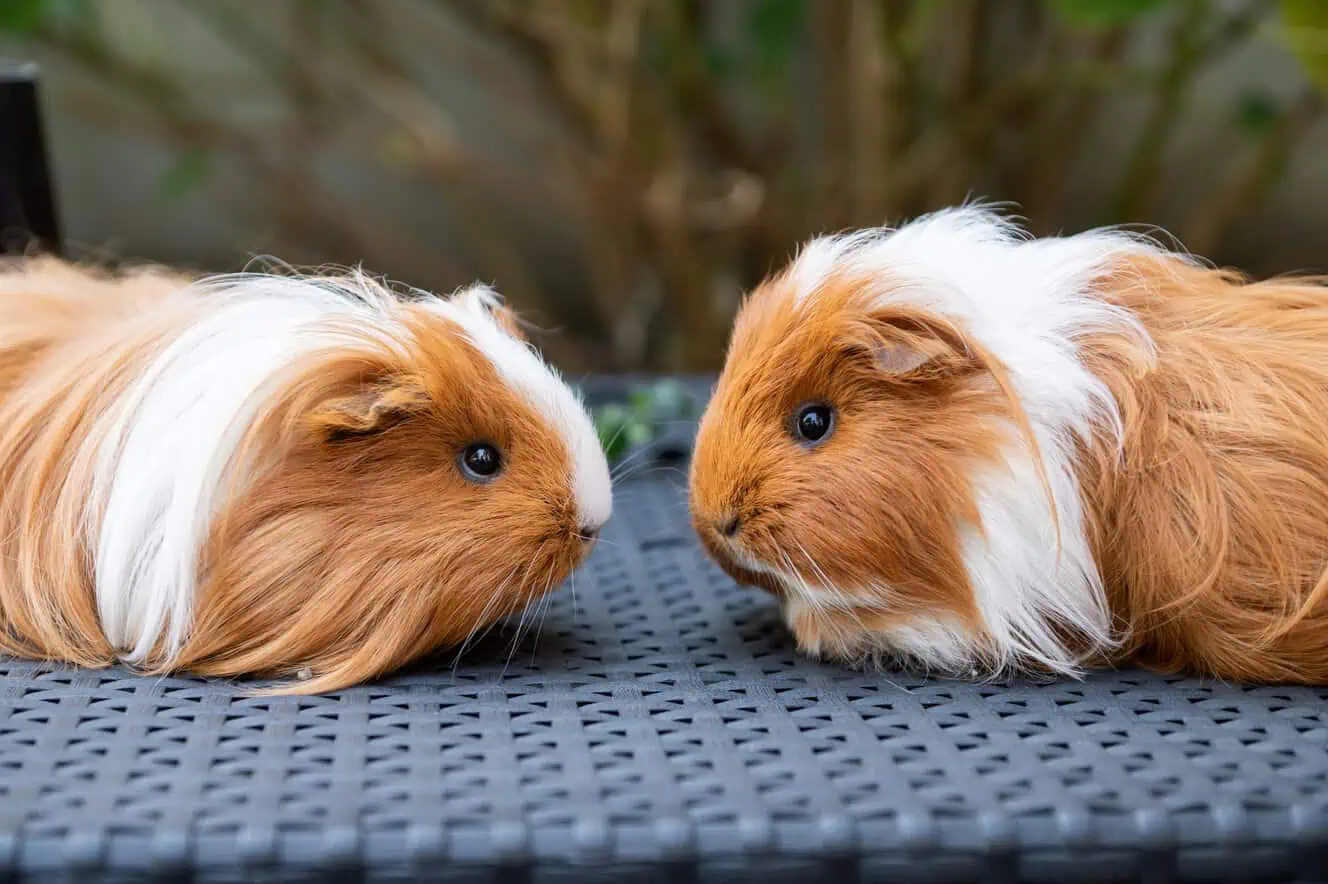
Short-coated or long-haired, smooth, silky or curly – with all manner of coat styles, colours and markings, there are lots of different types of guinea pigs. We take a closer look. Plus, how much do you know about guinea pigs? Find out what your piggy pals want you to know!

Expert approved
Dr Suzanne Moyes MVB, MRCVS
19th February 2026
Whatever style of coat they sport, or whatever their colour combination, we love all guinea pigs! In fact, guinea pigs have been treasured pets for many years. Today, there are an estimated 700,000 pet guinea pigs in the UK, and they are the nation’s eighth most popular pet. The British Cavy Council currently recognises 15 Specialist Breed Clubs and dozens of guinea pig types, including the Agouti, Abyssinian, English Crested, Rex, Himalayan, Fox and Texel.
It was back in the late 19th century that showing guinea pigs became a popular pastime, and the National Cavy Club was established in 1888. In 1921, the first event to bring small animal enthusiasts together under one roof – the Bradford Championship Show – was held. It’s still going strong today and is the largest and longest-running small animal show in the UK.
Help guinea pigs to live their best lives by seeing things from a piggy perspective >>
There are various events for both pure-bred and pet guinea pigs that take place across the country throughout the year, and, if you visit one, here are 7 different types of guinea pig you may spot:
- The Agouti – With dark eyes and a short, smooth coat, the Agouti is characterised by its speckled coat, known as a ‘ticked’ coat. This is due to each individual hair containing two distinct shades, which create a banded effect. Agoutis come in a range of colours, including golden, silver, lemon, chocolate, cinnamon and cream.
- The Abyssinian – One of the oldest breeds of guinea pigs, Abyssinians are instantly recognisable for their swirly rosettes of hair. They come in many colours and patterns, including self, tortoiseshell, and brindle, and their unique coat requires a lot of grooming to prevent tangles.
- The English Crested – Self-coloured with short, smooth hair, English Crested guinea pigs have a crown-like crest of hair on top of their forehead. As a short-haired piggy, these little cavies only require occasional grooming to keep them looking their best.
- The Rex – Known for their bristly coats, Rex guinea pigs are sometimes described as being like fuzzy potatoes. Their easy-care, springy coat grows to just half an inch (1.27 cm) in length and is sometimes curly or wavy along their belly.
- The Himalayan – These guinea pigs have white fur with black or brown colour points around their eyes, noses, ears, feet, and tails. They also have distinctive ruby red eyes. Like all guinea pigs, Himalayans are very social and thrive in the company of other cavy chums.
- The Fox – Thesesmooth-coated guinea pigs are a solid colour but have characteristic pale markings around their face, chest and belly, with white-tipped ticking on the sides. They come in chocolate, beige, slate, black and lilac.
- The Texel – These long-haired guinea pigs are instantly recognisable for their soft, curly hair that grows in ringlets down their back. As their luxuriously curly coat is prone to tangling, regular grooming is essential, along with regular trims.
HOW MUCH DO YOU KNOW ABOUT GORGEOUS GUINEA PIGS? HERE ARE 8 THINGS THEY WANT YOU TO KNOW!
- WE’RE OFTEN WIDE AWAKE! Although crepuscular creatures, who are most active during dusk and dawn, guinea pigs are awake for up to 20 hours of the day. This means their environment needs to enable them to have constant access to food, water, companion guinea pigs, safe hiding places, a guinea pig run, and plenty of things to do to keep them occupied.
- WE NEED SPACE TO CALL HOME Traditional small hutches do not provide the space guinea pigs need to behave normally. Instead, a hutch should just be viewed as your guinea pigs’ ‘bedroom’ and be permanently attached to a much larger guinea pig run where they can exercise freely at any point in the day or night. This can be a safe guinea pig-proofed room indoors or a large run outdoors.
- WE’RE ALWAYS ON THE SCENT Guinea pigs scent mark their stuff by rubbing their chin or cheeks across things, which helps keep their home smelling familiar and reassuring. This is why it’s important to make sure that you transfer some of the old bedding back into their accommodation when cleaning. They also drag their bottoms across the ground to leave scent secretions as messages, which are only understood by other guinea pigs.
- WE HAVE BUSY BODIES To keep healthy, guinea pigs need to keep their digestive systems busy with a mix of two kinds of fibre (called digestible and indigestible fibre) moving through the gut at all times. They can get this from eating good quality feeding hay, which also keeps their continually growing teeth in check. Like humans, they also need a daily dose of Vitamin C. Feeding, high quality guinea pig nuggets, which are high in fibre and contain Vitamin C, along with a small handful of leafy greens, will ensure they’re getting everything they need. Avoid ‘muesli’-style food, as research carried out by the University of Edinburgh revealed that it causes serious digestive problems and dental disease.
- WE NEED TO BE SAFE FROM HARM In the wilds of South America, guinea pigs are constantly at risk of being a hot lunch for various mammals, birds of prey and reptiles such as anacondas and caimans. Unsurprisingly, it’s in their nature to be constantly on the alert, looking out for danger, and easily startled. What’s required is cosy, predator-proof accommodation, with places to hide and lots of high-quality hay and soft paper bedding to tunnel in to help them feel safe.
- WE HAVE GREAT SOCIAL SKILLS Wild guinea pigs live in close family groups of five to 10 individuals, though several groups may live in close proximity, forming a colony. Pet guineas can only be truly happy if they have another cavy to chat to, as one of a pair or as part of a small group. The best mixes are ideally littermates – two females or a neutered male with one or more females.
- WE LIKE TO CHAT These small animals are very vocal and like to chat away to each other. They communicate using several noises, including the well-known ‘wheek-wheek’ call – a sign of excitement or to find a friend – and a low ‘purring’ sound, which they make when they are feeling content and chilled out – if you hear this when you’re petting your piggies, you can be pretty certain that they like you! They also emit a series of short ‘putt-putt’ noises when they’re happily exploring stuff and a disgruntled ‘chutt’ sound when they’re annoyed about something.
- WE WANT FEEDING TIME TO BE FUN Foraging behaviour is second nature to piggies, and you can encourage this by scattering a portion of guinea pig nuggets in different places around their accommodation, hiding it in cardboard egg cups, or mixing it with feeding hay. A few tasty Nature Snacks will add to the fun. This will keep them happily busy, which is really important, as not having enough to do is not good for their health and wellbeing.
DID YOU KNOW BURGESS PET CARE IS ON A MISSION TO CREATE A SAFER AND MORE LOVING ENVIRONMENT FOR ALL GUINEA PIGS?
Guinea Pig Awareness Week (GPAW) is the UK’s largest welfare initiative dedicated to guinea pigs. It’s led by small pet experts Burgess Pet Care in partnership with leading UK animal charities – the RSPCA, Blue Cross, Woodgreen and Raystede Centre for Animal Welfare, who come together each year to support guinea pig welfare.
Burgess in-house vet and deputy managing director, Dr Suzanne Moyes, says: “Guinea Pig Awareness Week has grown from strength to strength and is a much-needed opportunity to support guinea pig owners in better understanding their pets. Despite their popularity, guinea pigs are among the most misunderstood pets in the UK. A lack of knowledge means that their very specific welfare needs can be overlooked. We’re on a mission to inform and educate guinea pig lovers everywhere so that these much-loved pets have everything they need to be healthy and happy. Together we can create a safer and more loving environment for all guinea pigs.”
- SIGN UP to get involved in GPAW 2026 and to receive your FREE pack filled with loads of guinea pig fun and information here >>
- JOIN our Excel guinea pigs Berry and Bramble on the GPAW Facebook page and on Instagram @GuineaPigAwarenessWeek
- CARE MORE Discover more about meeting the needs of your guinea pigs with our Guinea Pig Care Guide >>
Burgess Pet Care has also recently launched Guinea Pig Welfare UK (GPW UK) – the first national guinea pig charity focusing on education, research and advocacy to advance the health and welfare of all guinea pigs in Great Britain and Northern Ireland. Find out more about the charity and how to support it by visiting GPWUK. You can also follow Guinea Pig Welfare UK on Facebook and @guineapigwelfareuk on Instagram.
* While it’s lovely for children to enjoy the company of guinea pigs, the responsibility for any animal’s wellbeing lies with adults. Small animals are often more complex to feed and care for than a cat or dog and require more looking after than a child can offer. *
SERVE UP ONLY THE VERY BEST DINNER FOR YOUR SMALL PETS!
Our small pets deserve a high-quality diet that’s created just for them. At Burgess, all our food for guinea pigs is made at our factory in the heart of Yorkshire, using only ingredients that meet our stringent specifications.
With a long tradition of supporting British farmers, we actively source all our ingredients as close to our mill as possible and have launched many innovations. These include the world’s first indoor guinea pig nuggets, which are made with a calm formula.
Check out our value-for-money mix-and-match hay bundles! >>
*It’s no surprise that 92% of UK vets recommend our Burgess Excel small pets range!*
Join the Burgess Pet Club for exclusive offers, competitions and expert advice from our in-house vet, Dr Suzanne Moyes.
NEED SOME EXPERT GUINEA PIG FEEDING TIPS?
If you are at all unsure about the best way of feeding your guinea pigs or have any concerns about specific nutritional requirements, ask your local veterinary practice for advice. You can also call our expert team on 44 (0)0800 413 969, who’ll be happy to help. They’re available 9am-5pm, Monday to Friday. Alternatively, use our online form to get in touch.
If you found this interesting, you may also like:
CAN GUINEA PIGS EAT GRAPES? Expert advice on feeding grapes to guinea pigs safely, what other fresh fruits and vegetables are safe for guinea pigs to eat, how to create the perfect piggy feeding plan – and what foods to avoid...
GUINEA PIG Q&A Are guinea pigs good pets for children? How long do guinea pigs live? What do guinea pigs like to do? How can you tell if your guinea pigs are happy? We’ve all the answers to these questions and more.
HOW LONG CAN YOU LEAVE A GUINEA PIG ALONE FOR? Whether you’re planning a day trip, weekend break or longer holiday, you’ll need to make arrangements for your guinea pigs to be cared for too.
WHAT’S THE BEST BEDDING FOR SMALL PETS? Whichever small pets you have, each has different requirements when it comes to creating a cosy, safe snoozing space.
HOW GUINEA PIGS BECAME ONE OF OUR MOST POPULAR PETS These chatty little creatures have been part of humans’ lives for centuries...
IS YOUR GUINEA PIG IN GOOD COMPANY? A solo guinea pig is unlikely to be a happy guinea pig. As highly social animals, guinea pigs need company of their own kind.
HOW TO CREATE THE PERFECT PIGGY ENVIRONMENT For guinea pigs to do all the things that come naturally to them, they need a safe, spacious and interesting home. Our 8 top tips can help you design a piggy des res...
HOW DO YOU CREATE AN IDEAL HOME FOR YOUR INDOOR GUINEA PIGS? Traditionally thought of as outdoor pets, more and more people prefer to keep their guinea pig friends indoors – and there are lots of good reasons why. Yet however cosy and stylish your indoor piggies’ home is, it also needs to meet all their health and wellbeing requirements.
HOW TO GROOM YOUR GUINEA PIGS From the brush and browse, ear clean, dental check and nail trim to the grease gland wipe, discover more about the essentials of guinea pig grooming with our 5-step guide.
LOST IN TRANSLATION? GUINEA PIG SPEAK EXPLAINED Guinea pigs generally have plenty to say, using around 11 different noises to communicate how they’re feeling. Getting to know what the various piggy sounds means will help you identify when they’re happy and excited or fearful and unwell.
RABBITS AND GUINEA PIGS – IS INDOORS OR OUTDOORS BEST? Is the outdoor life better for bunnies and guinea pigs, or will these small pets have a more enriching time if they’re kept indoors?
SPRING CLEANING? WHY GOOD HOUSEKEEPING IS A SMALL PET ESSENTIAL Keeping your small pets’ home clean, tidy and hygienic will discourage pests from making an unwanted appearance and help keep your small furry friends healthy and happy.
WILD AT HEART Inside every pampered small pet is the desire to exhibit their innate, hardwired, natural behaviours which reveal their wild origins. It’s the reason why bunnies want to dig and burrow, guinea pigs like to keep a watchful eye on what’s going on from a safe hiding place, hamsters stuff food in their cheek pouches and chinchillas prefer to sleep hunched up. Find out more about the natural and fascinating behaviours of some of our favourite small furries.
SMALL PET RESCUE If you’re looking for small pet friends, could a rescue centre be a good place to start? With expert advice on hand, finding your perfect small pet match couldn’t be easier...
FINDING A VET FOR YOUR SMALL PETS Did you know that just like hospital specialists, vets have different areas of expertise? That’s why, if you have small pets, it can be a good idea to seek out a vet that specialises in small animal medicine.
HOW TO HANDLE SMALL PETS When it comes to being handled, different small pets have very different opinions. Some soon learn to enjoy it – particularly if there are some tasty treats involved! Others are not quite so keen.
BONDING WITH YOUR SMALL PETS Handfeeding is a great way to build a closer bond with small animals. It takes time to build trust, but when your little friend finally feels confident enough to take a treat from your hand, it’s a special moment.
THE UK’S TRENDIEST SMALL PET NAMES From rabbits to guinea pigs, pet rats, mice, gerbils and hamsters to chinchillas, degus and ferrets, when it comes to naming your small pets, how do you choose a name that suits their beguiling looks, sweet personalities and adorable ways?
DO YOUR SMALL PETS HAVE THE RIGHT TO ROAM? While providing your small pets with secure, accommodation that’s suitable for their species is all-important, small furries also benefit from having the opportunity to explore and exercise outside their main housing in an appropriate setting.
SMALL PET MUMS ARE BIG ON LOVE Let’s celebrate small pet mums for the amazing job they do bringing up their tiny babies!
WHAT PUTS YOUR SMALL PETS IN A GOOD MOOD? Along with socialising with their same species companion and interacting with their favourite human, our survey reveals the best thing you can to do to give your small furries a happiness boost…
COST EFFECTIVE WAYS TO LOOK AFTER YOUR SMALL PETS How to create DIY boredom breakers and ways to upcycle old furniture and unwanted items from around the house into interesting features for your pets’ environment.
NEW PETS ON THE BLOCK? From dogs to degus, cats to chinchillas, guinea pigs to gerbils, ferrets to fancy rats – when did these awesome and amazing animals become our furry companions?
HOW TO TELL IF YOU HAVE A HAPPY PET Wheek-wheeking, bruxing, dooking, chirping, binkying, popcorning – there are all sorts of ways our pets tell us they’re feeling good, once you know what to look for...

Blog categories

Dogs

Cats

Rabbits
Guinea pigs