
Are Abyssinian cats cuddly? Are they energetic and playful? Does their unusual coat need a lot of attention? Are Abyssinians good with children and other pets? Are Abyssinians the smartest cats in the world? Do they have dog-like ways? Find out more about these elegant, endlessly curious cats, who’ll happily poke their pretty little noses into absolutely everything!

Expert approved
Dr Suzanne Moyes MVB, MRCVS
6th August 2026
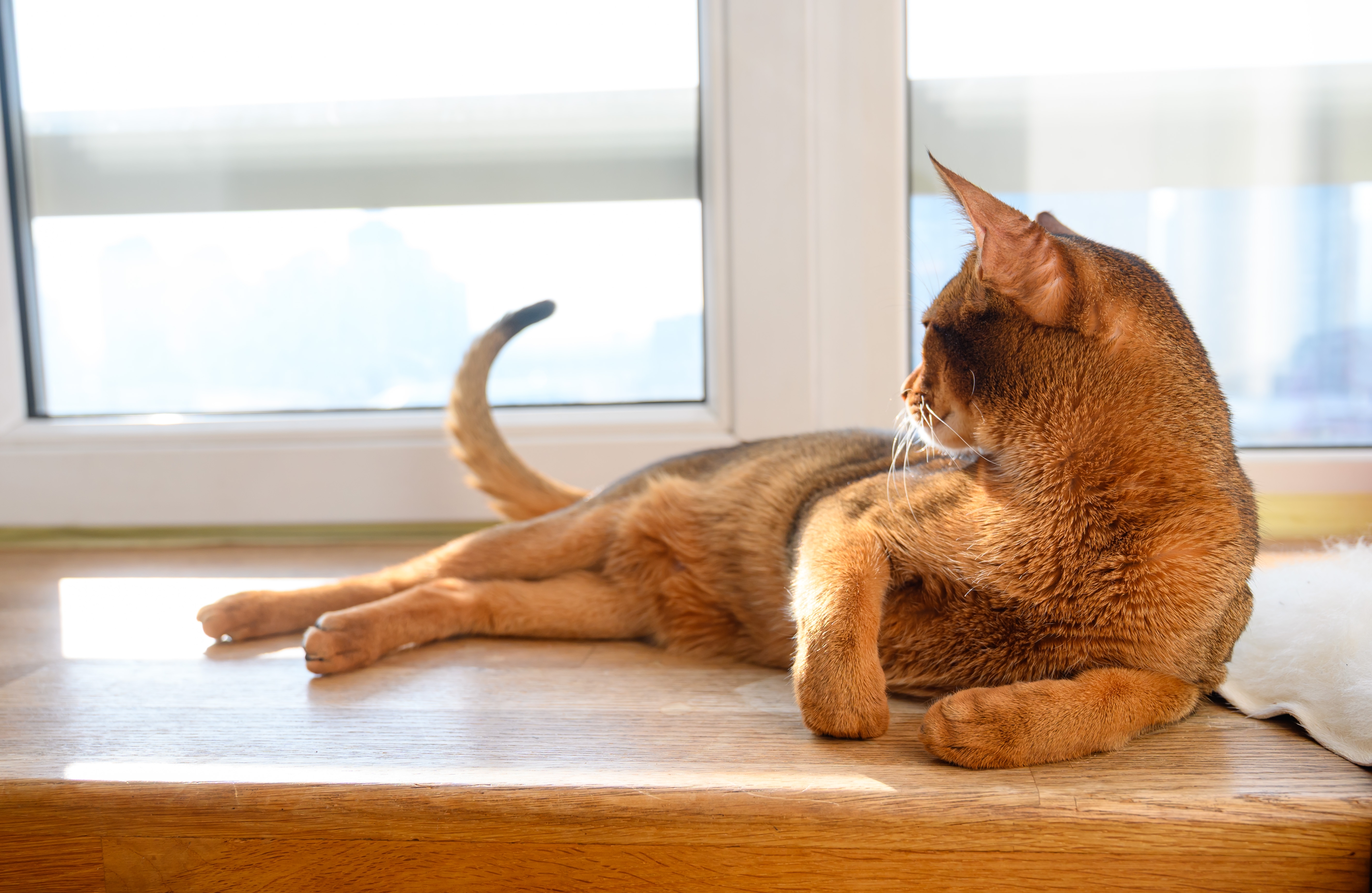
With their lithe body, sleek, shimmering coat, alluring, almond-shaped eyes, exquisite facial markings and large ears (sometimes with tufts), the striking Abyssinian resembles a miniature puma or lynx.
However, despite their wild, exotic looks, these loving, playful pussycats are devoted to their human and are renowned for their cheeky and inquisitive nature. Combining dazzling good looks with disarmingly charming ways, it’s no surprise that the Abyssinian is one of the top five most popular cat breeds worldwide.
“Abyssinian cats, also known as ‘Abys’, are never happier than when in human company,” says insurer Petplan. “They have a lot of love to offer their human companions and, once they feel comfortable and safe in your home, won’t hesitate to show their buoyant personality traits.”
ABYSSINIANS ARE CHATTY ATTENTION-SEEKERS
This is a cat who likes to be at the centre of their human’s world – and will enjoy chatting to you in a soft, chirruping voice.
“Abyssinians like to be involved with whatever their owner is doing. They like to 'chat' and know exactly how to get their owners' attention,” reports Lynda Ashmore of the Abyssinian Cat Association in Your Cat. Fellow member Carole Jones agrees: “The Abyssinian is, almost without exception, extremely affectionate, very active and intelligent, and insists on 'joining in' with domestic chores and gardening!”
WHAT DO ABYSSINIAN CATS LOOK LIKE?
Abyssinian cats have long entranced humans with their exotic looks and elegant demeanour.
“The Abyssinian is a delight to look at,” enthuses the Governing Council of the Cat Fancy (GCCF). “The overall appearance is of a wild or jungle cat with a lithe and muscular body of medium to large build, with a tail of sufficient length to balance the body. The body is carried on moderately slender and elegant legs with small oval feet.”
One of their most notable features is their distinctive ‘ticked’ coat, which comes in many stunning shades including burnished golden brown (known as the ‘usual’), along with cinnamon, blue, chocolate, lilac, fawn and silver. The dark brown or black ticking gives each individual hair bands of alternating dark and light colours, so their coat has a lustrous, luminous appearance.
WHERE DID ABYSSINIAN CATS COME FROM?
One of the oldest breeds of domestic cat, the Abyssinian first appeared in the UK in the 19th century and was formally recognised by the GCCF in 1929. However, its back story remains shrouded in mystery.
“The original cats were reported to have been imported from Ethiopia (formerly Abyssinia – hence the name) around 1868 possibly by Captain and Mrs Barrett Lennard, whose male Zula is often assumed to be the father of all modern Abyssinians. However, there is no hard evidence to support this. It is equally possible that several similar cats were brought to the UK due to the British troops returning from the war in Abyssinia that year,” reveals the Abyssinian Cat Association (ACA).
Other possible places of origin include the Indian Ocean coast and Southeast Asia. “Even though the origins are difficult to trace, the Abyssinian breed was developed and refined in England,” adds the ACA.
Read on to find out more about Abyssinian cats. Are they super intelligent? Are they good with children and other pets? What do Abyssinian cats like to do? From grooming to playtime, environmental enrichment to feeding, find out how to provide Abyssinian cats with everything they need to live a fulfilling and happy life.
But first, check out these fun Abyssinian cat facts!
7 AWESOME ABYSSINIAN CAT FACTS
- Abyssinian cats are medium in size. Adult females weigh between 6 to 9 pounds (2.7 to 4kg) and adult males 7 to 12 pounds (3.1 to 5.4kg).
- Abyssinian cats are strong and athletic – and, given their slender appearance, are surprisingly heavy.
- Abyssinian cats are often long-lived – with an average lifespan of between 14 - 17+ years. Many have been known to live well into their 20s.
- Abyssinian cats are sometimes called the cat from the Blue Nile. Romantic tales depict them as direct descendants of the sacred cats of Ancient Egypt because they resemble felines depicted in Egyptian murals and artefacts.
- Abyssinian cats have regal looks but due to their crazy antics they have earned the affectionate nickname of ‘Aby-silly-ans’!
- Abyssinian cats are known for their intelligence – CatTime named them as the smartest cat breed in the world.
- Abyssinian cats are known to be the most ‘canine of cats’ – their ability to fetch, learn tricks and habit of following their human has led to people often likening them to owning a dog.
ABYSSINIAN CAT PERSONALITY PROFILE
With a winning combination of graceful looks and a playful nature, if you’re looking for an active, intelligent feline who’ll return your love and attention in spades, then an Abyssinian could be your perfect feline friend.
“The more affection they receive, the greater their response in return,” says Carole Jones of the ACA. “Abyssinians are extremely affectionate and in the opinion of almost all owners, there is nothing like an Aby to share your life with – or maybe they will allow you to share theirs!”
“You can guarantee that if you pop off to take care of any household chores, there will be an Aby-shaped shadow behind you to make sure they don't miss out!” notes Your Cat.
Describing the Abyssinian’s personality as chatty and inquisitive. Petplan adds: “The Abyssinian might look graceful, but their personality is more boisterous than their regal bearing suggests. Abyssinian cats often retain a kittenish character throughout their life. They love to play games, especially with cat toys. If you’re looking for a calm lap-cat, the Abyssinian isn’t for you – they love to play, learn tricks, and can even be quite the performer.”
“Whilst they can be extremely affectionate, they can also be very wilful – sitting on laps is for when exhausted – playing with anything is better than sitting still!” notes the GCCF.
“Indomitable problem-solvers and intensely curious about everything, the Aby leaves no inch of its environment unexplored and is constantly on the move – unless asleep!” reveals the Cat Fanciers’ Association (CFA). “Because of this high activity level, the average Aby may not be a long-term lap snuggler, but that does not mean that they won’t seek out attention and affection. If it is not provided, they may reach out with a gentle paw to request it.”
Abyssinians are also highflyers – literally!
“They love to be on the highest level possible where they are able to observe the room, make decisions, and even guard their family. Don’t be stunned if you find a ‘flying’ Aby on your shoulder!” adds The International Cat Association (TICA). “The way they transform within seconds from a radiant and regal presence into an amazingly playful character with childlike antics is astounding. Perhaps alliteration is an easier way to describe the Abyssinian: active, awesome, agile, astounding, alert, animated, affectionate, amusing, athletic, astute, amiable and attentive.”
Understand your feline friend better with our cat communication guide >>
IS MY HOME SUITABLE FOR AN ABYSSINIAN CAT?
As long as there are people around most of the time, and plenty of climbing and exploration opportunities available, the friendly, outgoing Abyssinian will happily fit in with most family arrangements.
“This active and intelligent breed will thrive with an owner who has lots of time to play and interact with their cat,” says Petplan. “They might not be lap-cats, but Abys usually adore people and can make fantastic companions. Due to their intelligence, outdoor space is recommended to stimulate them and keep their days exciting.”
Abyssinians don’t like to be home alone
This people-loving cat will pine if left alone. “People with demanding jobs or travel schedules should probably think twice before getting an Abyssinian kitten due to the breed’s need for company,” advises Petplan. “They can even get depressed when they feel like they’re not getting the attention they deserve, so it’s important anyone considering this breed has the time to spend with their pet.”
Abyssinians get on well with children and other pets
“Abyssinians are usually friendly and get on well with other pets, but they will need time to adjust to a new household with other pets,” says veterinary charity PDSA.
“They make lovely feline companions for both pets and children. These cats also have a surprisingly good temperament with dogs as well as humans,” adds Petplan. “However, every pet is an individual so make sure you introduce your Abyssinian to other pets carefully and on their terms. They are well suited to households with older children who are able to recognise if a cat needs their own space.”
Make sure your Abyssinian is safe and secure
“The Abyssinian cat personality is friendly and outgoing – that, combined with their attractive appearance, can make them prime targets for thieves,” warns Petplan, also noting that their curious nature can lead to friction with other cats as they explore their neighbourhood: “These factors have led Abyssinian cat owners to think about contained outside areas like cat runs or ‘catios’, especially as Abyssinians are accomplished hunters.”
“Abyssinians are very intelligent and independent animals who like exercise and enjoy spending long periods outdoors. Due to their stunning physical appeal and their safety, an enclosed escape proof garden is the ideal,” recommends Carole Jones of the ACA.
WHAT DO ABYSSINIAN CATS LIKE TO DO?
While every cat is an individual with a unique set of likes and dislikes, there are certain things that are extremely important to Abyssinian cats.
Top of the list are fun, intriguing toys that enable these intelligent cats to exhibit all their natural behaviours, suitable climbing opportunities, and some humans to shadow and chat to.
“Although the Abyssinian is an active cat with lots of energy, they are normally an easy breed to care for,” says PDSA. “They will happily entertain themselves with their toys but do enjoy interaction with humans too. Abyssinians love climbing high, so providing them with a cat tree will enable them to climb safely. You are more likely to find them playing rather than settling on your lap.”
“They like a good view of their surroundings, so expect them to find them atop the refrigerator, doors, and bookcases,” notes TICA.
“Quick to learn and fun-loving, Abyssinian cats are rewarding to train and require a lot of play and mental stimulation,” adds Petplan. “Lively games, toys and plenty of interactive play will keep this intelligent and curious breed content.”
GROOMING YOUR ABYSSINIAN CAT
With their short, sleek coats, Abyssinians take care of most of their grooming themselves, only requiring a little help from their human.
“Brushing once a week is usually sufficient, though this loving breed will likely enjoy the extra attention grooming brings,” says Petplan. “Grooming sessions are also a great opportunity to look for fleas, lumps and bumps, and any skin issues to catch any problems early on.”
“Abys require very little in terms of grooming but should be combed or brushed a few times per month to control shedding,” adds the CFA. “A gentle rub with a chamois cloth on a dry coat will smooth it down and add a beautiful sheen.”
Caring for your Aby’s teeth is also important. “It is not unusual for many breeds, including Abyssinians, to develop a build-up of tartar around their teeth which can cause gingivitis. Always get your vet to check their mouths when having their routine annual vaccinations,” advises the GCCF.
FEEDING YOUR ABYSSINIAN CAT
All cats – from tiger to domestic tabby – are obligate carnivores, which means they must eat meat to survive. Meat contains essential amino acids which they can’t make themselves. Cats also require high levels of protein and can benefit from food that’s appropriate for their life stage.
Industry body UK Pet Food states: “Cats vary from many species, requiring a significant amount of protein in their diet, plus certain nutrients, such as taurine, as part of a balanced diet with just the right amount of fats, carbohydrates and essential vitamins and minerals, to stay in peak condition. Nutrients must be present in the correct amounts for their stage in life and in the correct proportion to each other, in order to provide a nutritionally complete and balanced diet.”
“Abyssinians are a slender breed who often work off their dinner through their active play,” notes Petplan. “This active breed requires a high-protein diet. As with the diet of any cat, it must be appropriate for age and life-stage.”
Burgess in-house vet Dr Suzanne Moyes MVB, MRCVS advises: “Along with high protein levels, cats require a careful balance of vitamins, plus the essential amino acid taurine necessary to promote a healthy heart and eyes. A complete diet will have all the necessary vitamins, minerals, essential fatty acids and amino acids in the right ratio.”
How much and how often should you feed your cat?
Adult cats are generally fed twice a day. Alternatively, as cats in the wild naturally eat lots of small meals per day, you could try splitting their daily intake into several small meals (unless advised otherwise by your vet). Providing dry cat food in a variety of ways, such as in treat balls or cat puzzles, can deliver a much more exciting and rewarding experience for your cat.
Portion control is also important, so get into the habit of measuring out accurate amounts each day. Giving your cat a little more than they need means they could become overweight. Likewise, if you don’t feed enough, your cat will not get all the nutrients they need and will become underweight.
Dr Moyes advises: “By following the on-pack instructions, it’s easy to measure out exactly the right-sized portion that’s suitable for your cat’s age and lifestyle to ensure they consume the correct amount of nutrients. For instance, house cats may need fewer calories than cats that spend much of their day roaming outdoors. Dry cat food is a good option as it’s easily portioned, may be better for dental health and encourages extra water consumption.”
Wet food v dry food
Unlike wet cat food, dry cat food stays fresh inside the pack until you’re ready to serve it to your cat. And that’s not all! Other benefits include:
- Free feeding – As dry food can be left out because it won’t spoil, this suits those cats who prefer to graze their food over the day rather than at specific mealtimes.
- Helpful for healthy teeth – Munching on crunchy kibble encourages chewing and helps to keep teeth clean.
- Makes feeding more fun – Dry food is easier to use with food dispensers and puzzle toys, providing environmental enrichment and mental stimulation.
- Portion control – By following the on-pack instructions, it’s easy to measure out exactly the right-sized portion to help your cat maintain a healthy weight.
Make sure to supply plenty of fresh water, too, in a separate place from their feeding area. Lots of cats aren’t keen on drinking water from a bowl, preferring moving water to still – so it may be worth investing in a cat fountain if you don’t want them drinking from a dripping tap!
GETTING AN ABYSSINIAN CAT
If you’re interested in adding one of these fabulous felines to your family, find out as much as you can first and decide if you’ll be able to provide them with everything they need to be a truly happy and contented cat.
If you’re looking for a kitten, only buy from a reputable, registered breeder.
Alternatively, visit the Cat Rescue Resource, Abyssinian Cat Club Welfare or visit the Abyssinian Cat Rescue UK Facebook page to find beautiful rescue cats looking for happy new homes. Also check out other rescue charities such as Cats Protection, Battersea, Blue Cross, RSPCA and Woodgreen, who’ll be delighted to hear from you, and can provide you with lots of helpful advice on adopting a rescued cat.
EVERY CAT DESERVES A DELICIOUS, NUTRITIOUS DINNER!
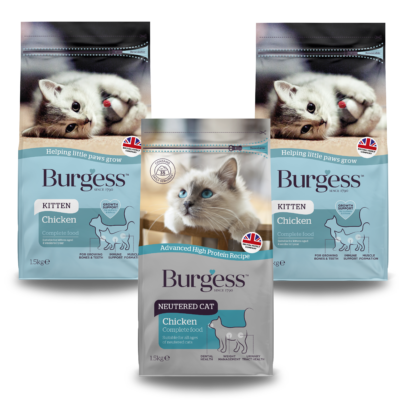
At Burgess Pet Care, all our cat food is made using premium ingredients to ensure excellent quality and superior taste to help keep your cat happy and healthy – from kitten, to adult and mature and Burgess Neutered Cat with Chicken – an advanced, high protein, complete food with added L-Carnitine to help maintain a healthy weight.
- Salmon? Duck? Chicken? Let your adult cat pick their favourite flavour with our fussy cat bundle >>
- Our cat diet and nutrition guide is here to help you create a meal plan that's tailored especially for your feline friend.
- How often should you feed your cat? Find out why little and often suits most cats – and the reason why play should be part of your feeding routine.
- Adapting your cat’s diet throughout their life What you choose to feed your cat can make all the difference.
With a whole host of *5-STAR REVIEWS*, our customers have told us:
* “I feel like I'm giving her a complete and nourishing meal that she genuinely enjoys eating.” * “My cat is obsessed with the chicken and duck combination – she finishes every bowl.” * “Love the high meat content and lack of artificial fillers, a very healthy food.” * “Her fur is visibly shinier since we switched to this food – clearly good nutrients.” * “Our cats love this cat food, and they are healthy and have lovely, glossy coats.” * “Noticed a definite improvement in my cat's fur texture since switching to this formula. It's much softer.” * “The person I got my cat from recommended this brand, and it's been fantastic, great product.” * “I trust Burgess for providing quality nutrition for my cat. This chicken and duck blend is fantastic.” *
CARE MORE Find out more about caring for your cat from Burgess, the Pet Care Experts.
Is your cat a Burgess cat? Join our Pet Club for exclusive offers and competitions – and expert advice from our in-house vet, Dr Suzanne Moyes.
You may also like to read...
Blog categories

Dogs
Cats

Rabbits

Guinea pigs