

Are Cornish Rex cats intelligent? Do they have dog-like qualities? Do Cornish Rex cats get on well with children and other pets? Do their wavy coats need special care? Are Cornish Rex cats hypoallergenic? Find out more about these racy felines who can invent their own games and are always on the lookout for a cosy lap to snuggle in…

Expert approved
Dr Suzanne Moyes MVB, MRCVS
21st October 2026
Slender, elegant, with a coat resembling crushed velvet, the captivating Cornish Rex cat is athletic and intelligent, even making up their own games if the mood takes them. Understandably, this loving, playful breed has won over many a human heart.
“Imagine the racy elegance of a Greyhound paired with playful personality of a clown – then dress it up in curls! You’ll have captured the essence of the Cornish Rex, one of the most unusual and charming felines to ever enchant cat lovers,” states the Cat Fanciers’ Association (CFA).
“Nothing compares to the mischievous and loving Cornish Rex cat,” says Your Cat. “This distinctive cat, with a silky soft coat, is very affectionate and loves human company.”
“Cornish Rex cats make excellent pets,” enthuses the Cornish Rex Society. “Aristocratic in appearance, they are charming, acutely intelligent, very affectionate and gentle whilst full of mischief, never seeming to grow old. Even 15-year-olds will still play like kittens.”
“The Cornish Rex is a highly active cat always on the move; they will often happily play on their own if no one is able to play with them,” adds veterinary charity PDSA. “You won’t often hear the Cornish Rex, but you will know if they want your attention!”
WHAT DO CORNISH REX CATS LOOK LIKE?
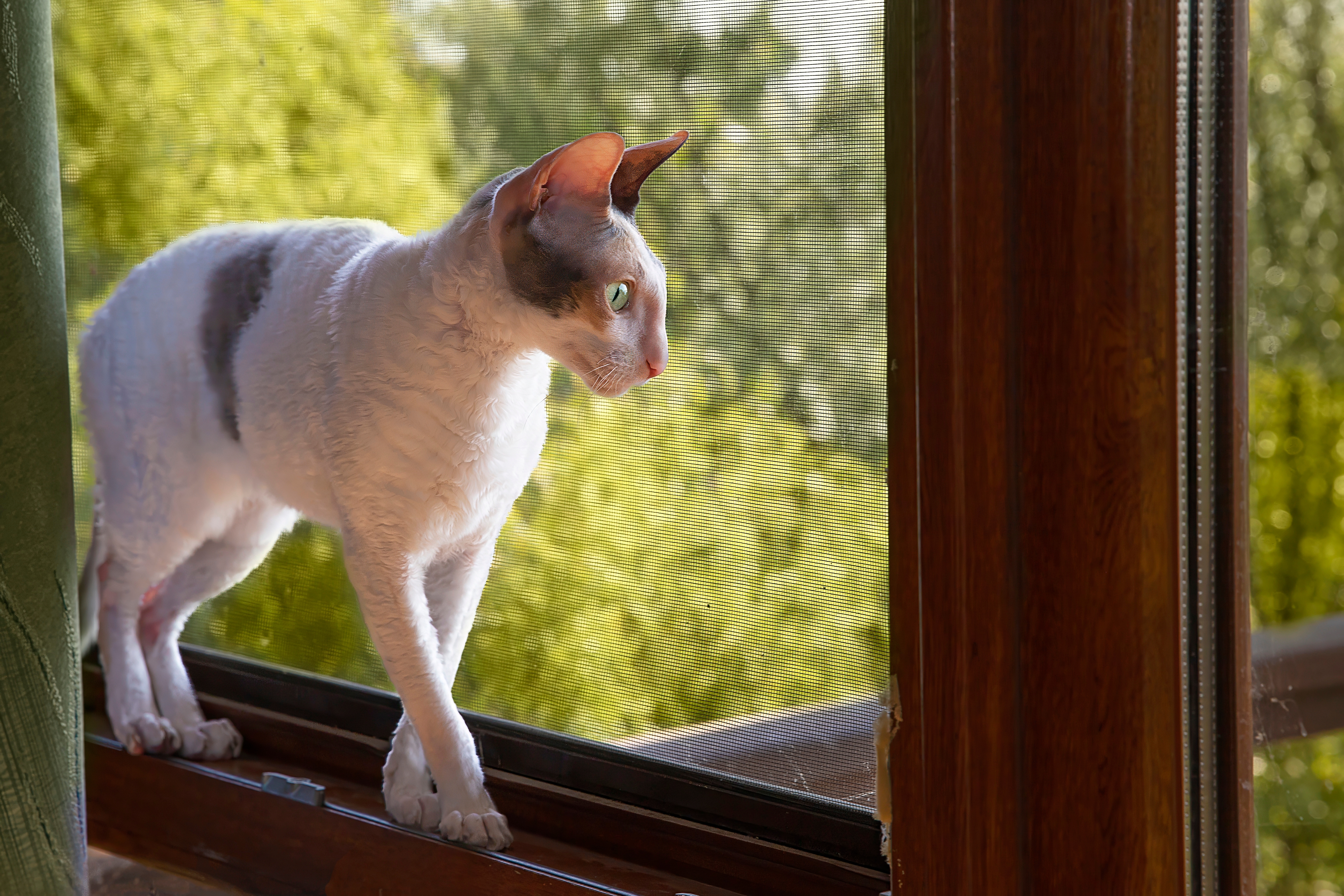
The Cornish Rex is very distinctive, with long slender legs and small oval paws – which makes them look like they are standing on tiptoe. With an elegant neck and slim body, their enchanting faces have high cheekbones, slightly slanted oval-shaped eyes and large ‘mussel shell shaped’ ears with rounded tips. Their tail is long and tapering and they come in a wide range of colours and markings including self (solid) coloured, tortoiseshell, tabbies with or without white, smoke and pointed.
Yet, despite their lean lines, Cornish Rex cats are surprisingly hefty.
“Their fine and almost delicate appearance totally belies their tremendously muscular body and deceptively heavy weight,” notes the Cornish Rex Society. “However, it is the coat of a Rex that is the main feature to differentiate it from all other breeds. Once felt never forgotten. It is short, soft, dense and luxuriant to the touch, feeling like crushed velvet. Neat and even waves cover the body and tail whilst the coat on the head, legs and paws is short and plush, but some even have tiny waves rippling down their legs and onto their paws as well.” Gorgeous!
WHERE DO CORNISH REX CATS COME FROM?
The Cornish Rex’s origins can be traced to the mid 20th century and obtained official recognition with the GCCF in 1967. This remarkable breed is thought to be the result of a spontaneous natural mutation.
“The very first Cornish Rex kitten appeared in a litter of non-pedigree kittens, born on a farm in a small village on Bodmin Moor in Cornwall on 21 July 1950,” reveals Your Cat. “A tortie and white shorthair female called Serena gave birth to a litter of five kittens, four of the kittens were typical, short-haired farm kittens; but the fifth, a cream male, had an unusual fine, curled, and wavy coat. As he developed and grew, he was obviously very different from his littermates in shape, with a slender body and long legs, a narrow head, large ears, and a long, whippy tail. He was named Kallibunker and is the original Cornish Rex.”
ARE CORNISH REX CATS HYPOALLERGENIC?
Due to their short, low-shedding coats, it’s often assumed that Cornish Rex cats are hypoallergenic. However, experts state that this is not the case.
“They do moult and, contrary to some reports, they are not hypoallergenic,” advises Your Cat. “No cat breed is completely hypoallergenic, but the Cornish Rex is often regarded as more suitable for individuals with specific cat allergies,” adds insurer, Agria. “This is mainly due to its shorter fur, which results in less shedding. Cat allergies are triggered by proteins found in a cat's saliva, skin, and dander (skin cells) that are released into the environment during shedding.”
“Whilst a high percentage of those who are allergic to normal coated cats can live quite happily with Rex, there are still unfortunately those who cannot,” notes the Cornish Rex Society. “The only way to be reasonably sure is to spend some time in a 'Rex only' household. Even this is not always a true guide as it is possible to be allergic to just one particular cat.”
Read on to find out more about Cornish Rex cats. Are they good with children and other pets? Are they playful and affectionate mischief-makers? What do Cornish Rex cats like to do? From grooming and playtime to feeding, find out how to provide Cornish Rex cats with everything they need to live a fulfilling and happy life.
But first, check out these Cornish Rex cat facts!
7 REMARKABLE CORNISH REX CAT FACTS
- Cornish Rex cats are small to medium in size. Adult females weigh between 5 to 7 pounds (2.26 to 3.17kg), and adult males between 8 to 10 pounds (3.6kg to 4.5kg).
- Cornish Rex cats have muscular hind legs which enable them to run very fast and jump high, including vertically.
- Cornish Rex cats have a particularly distinctive feature – long toes – which enable them to use their paws like little hands.
- Cornish Rex cats have a body temperature that’s the same as that of any other cat, but because of their light coat they feel especially warm to the touch.
- Cornish Rex cats are born covered in curls, including their whiskers and eyebrows, which often form little coils. As the kittens grow their coats and whiskers usually straighten, becoming crimped and curved rather than tightly curled.
- Cornish Rex cats are a long-lived breed. Their lifespan is around 16-plus years, although it is not unusual for them to live up to 20 years. They remain playful and energetic well into old age.
- The Cornish Rex is sometimes known as ‘the feline version of a Whippet’.
CORNISH REX PERSONALITY PROFILE
These endlessly curious, sociable cats just adore people and love being the centre of attention. They’ll also want to get involved with every activity and are renowned for their playful nature and dog-like loyalty.
“The Cornish Rex is a highly social, extremely affectionate, captivating companion animal. Always ready to play, they are acrobatic and funny in their antics and if there is no-one willing to play, they will invent lively and energetic games,” says the GCCF. “Close human contact is important to the Cornish and without his ‘people’ this wonderful cat would soon decline. This is a breed that adores human attention and friendship, and, like a heat-seeking missile, you will find your Cornish in your bed and on your lap as you rest.”
If you’d adore a feline friend who follows you like a four-pawed shadow and enjoys a game of fetch, then a Cornish Rex will fit the bill.
“Some of the charming characteristics of the breed are their dog-like habits of following their owners and retrieving their favourite toy,” says the Cornish Rex Society.
“They have an endearing personality, are extremely affectionate, and make wonderful companions; bonding with and positively seeking the companionship of their human family,” adds Your Cat. “They are intelligent, curious, and tolerant. They are not particularly vocal but communicate with their eyes and their body language.”
“Cornish Rex love attention and make wonderful pets, although can be demanding at times,” says TICA. “They are usually quiet, but can express themselves quite well with a pat on the cheek, a kiss on the cheek or a turned back and flip of the tail.”
Understand your cat better with our cat communication guide >>
IS MY HOME SUITABLE FOR A CORNISH REX CAT?
Cornish Rex cats are happiest hanging around indoors with their human family, so they need a home where someone’s around most of the time.
“Lovely with all members of the family, the Cornish Rex would be unhappy and bored if left without people for too long,” says the GCCF.
“They prefer the company of their humans, other cats, and cat-friendly dogs rather than being left alone for hours at a time,” notes The International Cat Association (TICA).
Due to their incessant desire to investigate stuff, you may want to put anything breakable well out of reach of your Cornish Rex cat’s paws. “The Cornish Rex is a very curious and mischievous breed. Therefore, think about securing fragile things such as pots, glassware and china before your Cornish Rex goes exploring,” adds Agria.
“Given their exuberant natures and high activity levels, they are in constant search of new things to play with, which may not actually be appropriate things for them to play with! Owning a Cornish Rex calls for thoroughly child proofing the house and keeping fragile objects behind closed doors,” recommends the CFA.
Cornish Rex cats need protection from wet weather
Their unusual coat means extra care must be taken to keep them warm and dry.
“They should not be allowed to go out in the rain because they can become saturated due to the lack of guard hairs in their coat,” notes Your Cat.
“Cornish Rex cats usually thrive best as indoor pets, as their thin fur makes them sensitive to our chilly climate,” adds insurer Agria.
Being such inquisitive investigators can also land the Cornish Rex in trouble, so you’ll need to create safe spaces for them to explore.
“Their inquisitive and sociable personality can sometimes lead to trouble with neighbours or result in them accidentally hopping into delivery vans or cars. To keep them safe, consider securing your garden with rollers or mesh, or create an enclosed cat run for safe outdoor play,” advises Agria.
Cornish Rex cats, other pets and children can get along well
Sociable, adaptable and confident, Cornish Rex cats will happily rub along with other pets and be friendly with children. “They are a good choice for families with children or other pets, and they enjoy a snuggle and a lap to sit on,” says Your Cat. “This intelligent curious cat is friendly towards other companion animals in the family,” adds the GCCF.
WHAT DO CORNISH REX CATS LIKE TO DO?
While every cat is an individual with a unique set of likes and dislikes, there are certain things that are extremely important to Cornish Rex cats. Top of the list is hanging around with their human family, joining in with everyday activities, and playing lots of games together that help keep these acrobatic, active cats fit and healthy – and their intelligent minds stimulated.
“The Cornish Rex is an athletic cat and can appear limitless in their love of running, jumping and playing,” notes TICA.
“One of their favourite games is fetch, retrieving toys like a dog, and if no one is available, they will even throw the toy for themselves with their little paws that they use like hands,” adds TICA.
“Give your Cornish Rex the opportuning to sneak about and plan a hunt when you play with them. And make sure they also have opportunities to run after and catch their toy – as this is an important part of the game,” recommends Agria. “‘Scatter feeding’ is a great way to keep them active – you can spread food or treats out around the home and hide them for the cat to find. Many cats like to explore and be part of the activities in your home. Encourage them to participate when you’re doing things around the home.”
And after all that running, jumping and fetching, a Cornish Rex will seek out any available lap. “The Cornish is definitely a lap cat and ANY lap will do,” says TICA.
GROOMING YOUR CORNISH REX CAT
When it comes to grooming, your Cornish Rex cat is a relatively low-maintenance feline who needs a little extra care with their ears.
“A gentle hand grooming is all their coat requires to keep it in good condition, although they do tend to have greasy ears and toes,” says Your Cat. “It is important to pay attention to the ears, which may accumulate waxy buildup more quickly than other breeds and should be cleaned often,” adds the CFA.
“Their hair is usually fragile and can break easily even with gentle brushing, so care should be taken when grooming. Often stroking them with your hand is sufficient to keep their coat in good condition,” notes PDSA.
“Hand grooming is normally sufficient to keep their coats in good condition but in some of the longer or woollier coated cats a soft bristle brush or a fine toothed comb might be necessary to coax the coat into neat waves,” adds the GCCF.
The ultimate cat grooming guide >>
FEEDING YOUR CORNISH REX CAT
All cats – from tiger to domestic tabby – are obligate carnivores, which means they must eat meat to survive. Meat contains essential amino acids which they can’t make themselves. Cats also require high levels of protein and can benefit from food that’s appropriate for their life stage.
Industry body UK Pet Food states: “Cats vary from many species, requiring a significant amount of protein in their diet, plus certain nutrients, such as taurine, as part of a balanced diet with just the right amount of fats, carbohydrates and essential vitamins and minerals, to stay in peak condition. Nutrients must be present in the correct amounts for their stage in life and in the correct proportion to each other, in order to provide a nutritionally complete and balanced diet.”
“They have very good appetites, and care should be taken to ensure they don’t overfeed and become too plump,” notes Your Cat.
Burgess in-house vet Dr Suzanne Moyes MVB, MRCVS advises: “Along with high protein levels, cats require a careful balance of vitamins, plus the essential amino acid taurine necessary to promote a healthy heart and eyes. A complete diet will have all the necessary vitamins, minerals, essential fatty acids and amino acids in the right ratio.”
How much and how often should you feed your cat?
Adult cats are generally fed twice a day. Alternatively, as cats in the wild naturally eat lots of small meals per day, you could try splitting their daily intake into several small meals (unless advised otherwise by your vet). Providing dry cat food in a variety of ways, such as in treat balls or cat puzzles, can deliver a much more exciting and rewarding experience for your cat.
Portion control is also important, so get into the habit of measuring out accurate amounts each day. Giving your cat a little more than they need means they could become overweight. Likewise, if you don’t feed enough, your cat will not get all the nutrients they need and will become underweight.
Dr Moyes advises: “By following the on-pack instructions, it’s easy to measure out exactly the right-sized portion that’s suitable for your cat’s age and lifestyle to ensure they consume the correct amount of nutrients. For instance, house cats may need fewer calories than cats that spend much of their day roaming outdoors. Dry cat food is a good option as it’s easily portioned, may be better for dental health and encourages extra water consumption.”
Wet food v dry food
Unlike wet cat food, dry cat food stays fresh inside the pack until you’re ready to serve it to your cat. And that’s not all! Other benefits include:
- Free feeding – As dry food can be left out because it won’t spoil, this suits those cats who prefer to graze their food over the day rather than at specific mealtimes.
- Helpful for healthy teeth – Munching on crunchy kibble encourages chewing and helps to keep teeth clean.
- Makes feeding more fun – Dry food is easier to use with food dispensers and puzzle toys, providing environmental enrichment and mental stimulation.
- Portion control – By following the on-pack instructions, it’s easy to measure out exactly the right-sized portion to help your cat maintain a healthy weight.
Make sure to supply plenty of fresh water, too, in a separate place from their feeding area. Lots of cats aren’t keen on drinking water from a bowl, preferring moving water to still – so it may be worth investing in a cat fountain if you don’t want them drinking from a dripping tap!
GETTING A CORNISH REX CAT
If you’re interested in adding one of these fabulous felines to your family, find out as much as you can first and decide if you’ll be able to provide them with everything they need to be a truly happy and contented cat.
If you’re looking for a kitten, only buy from a reputable, registered breeder.
Alternatively, visit the Cat Rescue Resource, the Cornish Rex Society Welfare, the Rex Cat Association and the Cornish Rex Kittens for Adoption Facebook page to find beautiful rescue cats looking for happy new homes. Also check out other rescue charities such as Cats Protection, Battersea, Blue Cross, RSPCA and Woodgreen, who’ll be delighted to hear from you, and can provide you with lots of helpful advice on adopting a rescued cat.
EVERY CAT DESERVES A DELICIOUS, NUTRITIOUS DINNER!
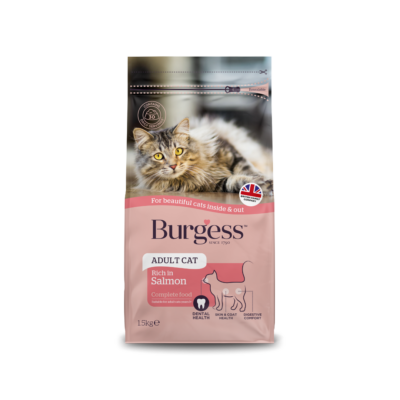
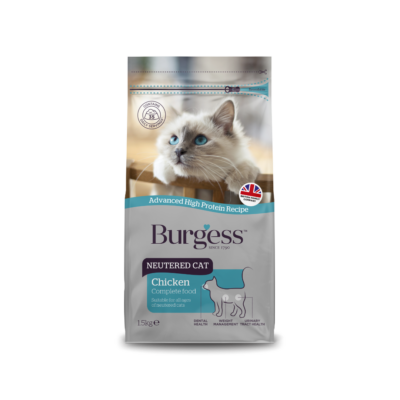
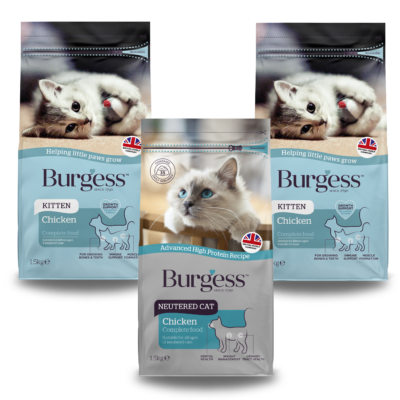
At Burgess Pet Care, all our cat food is made in Yorkshire, using premium ingredients to ensure excellent quality and superior taste to help keep your cat happy and healthy – from kitten, to adult and mature and Burgess Neutered Cat with Chicken – an advanced, high protein, complete food with added L-Carnitine to help maintain a healthy weight.
- Salmon? Duck? Chicken? Let your adult cat pick their favourite flavour with our fussy cat bundle >>
- Our cat diet and nutrition guide is here to help you create a meal plan that's tailored especially for your feline friend.
- How often should you feed your cat? Find out why little and often suits most cats – and the reason why play should be part of your feeding routine.
- Adapting your cat’s diet throughout their life What you choose to feed your cat at different life stages can make all the difference.
With a whole host of *5-STAR REVIEWS*, our customers have told us:
* “I feel like I'm giving her a complete and nourishing meal that she genuinely enjoys eating.” * “My cat is obsessed with the chicken and duck combination – she finishes every bowl.” * “Love the high meat content and lack of artificial fillers, a very healthy food.” * “Her fur is visibly shinier since we switched to this food – clearly good nutrients.” * “Our cats love this cat food, and they are healthy and have lovely, glossy coats.” * “Noticed a definite improvement in my cat's fur texture since switching to this formula. It's much softer.” * “The person I got my cat from recommended this brand, and it's been fantastic, great product.” * “I trust Burgess for providing quality nutrition for my cat. This chicken and duck blend is fantastic.” *
CARE MORE Find out more about caring for your cat from Burgess, the Pet Care Experts.
Is your cat a Burgess cat? Join our Pet Club for exclusive offers and competitions – and expert advice from our in-house vet, Dr Suzanne Moyes.
You may also like to read...
Blog categories

Dogs

Cats

Rabbits

Guinea pigs