

Why are Turkish Vans called the ‘swimming cat’? Do they really have a dog-like personality? Are Turkish Van cats affectionate? Does their cashmere-like coat need lots of grooming? Are Turkish Van cats good with children and other pets? Find out more about these distinctive, clever cats who like to run, fetch and make mischief!

Expert approved
Dr Suzanne Moyes MVB, MRCVS
22nd September 2026
Turkish Vans are large and fluffy with a chalk-white coat featuring characteristic head and tail markings. They have expressive amber or blue eyes – or even one of each colour. And, unlike most felines, Turkish Vans have an unusual love of water.
“Commonly known as the ‘swimming cat’, the Turkish Van is known for its distinctive pattern – a white cat with a strikingly coloured head and tail,” notes the Governing Council of the Cat Fancy (GCCF).
Described as loyal, loving and very intelligent, Turkish Vans have endearing dog-like ways. “They will follow you from room to room, enjoy playing games of fetch, and love their humans,” says Your Cat.
While reluctant to spend much time on laps, Turkish Vans love to stay close to their human family and be involved in everything that’s going on.
TURKISH VANS ARE SKILLED PROBLEM-SOLVERS
The Cat Fanciers’ Association (CFA) describes them as: “Loyal companions, these cats are very intelligent and adept at solving problems (how do I open the cupboard where the cat food lives?). They are not fond of being held or carried but still crave physical closeness to their owners. When playtime is over, they will curl up next to you on the couch or even crawl into your lap while you watch TV.”
“In addition to being loyal and loving, they are highly intelligent with a mischievous streak,” adds The International Cat Association (TICA).
WHAT DO TURKISH VAN CATS LOOK LIKE?
A large, muscular cat, with a substantial body and legs and a brush-like tail, Turkish Vans have feathery ears, an impressive neck and chest ruff, and large, oval eyes. Their gorgeously soft and silky, cashmere-like coat gets thicker and even more luxurious in winter.
“It is always an eye-catching cat with its pristine white coat and contrasting colour markings, which now come in auburn (the most traditional), cream, black, blue, plus tabbies and torties, with eyes in light amber, blue or one of either colour,” notes the Turkish Van Cat Club. “Their patterns may include rings on the tail, and a ‘thumbprint’ on the shoulder blades,” adds TICA.
WHERE DID TURKISH VAN CATS COME FROM?
The Turkish Van is an ancient breed from the Lake Van region of Türkiye, where it has been a prized pet for centuries. The breed's history in the UK began in 1954 when journalist Laura Lushington and photographer Sonia Halliday, while travelling in Türkiye, were gifted two unrelated Turkish Van kittens. “During this trip, both kittens strolled into a stream by which they were camped, and swam out of their depth apparently enjoying themselves,” reveals the Turkish Van Cat Club.
The water-loving white kittens, with auburn head and tail markings and amber eyes, accompanied the Lushington and Halliday to England, where they successfully bred.
Lushington then sought official recognition for the breed. In 1959, she and Halliday returned to Van, and obtained another pair of Turkish cats to strengthen the breeding programme. Prof Dr Emin Ariturk, the then acting head of the Department of Animal Sciences at the University of Ankara, confirmed that the cats were a recognised breed and Turkish Vans gained Championship status in the UK in 1969.
Read on to find out more about Turkish Van cats. Are they curiously clever mischief makers? Are they good with children and other pets? What do Turkish Van cats like to do? From grooming to playtime, environmental enrichment to feeding, find out how to provide Turkish Van cats with everything they need to live a fulfilling and happy life.
But first, check out these fun Turkish Van cat facts!
6 TERRIFIC TURKISH VAN CAT FACTS
- Turkish Van cats are large in size. Adult females weigh between 7 to 12 pounds (3.1 to 5.4kg) and adult males 10 to 20 pounds (4.5 to 9kg).
- Turkish Van cats are slow to mature and continue to grow to the age of three or older.
- Turkish Van cats are considered national treasure in Türkiye with the breed being preserved at the Van Cat Villa, part of the Van Yüzüncü Yıl University Van Cat Research Centre.
- Turkish Van cats are an ancient breed – the first record of white, semi-long haired cats with ringed tails and colour on their heads were carvings on jewellery by the Bronze Age Hittites (1600-1200 BC).
- Turkish Van cats have a cousin – the Turkish Vankedisi has the same characteristics and temperament, but has pure-white, semi-longhaired fur, and is more predisposed to having different coloured eyes.
- Turkish Van cats have a very famous fan – Cats The Musical composer Sir Andrew Lloyd Webber likes to take a dip in the swimming pool with his Turkish Van Fez!
TURKISH VAN CAT PERSONALITY PROFILE
If you crave the company of a large, active, curious cat who’s friendly and affectionate and always wants to be by your side (but not often on your lap) then a Turkish Van could be your perfect feline friend.
“Curious and companionable, Turkish Vans want to be with you participating in whatever is happening and so they follow you from room to room,” says TICA. “While they love to be with you and will choose to curl up in your lap to enjoy a stroking session, they are not a breed that wants to be picked up and held or cuddled for long periods.”
“The Turkish Van is not only eye-catching in looks but has great character and personality, notes the Turkish Van Cat Club. “Being a very active cat, it is rare to see one walking, or even on the floor! Most Van cats have a love of heights and can often be found on the highest point in a room, even if that means the top of a door. It is a very agile cat and loves joining in games with balls or scraps of paper, which it will retrieve endlessly. With such quick movements, these cats can also wreak havoc amongst ornaments or in furnishings and being intelligent they can use this to their own advantage.”
“The Turkish Van is considered a mischievous and clever clown-like cat that is entertaining to live with,” adds TICA. “Their powerful hind legs mean they are great jumpers and climbers so expect to find them atop the bookcase or in some other area they have located as a great place to ensure they can see everything going on in their world. Most cats flick their tails when they are angry or upset, but the Van’s tail seems to be in constant motion, even when they are in a good mood, which is most of the time.”
This large cat has a surprisingly soft voice, which “sometimes sound rather like a sheep,” notes the GCCF.
Turkish Van are also entranced by water. “Don’t be surprised if you find you’ve got a helper when it comes to doing the washing up, or your cat tries to join you in the bath or shower!” says Your Cat. “With this in mind, it’s always worth keeping the toilet seat down, and the bathroom door closed!”
“Most of them also have more than a normal love of water, ranging from dripping taps, especially drinking from them, and dunking their toys in water bowls or a sink,” adds the Turkish Van Cat Club.
Understand your feline friend better with our cat communication guide >>
IS MY HOME SUITABLE FOR A TURKISH VAN CAT?
As long as there are people around most of the time, and plenty of climbing and exploration opportunities available, the sociable Turkish Van will happily fit in with most family arrangements.
With Turkish Vans, one thing’s for sure – they really don’t like being on their own.
“They love company and wouldn’t enjoy being at home alone all day, so if you work full-time, it’s always best to have a companion for them so they don’t become lonely and bored,” advises Your Cat. “They require a lot of attention from their families and don’t like to be left alone for long periods of time,” adds TICA.
Turkish Vans get on well with older children and other pets
Sensible children will adore having a Turkish Van in the family – and these versatile cats will happily rub along with other pets, too – although they’re likely to want to rule the roost!
“The Turkish Van is an excellent pet and makes a devoted companion once its loyalty and confidence have been won. It can be very dog-like, often following the owner around, and indeed they do get on very well with dogs,” says the Turkish Van Cat Club. “They get along with other pets, including dogs, after making sure the other pets know they are the one in charge,” adds TICA.
“They get along well with dogs if properly introduced but do best with older children who can understand their reluctance to be carried around and be trusted not to pull their colourful tails,” notes the CFA.
Turkish Vans need sturdy accessories
And, when it comes to cat accessories, due to their size, you’ll need to think big – ample, comfy sleeping spots, spacious hideaway places, roomy litter trays, generously-sized cat tunnels for your Turkish Van to run through and play in – and very sturdy scratching posts and climbing trees that will support their weight.
WHAT DO TURKISH VAN CATS LIKE TO DO?
While every cat is an individual with a unique set of likes and dislikes, there are certain things that are extremely important to energetic Turkish Van cats.
Top of the list are fun, intriguing toys and games – especially those involving water – that enable these intelligent cats to exhibit all their natural behaviours, along with suitable climbing opportunities with high perches to peek down from, and some humans to shadow and chat to.
“They love to play games and will learn to retrieve, amusing you at the same time with their antics as they catch toys in mid-flight or turn somersaults in their enthusiastic chases. They love to run and run and run – as much as they love to play with the water that so fascinates them,” says TICA. “They like to play with water and have been known to turn on the water faucet (tap).”
“Turkish Vans are usually very active and love playing. Due to the speed of their movements, they can be quite clumsy and may knock things over during their energetic play,” adds veterinary charity PDSA. “They are unlikely to curl up quietly on your lap, preferring to be high up.”
When it comes to choosing cat toys, there are all sorts that appeal to curious Turkish Vans, who will also figure out their own forms of entertainment.
“Turkish Vans particularly enjoy toys made of natural materials such as feathers but will also devise their own toys from crumpled paper and countless other things,” says the CFA.
“Challenge their brain and by teaching them tricks and providing puzzle toys that reward with treats,” suggests TICA. “The Van is tough on toys so be prepared to replace them on a regular basis.”
Turkish Vans will also astonish you with their acrobatic antics. “Vans have been known to catch toys mid-air and roll in somersaults,” notes TICA.
GROOMING YOUR TURKISH VAN CAT
With their luxurious silky coat, Turkish Vans may look high maintenance but keeping them looking their best is relatively easy.
“One of the easiest longhair breeds to groom, Turkish Vans have no undercoat to tangle up or cause mats,” notes the CFA
“Their single coat is easy to care by combing just once a week,” advises TICA. “They will need coat care more frequently in winter when their coat is heavier.”
“Their semi-longhaired, water-resistant coats don’t mat easily as they have no undercoat and also tend to repel dirt, but a weekly brush is still a good idea to remove loose hairs,” adds Your Cat.
“It is a good idea to brush them regularly to remove loose, dead hair and help prevent furballs,” says the GCCF. “Their coats repel dirt to a large degree, so they do not need a lot of bathing but many of them enjoy water and so also enjoy a bath.”
The ultimate cat grooming guide >>
FEEDING YOUR TURKISH VAN CAT
All cats – from tiger to domestic tabby – are obligate carnivores, which means they must eat meat to survive. Meat contains essential amino acids which they can’t make themselves. Cats also require high levels of protein and can benefit from food that’s appropriate for their life stage.
Industry body UK Pet Food states: “Cats vary from many species, requiring a significant amount of protein in their diet, plus certain nutrients, such as taurine, as part of a balanced diet with just the right amount of fats, carbohydrates and essential vitamins and minerals, to stay in peak condition. Nutrients must be present in the correct amounts for their stage in life and in the correct proportion to each other, in order to provide a nutritionally complete and balanced diet.”
Burgess in-house vet, Dr Suzanne Moyes MVB, MRCVS, advises: “Along with high protein levels, cats require a careful balance of vitamins, plus the essential amino acid taurine necessary to promote a healthy heart and eyes. A complete diet will have all the necessary vitamins, minerals, essential fatty acids and amino acids in the right ratio.”
How much and how often should you feed your cat?
Adult cats are generally fed twice a day. Alternatively, as cats in the wild naturally eat lots of small meals per day, you could try splitting their daily intake into several small meals (unless advised otherwise by your vet). Providing dry cat food in a variety of ways, such as in treat balls or cat puzzles, can deliver a much more exciting and rewarding experience for your cat.
Portion control is also important, so get into the habit of measuring out accurate amounts each day. Giving your cat a little more than they need means they could become overweight. Likewise, if you don’t feed enough, your cat will not get all the nutrients they need and will become underweight.
Dr Moyes advises: “By following the on-pack instructions, it’s easy to measure out exactly the right-sized portion that’s suitable for your cat’s age and lifestyle to ensure they consume the correct amount of nutrients. For instance, house cats may need fewer calories than cats that spend much of their day roaming outdoors. Dry cat food is a good option as it’s easily portioned, may be better for dental health and encourages extra water consumption.”
Wet food v dry food
Unlike wet cat food, dry cat food stays fresh inside the pack until you’re ready to serve it to your cat. And that’s not all! Other benefits include:
- Free feeding – As dry food can be left out because it won’t spoil, this suits those cats who prefer to graze their food over the day rather than at specific mealtimes.
- Helpful for healthy teeth – Munching on crunchy kibble encourages chewing and helps to keep teeth clean.
- Makes feeding more fun – Dry food is easier to use with food dispensers and puzzle toys, providing environmental enrichment and mental stimulation.
- Portion control – By following the on-pack instructions, it’s easy to measure out exactly the right-sized portion to help your cat maintain a healthy weight.
Make sure to supply plenty of fresh water, too, in a separate place from their feeding area. Lots of cats aren’t keen on drinking water from a bowl, preferring moving water to still – so it may be worth investing in a cat fountain if you don’t want them drinking from a dripping tap!
GETTING A TURKISH VAN CAT
If you’re interested in adding one of these fabulous, fluffy felines to your family, find out as much as you can about this breed first and decide if you’ll be able to provide them with everything they need to be a truly happy and contented cat.
If you’re looking for a kitten, only buy from a reputable, registered breeder.
Alternatively, visit the Cat Rescue Resource or the Turkish Van Cat Club Welfare & Rescue to find beautiful rescue cats looking for happy new homes. Also check out other rescue charities such as Cats Protection, Battersea, Blue Cross, RSPCA and Woodgreen, who’ll be delighted to hear from you, and can provide you with lots of helpful advice on adopting a rescued cat.
EVERY CAT DESERVES A DELICIOUS, NUTRITIOUS DINNER!
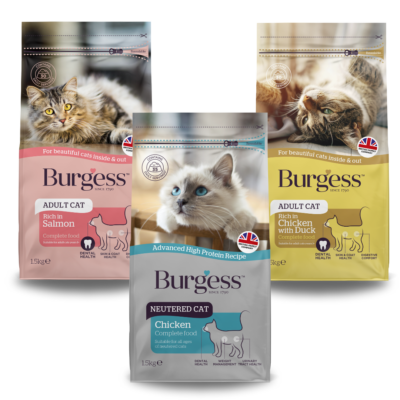
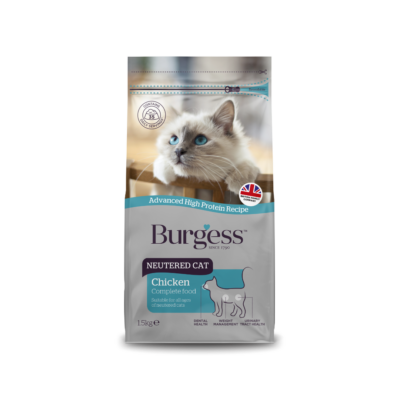
At Burgess Pet Care, all our cat food is made using premium ingredients to ensure excellent quality and superior taste to help keep your cat happy and healthy – from kitten, to adult and mature and Burgess Neutered Cat with Chicken – an advanced, high protein, complete food with added L-Carnitine to help maintain a healthy weight.
- Salmon? Duck? Chicken? Let your adult cat pick their favourite flavour with our fussy cat bundle >>
- Our cat diet and nutrition guide is here to help you create a meal plan that's tailored especially for your feline friend.
- How often should you feed your cat? Find out why little and often suits most cats – and the reason why play should be part of your feeding routine.
- Adapting your cat’s diet throughout their life What you choose to feed your cat can make all the difference.
With a whole host of *5-STAR REVIEWS*, our customers have told us:
* “I feel like I'm giving her a complete and nourishing meal that she genuinely enjoys eating.” * “My cat is obsessed with the chicken and duck combination – she finishes every bowl.” * “Love the high meat content and lack of artificial fillers, a very healthy food.” * “Her fur is visibly shinier since we switched to this food – clearly good nutrients.” * “Our cats love this cat food, and they are healthy and have lovely, glossy coats.” * “Noticed a definite improvement in my cat's fur texture since switching to this formula. It's much softer.” * “The person I got my cat from recommended this brand, and it's been fantastic, great product.” * “I trust Burgess for providing quality nutrition for my cat. This chicken and duck blend is fantastic.” *
CARE MORE
Find out more about caring for your cat from Burgess, the Pet Care Experts.
Is your cat a Burgess cat? Join our Pet Club for exclusive offers and competitions – and expert advice from our in-house vet, Dr Suzanne Moyes.
Blog categories

Dogs

Cats

Rabbits

Guinea pigs