
Are Devon Rex cats intelligent? Do they have dog-like qualities? Do Devon Rex cats get on well with children and other pets? Do their wavy coats need special care? Are Devon Rex cats hypoallergenic? Find out more about these charming little mischief makers who are often referred to as the pixies of the cat world…

Expert approved
Dr Suzanne Moyes MVB, MRCVS
24th June 2026
With their wonderfully wavy coats, strangely hypnotic eyes and exceptionally large ears, the Devon Rex looks like no other cat breed. And fans of this fun-loving feline would have it no other way.
“Devon Rex make delightful pets and are excellent companions for those seeking an action-packed character, for they can be wickedly naughty and demand constant attention,” states the Rex Cat Club. “They are loving, need human companionship and share the dog-like habits of their Cornish Rex cousins. Their long toes allow them to use their paws like little hands. They are also pretty good at climbing net curtains! Many years ago, a well-known Devon Rex breeder was stopped by a neighbour who had seen her kittens climbing the curtains and was curious to know what type of monkey she kept!”
“If you could cross a cat and an elf, you’d most likely have a Devon Rex. It’s virtually impossible to discuss these charming, wavy-haired wonders without using the words ‘elfin’ or ‘pixie’,” adds the Cat Fanciers’ Association (CFA). “So striking and unusual that at first glance, people wonder if they are truly looking at a cat.”
WHAT DO DEVON REX CATS LOOK LIKE?
The Devon Rex really does have very distinctive looks – with a slender neck, big, impish eyes, wide cheekbones, and large ears set low on the sides of their heads. Small to medium in size, this cat is surprisingly muscular, with a broad chest and a long, tapering tail. Their short, dense coat, which comes in a variety of colours, has few guard hairs (the longest and coarsest hairs in a cat’s coat), resulting in a soft, wavy texture.
“The defining features of these endearing cats are their very large ears, expressive eyes, high cheekbones and a velvety soft coat that ripples and waves under your touch,” notes the Governing Council of the Cat Fancy (GCCF).
WHERE DO DEVON REX CATS COME FROM?
How this wavy-coated cat came into being is something of a West Country mystery. While curly-coated cats first appeared in Cornwall in 1950, the arrival of just one curly-haired male in a litter of regular kittens, born in a garden in Devon a few years later, was rather a surprise.
“Nature can produce some odd coincidences, and the appearance of the first Devon Rex is one,” notes the GCCF. “The Cornish Rex breed, a natural mutation, first appeared on Bodmin Moor in 1950. On 15 July 1959, the first Devon Rex kitten was born to a non-pedigree mother. He was black smoke in colour, and the only curly-coated kitten in the litter, and was called ‘Kirlee’.”
As Cornwall and Devon are adjoining counties, it was initially assumed that Kirlee arose from the same natural mutation as the Cornish Rex. However, it was later proved that Kirlee was, in fact, the result of a completely separate natural mutation and, in 1967, the GCCF recognised the Devon Rex as a distinct breed.
ARE DEVON REX CATS HYPOALLERGENIC?
Due to their short, low-shedding coats, it’s often assumed that Devon Rex cats are hypoallergenic. However, experts state that this is not the case.
“Devon Rex cats are technically not hypoallergenic, though many believe they are because of their short hair (allergies are caused by a protein in their saliva that stays on their coat after grooming),” advises insurer Petplan.
“Contrary to popular opinion, Devon Rex do shed just like all other cats; however, the structure of their coat makes the shedding less obtrusive than in some other breeds. There is a perception that the Devon Rex is hypoallergenic, but they do produce allergens like every other cat,” adds the GCCF. “Some people with allergies to cats are able to tolerate Devons, but others are not. If you are allergic, you should make arrangements to spend some time in the company of a Devon before acquiring one.”
Read on to find out more about Devon Rex cats. Are they good with children and other pets? Are they playful and affectionate mischief-makers? What do Devon Rex cats like to do? From grooming and playtime to feeding, find out how to provide Devon Rex cats with everything they need to live a fulfilling and happy life.
But first, check out these Devon Rex cat facts!
5 DELIGHTFUL DEVON REX CAT FACTS
- Devon Rex cats are medium in size. Adult females weigh between 6 to 7 pounds (2.2 to 3.1 kg), and adult males 7 to 9 pounds (3.1 to 4.1kg).
- Devon Rex cats have recently been named the most popular of all shorthaired breeds by the Cat Fanciers’ Association.
- Devon Rex cats’ wavy coat doesn’t fully mature until the cat is around 18 months old. All cats have three types of hair – guard hair, awn hair and down hair, and the Devon Rex coat is unusual because it has very little guard hair.
- Devon Rex cats have curly whiskers to match their curly coat. Their whiskers are prone to breakage, so great care must be taken to avoid damaging them.
- Devon Rex cats are surprisingly warm to the touch – they feel like soft hot water bottles and are ideal to snuggle up to in winter! In fact, they have the same body temperature as other cats, but their coat does not provide as much insulation, which is why they feel warmer.
DEVON REX PERSONALITY PROFILE
These endlessly curious, sociable cats just adore people and love being the centre of attention. They’ll also want to get involved with every activity and are renowned for their playful nature and dog-like loyalty.
“The Devon Rex is a mischievous and highly active breed of cat. They love playing and want to know what you are doing all the time so they may become your shadow,” says veterinary charity PDSA. “Normally a quiet cat, you may hear a small chirp if they need your attention.”
“Devon Rex are adorably cute, delightfully silly, and pure fun from beginning to end,” enthuses the CFA. “Part court jester, part soulmate, Devons seek to be all things to all people and are always eager to please. Very intelligent cats, they learn to respond to their names, follow their people everywhere in the house, and often snuggle up next to them in bed. Fascinated by their owners’ every activity, they will often seek to provide their own special type of assistance; don’t be surprised if your Devon tries to join you in the shower or falls into the bathtub with you.”
“If you are sitting, they will be in your lap; if you are in bed, they will join you under the covers. They are interested in everything and hate to be left out of any activity,” notes The International Cat Association (TICA).
“Although not a large breed, Devon Rex have huge personalities!” says the GCCF. “They will perch on your shoulder watching you make supper (food is another of their favourite things!), curl in your lap while you read a book and snuggle under the covers to sleep with you at night. They are powerful jumpers, so no spot goes unexplored! Expect to find them perching on the top of doors or climbing to some previously unexplored place.”
“The Devon Rex cat personality is more like that of a dog; they can make very loyal and loving pets,” adds Petplan. “They enjoy playing and using up all their energy and then curling up with you on the sofa for a nice nap. Affectionate and attention-seeking, this breed makes a rewarding family pet who’ll have the whole family in stitches with their antics.”
Understand your cat better with our cat communication guide >>
IS MY HOME SUITABLE FOR A DEVON REX CAT?
Devon Rex cats are happiest hanging around indoors with their human family, so they need a home where someone’s around most of the time.
“Due to their coat, which is less water resistant and less insulating than other breeds, this is a cat that may physically benefit from an indoor lifestyle, as long as they are provided with opportunities for play and stimulation to prevent boredom,” advises Petplan. “The Devon Rex’s short hair can also mean your cat is sensitive to temperature, so it’s important to bear this in mind when providing cool or warm spots for them to sleep.”
“Their short, fine coat does not provide much insulation. Devons enjoy warm surroundings so may make the airing cupboard or a sunny window ledge their favourite spot,” adds Your Cat.
Devon Rex cats like lots going on
These all-action cats thrive in busy households where there’s always something happening that they can get involved in.
“These busy little pixies work well in an active household as they thrive on company but should not be left alone for long periods as they can become destructive if they get bored,” says the GCCF. “They are both active and interactive, seeking you out to play and for a cuddle. Indeed, their mischievousness and playful behaviour are all part of their charm.”
Devon Rex cats, other pets and children can get along well
Breed experts reveal that these confident cats will happily rub along with children and other pets.
“They’re great with children and happy to share their home with other family pets,” notes Your Cat. “The active and social Devon Rex is a perfect choice for families with children, other cats, and cat-friendly dogs,” adds TICA.
“These playful minxes are friendly, intelligent, curious companions and fare best when in a home with other cats, ideally Devon Rex,” recommends the GCCF. “If there are children too, even better!” The CFA adds: “They readily accept dogs or other animals as companions, playmates or pillows, and get along very well with children.”
Devon Rex cats don’t like to be left home alone
Because they are so people-centric, a Devon Rex left alone for hours on end will not be a happy cat.
“Intensely loyal and loving, they become deeply attached to their owners and dislike being left alone for long periods,” advises the CFA. “Leaving them alone for long is unwise as they can become bored and look for things with which to amuse themselves,” adds TICA.
“This is a breed which will need a lot of playtime and stimulation. If you work long shifts or are out of the house a lot, you may find a more independent breed is more suited to your lifestyle,” notes Petplan.
WHAT DO DEVON REX CATS LIKE TO DO?
While every cat is an individual with a unique set of likes and dislikes, there are certain things that are extremely important to Devon Rex cats.
Top of the list is hanging around with their human family, joining in with everyday activities, and playing lots of games together that help keep these acrobatic, active cats fit and healthy – and keep their intelligent minds stimulated.
“This fun-loving, impish breed has high energy levels and a low boredom threshold – but that can make for an extremely rewarding training relationship,” says Petplan. “Devon Rexes are intelligent and playful, so cat training using positive reinforcement techniques is perfectly possible. However, because of their intelligence they can become bored easily, so keep training sessions short and rewarding.”
“They love their toys and are good at amusing themselves,” adds TICA. “Puzzle and interactive toys will keep them occupied when they are alone. They like to learn tricks, and many will fetch a toy for you to throw.”
Be aware that Devon Rex cats are expert jumpers and climbers! “The best toys for these cats are cat trees and perches – not least to save the tops of your cupboards,” notes Petplan. “If these levels aren’t introduced to their daily life, you may find your Devon Rex in surprising places, like that difficult-to-reach spot on the top of your wardrobe or even on top of open doors!”
GROOMING YOUR DEVON REX CAT
When it comes to grooming, your Devon Rex cat is a relatively low-maintenance feline who needs a little extra care with their ears and whiskers.
“This curly-haired cat is a low shedder, but their coat is more delicate than most, so grooming should be careful and gentle,” advises Petplan. “Their fur is prone to breaking thanks to their short, downy undercoat. Gently wiping the fur with a damp cloth occasionally will be adequate. Over-grooming can lead to bald patches. Be careful around their face – Devon Rex’s whiskers are liable to crinkle and be quite stubbly. Cats need whiskers for balance, communication, judging distances and sensing air pressure and direction. Try to be particularly gentle when grooming the face.”
“Their soft, short, curly coats vary from cat to cat – individual cats will have coats ranging from a tousled mop of curls to a thin suede-like coat,” adds the GCCF. “The Devon’s wavy coat is easy to maintain. Groom gently so you do not break the delicate hairs. In many cases, brushing your hand over the coat is all it needs.”
“Their ears may be prone to being greasy so will require regular cleaning, and cats with paler coat colours may require sun block on their ears in the summer months,” notes Your Cat.
“Their large ears collect earwax, which your cat will be unable to clean themselves. To avoid ear infections, you’ll need to clean your cat’s ears regularly. Discuss this with your vet for more advice,” adds Petplan.
The ultimate cat grooming guide >>
FEEDING YOUR DEVON REX CAT
All cats – from tiger to domestic tabby – are obligate carnivores, which means they must eat meat to survive. Meat contains essential amino acids which they can’t make themselves. Cats also require high levels of protein and can benefit from food that’s appropriate for their life stage.
Industry body UK Pet Food states: “Cats vary from many species, requiring a significant amount of protein in their diet, plus certain nutrients, such as taurine, as part of a balanced diet with just the right amount of fats, carbohydrates and essential vitamins and minerals, to stay in peak condition. Nutrients must be present in the correct amounts for their stage in life and in the correct proportion to each other, in order to provide a nutritionally complete and balanced diet.”
Your Cat has a word of caution about the Devon Rex: “They are greedy and inclined to pinch food if they can, even off your dinner plate – they are so quick and clever that a piece of chicken will disappear before you can say knife!”
“Some Devons really love to eat and need to have strict feeding limits, while others are very good at self-regulating,” adds TICA. “Many Devons are ‘snackers’ and like to have kibble available rather than limited wet food.”
Burgess in-house vet Dr Suzanne Moyes MVB, MRCVS advises: “Along with high protein levels, cats require a careful balance of vitamins, plus the essential amino acid taurine necessary to promote a healthy heart and eyes. A complete diet will have all the necessary vitamins, minerals, essential fatty acids and amino acids in the right ratio.”
How much and how often should you feed your cat?
Adult cats are generally fed twice a day. Alternatively, as cats in the wild naturally eat lots of small meals per day, you could try splitting their daily intake into several small meals (unless advised otherwise by your vet). Providing dry cat food in a variety of ways, such as in treat balls or cat puzzles, can deliver a much more exciting and rewarding experience for your cat.
Portion control is also important, so get into the habit of measuring out accurate amounts each day. Giving your cat a little more than they need means they could become overweight. Likewise, if you don’t feed enough, your cat will not get all the nutrients they need and will become underweight.
Dr Moyes advises: “By following the on-pack instructions, it’s easy to measure out exactly the right-sized portion that’s suitable for your cat’s age and lifestyle to ensure they consume the correct amount of nutrients. For instance, house cats may need fewer calories than cats that spend much of their day roaming outdoors. Dry cat food is a good option as it’s easily portioned, may be better for dental health and encourages extra water consumption.”
Wet food v dry food
Unlike wet cat food, dry cat food stays fresh inside the pack until you’re ready to serve it to your cat. And that’s not all! Other benefits include:
- Free feeding – As dry food can be left out because it won’t spoil, this suits those cats who prefer to graze their food over the day rather than at specific mealtimes.
- Helpful for healthy teeth – Munching on crunchy kibble encourages chewing and helps to keep teeth clean.
- Makes feeding more fun – Dry food is easier to use with food dispensers and puzzle toys, providing environmental enrichment and mental stimulation.
- Portion control – By following the on-pack instructions, it’s easy to measure out exactly the right-sized portion to help your cat maintain a healthy weight.
Make sure to supply plenty of fresh water, too, in a separate place from their feeding area. Lots of cats aren’t keen on drinking water from a bowl, preferring moving water to still – so it may be worth investing in a cat fountain if you don’t want them drinking from a dripping tap!
GETTING A DEVON REX CAT
If you’re interested in adding one of these fabulous felines to your family, find out as much as you can first and decide if you’ll be able to provide them with everything they need to be a truly happy and contented cat.
If you’re looking for a kitten, only buy from a reputable, registered breeder.
Alternatively, visit the Cat Rescue Resource, Devon Rex Owners Club Rehome page, or the Rex Cat Association to find beautiful rescue cats looking for happy new homes. Also check out other rescue charities such as Cats Protection, Battersea, Blue Cross, RSPCA and Woodgreen, who’ll be delighted to hear from you, and can provide you with lots of helpful advice on adopting a rescued cat.
EVERY CAT DESERVES A DELICIOUS, NUTRITIOUS DINNER!
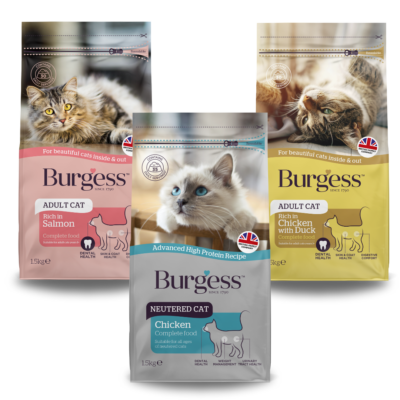
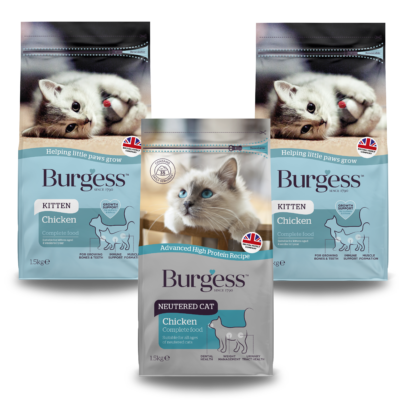
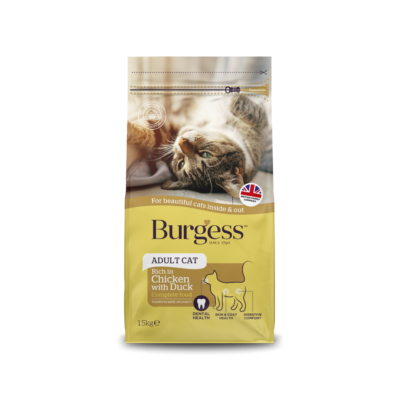
At Burgess Pet Care, all our cat food is made in Yorkshire, using premium ingredients to ensure excellent quality and superior taste to help keep your cat happy and healthy – from kitten, to adult and mature and Burgess Neutered Cat with Chicken – an advanced, high protein, complete food with added L-Carnitine to help maintain a healthy weight.
- Salmon? Duck? Chicken? Let your adult cat pick their favourite flavour with our fussy cat bundle >>
- Our cat diet and nutrition guide is here to help you create a meal plan that's tailored especially for your feline friend.
- How often should you feed your cat? Find out why little and often suits most cats – and the reason why play should be part of your feeding routine.
- Adapting your cat’s diet throughout their life What you choose to feed your cat at different life stages can make all the difference.
With a whole host of *5-STAR REVIEWS*, our customers have told us:
* “I feel like I'm giving her a complete and nourishing meal that she genuinely enjoys eating.” * “My cat is obsessed with the chicken and duck combination – she finishes every bowl.” * “Love the high meat content and lack of artificial fillers, a very healthy food.” * “Her fur is visibly shinier since we switched to this food – clearly good nutrients.” * “Our cats love this cat food, and they are healthy and have lovely, glossy coats.” * “Noticed a definite improvement in my cat's fur texture since switching to this formula. It's much softer.” * “The person I got my cat from recommended this brand, and it's been fantastic, great product.” * “I trust Burgess for providing quality nutrition for my cat. This chicken and duck blend is fantastic.” *
CARE MORE Find out more about caring for your cat from Burgess, the Pet Care Experts.
Is your cat a Burgess cat? Join our Pet Club for exclusive offers and competitions – and expert advice from our in-house vet, Dr Suzanne Moyes.
Blog categories

Dogs

Cats

Rabbits

Guinea pigs