

What’s the best daily diet for degus? What fresh foods are safe to feed? What foods can’t degus eat? How much should you feed and how often? How can you make feeding time more fun? Find all the answers in our feeding your degus Q&A.


Expert approved
Dr Suzanne Moyes MVB, MRCVS
29th May 2026
With their silky, grey-brown fur and long, tufted tail, degus look rather like an oversized gerbil. A close relative of another South American rodent – the chinchilla – wild degus survive on grasses, leaves, twigs, bark, roots and stems. When kept as pets, these endearing small animals need a diet that replicates what they would eat naturally to keep them happy and healthy
“Degus are highly specialised herbivores and need a high-fibre, low-fat diet,” advises Burgess in-house vet Dr Suzanne Moyes. “What’s more, degus can’t digest or metabolise sugar and carbohydrates, and they’re prone to diabetes, so sugary fruits and certain high-sugar vegetables must be avoided.”
In fact, these vivacious vegetarians have very different needs from other small furries – so providing the correct diet that suits their sensitive digestion is essential.
If you’re not sure about the best way to feed your degus, our Q&A can help!
Q: What’s the best daily diet for degus?
A: As degus are closely related to chinchillas, small pet experts agree that choosing a pelleted dry food created especially for these rodents is the best choice. Foods formulated for other small animals, such as rabbits, hamsters, and gerbils, should not be fed to degus, as they won’t meet their nutritional requirements. Avoid muesli mixes, too.
Burgess Pet Care in-house vet, Dr Suzanne Moyes, says: “Degus are renowned for being selective feeders. With muesli-style mixes, they’ll pick out the bits they fancy and leave the rest, which puts them at risk of not getting all the nutrients they need. The way to overcome this is to feed them an all-in-one, pelleted food, which contains all of the nutrients they need in each crunchy mouthful.”
- High-quality chinchilla nuggets are suitable for degus and will provide them with all the essential amino acids, fatty acids, vitamins and minerals they require, including Vitamin C for healthy skin, coat and gums, Vitamin A to maintain healthy eyesight and Vitamin E to maintain a healthy immune system. Feed an egg cup-size portion daily, per degu, half in the morning and half in the evening.
- Nutritious feeding hay should make up a large part of your degus’ daily diet – give each degu a pile the size of their body every day. Feeding hay (not bedding hay) enables their digestive system to function properly. Chomping on hay also helps keep their continuously growing teeth at the correct length and shape.
- Fresh, clean water must always be available – without water, degus become seriously ill. Keep their bottle spotlessly clean and change the water daily. Ensure that your degus can reach and drink from the bottle with ease.
Q: What fresh foods are suitable for degus?
A: Along with a big pile of feeding hay and a portion of nuggets, your degus will also enjoy a small daily handful of fresh greens such as dandelion leaves, broccoli, alfalfa, basil, and parsley. You can also give them a small cube of carrot, celery, pumpkin, sweet potato, or squash as an occasional treat.
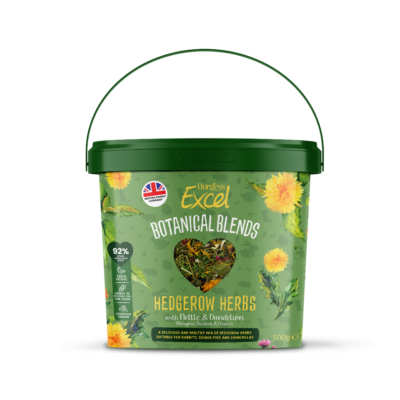
And, as degus naturally eat dry tree and shrub leaves, some Lucious Leaves (a tempting mix of dried dandelion leaves, nettle leaves, red clover and ribwort), and dried Wildflower Forage Mix (a nibbly blend of rose, hibiscus, marigold and cornflower) or Botanical Blends (a selection of dried hedgerow herbs) will also be relished by your degu friends. Mix a handful in with their feeding hay, so they can forage away to their heart’s content, just as they would in the wild.
Q: What foods should be avoided?
A: Because degus can’t digest or metabolise sugar and carbohydrates, they need a low-fat, low-sugar diet. Avoid high-fat foods such as peanuts and sunflower seeds, as well as foods high in sugar, such as fruits.
Q: Do degus need things to chew on?
A: As with all rodents, degus have teeth that grow continuously, so gnawing helps to keep them in good shape. Natural wood branches (safe woods include apple, hazelnut and hawthorn) provide both something to climb on and to chew. Enrichment items such as Coconut Leaf Twists and Banana Leaf Balls wrapped in seagrass string are perfect for shredding and chewing.
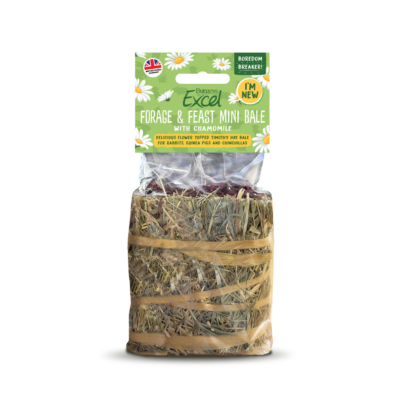
You can also treat your degus to Forage & Feast Mini Bales, which are bite-sized bundles of hay topped with a choice of flavoursome flowers – Cornflower, Rosehip or Marigold, and Forage & Feast Hay Bars, which are perfect for hand feeding and come in three appetising varieties – Marigold, Cornflower or Rose.
Q: How can I make feeding time more fun for my degus?
A: As well as ensuring that your degus get all the nutrition they need, nuggets are also ideal for adding enrichment, making feeding time extra fun for dynamic degus who like to keep busy. In the wild, degus would spend a lot of time searching out food, and you can encourage this foraging behaviour by scattering a few nuggets around your pets’ accommodation. Also try:
- Hiding hay, food pellets and greens in paper bags and cardboard tubes to provide your degu chums with additional foraging challenges.
- Providing some special activity toys suitable for small animals, such as maze boards and treat balls, in which you can hide some yummy nuggets.
- Filling a box with hay, then throw in a few nuggets and watch some delightful degu digging action!
Burgess In-house Vet, Dr Suzanne Moyes, says: “Enrichment is really important as it facilitates natural behaviours such as foraging, digging, chewing and gnawing, which minimises stress-related behaviours and improves quality of life. Providing food and treats in innovative ways is a great way for degu owners to make their pets’ lives more interesting and rewarding by increasing cognitive problem-solving and reducing boredom.”
Q: Why do degus eat some of their droppings?
A: While this behaviour seems rather strange to us humans, it’s actually the natural way that degus get all the nutrients they need. This is how the degu digestion process works:
- Degus need to keep their digestive systems busy with a mix of two kinds of fibre moving through the gut at all times – these are known as digestible fibre and indigestible fibre. This is because they can’t get enough nutrition from fibre when it passes through their gut the first time, so they pass it through a second time.
- Indigestible fibre is moved through their digestive system and excreted as separate, round, hard droppings. This type of fibre keeps the digestive system moving and their appetite stimulated.
- Digestible fibre is moved up into an organ called the caecum, which is like a giant appendix. Good bacteria in the caecum ferment the fibre, making it easy to digest. This emerges in the form of clumps of sticky droppings called caecotrophs.
- Degus then re-eat the caecotrophs directly from their bottom, and the essential nutrients are then absorbed when the digestible fibre passes through for the second time.
So now you know! If your degus are eating their sticky droppings, it’s a sign that everything’s working properly!
WHY CHOOSE BURGESS EXCEL CHINCHILLA NUGGETS FOR YOUR DEGUS?
With a whole host of *5-STAR REVIEWS*, take a look at what our customers have told us:
* “My chinchilla is happy and healthy on this food. It's a reliable brand.” * “The nuggets are great quality, and my chinchilla loves them.” * “My chinchilla is always excited for mealtime with this food. The nuggets are a good size for him to hold and eat. Top product for chinchilla owners.” * “I trust this brand for its small animal nutrition. The chinchilla nuggets are a fantastic complete diet. Great value for the high-quality ingredients.” * “The nuggets are a good, hard texture, which is great for their teeth and constant chewing.” * “My chinchilla never leaves any of this food. It's a complete and balanced meal for him. Highly recommended by my furry friend.” *
CARE MORE
Where do degus come from? When did they first become pets? What do degus like to do? We’ve all the degu details you need to help you become the perfect degu parent >>
LOVE PETS? TRUST BURGESS – WE’RE EXPERTS IN OUR FIELD!
Burgess Pet Care is one of the UK's leading pet food manufacturers for the country’s most popular pets – dogs, cats, rabbits, guinea pigs, chinchillas and degus, hamsters, gerbils and mice, rats and ferrets.
All our high-quality recipes have been formulated by vets, and, with a long tradition of supporting British farmers, we actively source all our ingredients as close to our Yorkshire mill as possible.
*It’s no surprise that 92% of UK vets recommend our Burgess Excel small pets range!*
Join the Burgess Pet Club for exclusive offers, competitions and expert advice from our in-house vet, Dr Suzanne Moyes.
NEED SOME EXPERT DEGU FEEDING TIPS?
If you are at all unsure about the best way of feeding your degus, or have any concerns about specific nutritional requirements, ask your local veterinary practice for advice. You can also call our expert team on 44 (0)0800 413 969 who’ll be happy to help. They’re available 9am-5pm, Monday to Friday. Alternatively, you can use our online form to get in touch.
You may also like to read...
Blog categories

Dogs

Cats

Rabbits

Guinea pigs