

Pet rats may not have a long lifespan, but these highly intelligent animals make delightful companions. Understanding how to care for these clever, curious creatures will enable them to enjoy their happiest, healthiest lives for the longest time possible.

Expert approved
Dr Suzanne Moyes MVB, MRCVS
27th May 2026
While rats may not be everyone’s choice of pet, fans of these super-smart rodents testify that they are unexpectedly rewarding animals to share your life with.
Caron Clayton first bought a rat for her teenage son and admits she was apprehensive: “I viewed them the same way as most people before my son pestered me into getting him one. It was their tails that particularly put me off,” she told BBC News Magazine. “Bubbles soon changed my opinion, and I would now recommend them to anyone as a pet. Bubbles really enjoys interacting with people and is very intelligent. He learned to recognise his name really quickly and has been taught tricks. My favourite time is when he settles on my lap in the evening, and we watch television together.”
How long will my pet rat live for?
If you’re wondering how long rats live for, the answer is around two to three years. However, according to Guinness World Records, the oldest rat ever recorded – Rodney from Oklahoma, USA – reached the ripe old age of seven years and four months! And, as one month of a rat’s life is roughly equivalent to around two and a half human years, that made Rodney an incredible 220 years old!
So, if your pet rats reach the grand old age of three, that’s around 90 in human terms. “Although two years may appear a short time in comparison to other pets, owning rats is still a big responsibility and commitment,” notes the RSPCA.
How can you help pet rats live a healthy, happy life?
To give your pet rats the best chance of being healthy and happy for the longest time possible, caring for them in the correct way is key.
“The best way to ensure your pet rats lead happy and healthy lives is to understand their needs and provide them with everything they need to thrive,” advises Burgess in-house vet Dr Suzanne Moyes. “That means providing them with the correct nutrition, environment, enrichment, companionship and veterinary care. Like most rodents, rats will hide signs of pain or ill health, as, in the wild, this would make them vulnerable. Regular check-ups with a vet specialising in exotic pets are an essential part of their care.”
Follow our top tips to give your ratty chums everything they need to live their absolute best rat lives!
FEEDING YOUR PET RATS
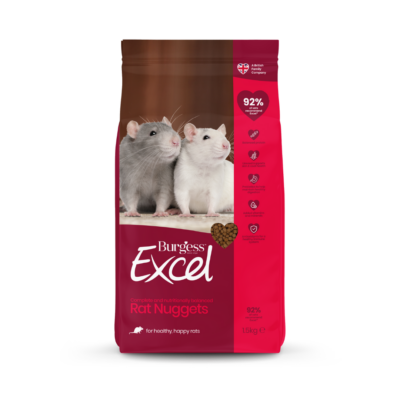
The best way to ensure your rats are getting a healthy and balanced diet is by feeding them high-quality rat nuggets to munch on. “Always feed them food designed specifically for rats, rather than pellets for rabbits, guinea pigs, hamsters or other herbivores – these won’t give rats the nutrients they need,” advises the RSPCA.
Burgess Pet Care in-house vet, Dr Suzanne Moyes, adds: “Rats are renowned for being selective feeders, picking out the bits they fancy and leaving the rest, which puts them at risk of not getting all the nutrients they need. The way to overcome this is to feed them an all-in-one, pelleted food, which contains all of the nutrients they need in every crunchy mouthful.”
The best rat nuggets contain:
- Balanced protein to support healthy growth
- Prebiotics to support healthy digestion
- Linseed to maintain a healthy skin and coat
With rat nuggets forming the foundation of their diet, offering a variety of fresh foods (in small amounts) will provide extra vitamins and minerals – and keep things interesting for your omnivorous rodents. Suitable treats can also be given occasionally.
- Safe veggies and herbs for rats include carrot, white cabbage, broccoli, cauliflower, sweet peppers, cucumber, courgette, cress, peas, chicory, basil, sage, parsley and coriander.
- Rat-friendly fruits include apple, pear, ripe banana, strawberry, peach and melon – but only offer very small amounts as fruit is high in sugar. As a guide, a piece the same size as a rat’s ear is a good-sized portion.
- Occasional treats that are suitable for rats include cooked, lean meat, cooked lentils, beans, peas, chickpeas and hard-boiled egg.
“Don’t panic if you spot your rats eating their freshly deposited droppings – this is a natural behaviour that helps them to absorb all the nutrients and minerals they need to stay healthy,” adds Dr Moyes.
- Foods to avoid include anything sugary or high in fat, such as dairy products.
- Foods that are harmful to rats and should never be given to them include onion, garlic, citrus fruits, walnuts, blue cheese, avocado, rhubarb, grapes, raisins and chocolate.
“Rats are naturally most active at dawn and dusk, so get into a routine of feeding them in the morning and the evening,” advises Dr Moyes. “It’s important to follow the feeding guidelines on the packet and weigh out their daily portions accurately so you don’t give them too much – rats can easily become overweight, which can lead to health issues.”
- Clean, fresh water should be available at all times – without water, rats become seriously ill. Choose good-quality water bottles rather than water bowls, as bits of stray bedding and droppings will end up in bowls, contaminating the water.
TOP TIPS WHEN IT COMES TO RATS
- HOUSING YOUR PET RATS Your rats’ housing should be as big as possible – at least three cubic feet per rat – as they can become stressed if they’re too confined. Their wire cage should feature lots of levels, connected by tunnels, so they can scurry and climb. Nesting boxes should be provided for each rat, as well as a larger enclosed space, so they can sleep together. If you hang ropes up, your rats will love to walk across them. Cardboard boxes and drainpipes will provide them with lots of places to explore and hide away if they want to, and a rat-sized exercise wheel with a solid surface (not wire or mesh) at least 12 inches in diameter will also be welcome. Cover the floor with absorbent material, such as paper-based bedding. Never use wood shavings, sawdust, or straw, as it’s too sharp and may damage your rats’ mouths. Rats like making their own nests and spend lots of time playing with nesting material. Suitable materials are hay, shredded paper, paper strips and paper tissues. Don't use nesting materials that separate into thin strands, such as cotton wool or similar 'fluffy' bedding products, as they can get tangled in them.
- PROVIDING COMPANIONSHIP FOR YOUR PET RATS While your rats will bond with you, these highly social animals also need the company of their own kind. However, if you have a pair, trio or even a rat pack, you’ll need to consider neutering. Animal wellbeing charity Blue Cross advises: “To avoid unwanted babies, the best option is usually a pair or group of the same sex. If your pair or group is mixed, make sure the male is neutered to prevent unwanted litters. Male rats tend to get on very well if they have grown up together. If they start fighting and fall out, talk to your vet about neutering, as this may help.”
- PROVIDING ENRICHMENT FOR YOUR PET RATS In the wild, rats spend a lot of time searching out food, and you can encourage this foraging behaviour by scattering a few rat nuggets around their accommodation and among fresh bedding. Hide some in an old rolled-up sock, paper bag or cardboard tube, or push some into a pinecone for them to extract. Rats will happily dig in trays of chinchilla sand to find hidden favourite food items. Add items they can gnaw on, such as bits of fruitwood branches (such as apple wood) or low-calorie dog biscuits, which not only will keep them happily occupied but will also help their continuously growing teeth stay in good shape, preventing serious dental issues.
Dr Moyes says: “Enrichment is really important as it facilitates natural behaviours such as climbing, tunnelling, foraging, chewing and gnawing. Enrichment is well established as a way of minimising stress-related behaviours and improving quality of life. Providing food and treats in innovative ways is a great way for rat owners to make their pets’ lives more interesting and rewarding by increasing cognitive problem solving and reducing boredom, which is essential for their overall health.”
- EXERCISING YOUR PET RATS These energetic animals require at least one hour of playtime each day outside their cage in a secure, rat-proofed room where they can explore and exhibit their natural behaviours.
- TRAINING YOUR PET RATS These clever creatures thrive on training. The RSPCA says: “Rats are quick learners, highly trainable, very clever, curious and have excellent memories. They need mental stimulation to stop them getting bored, so consider training them. This can help you bond with your rat, as well as keeping them physically and mentally active.”
- HANDLING YOUR PET RATS Unlike many small pets, rats love lots of attention from their human. “When handling your rats, ensure they are alert and aware of your movements. Gently but confidently, place one hand behind their front legs. Once lifted, support the rear end with the other hand, and place the rat into your arms. Never try to pick rats up by their tail – this can result in damage or even loss of the tail,” advises rehoming charity Woodgreen. “Your rats will find it more enjoyable and relaxing to climb and sit on your arms and shoulders rather than being held. Placing your arm out for them to climb on is more relaxing for them than being picked up. If your rat is a little timid, encourage them to walk into a tunnel. Carefully place the tunnel on your lap and allow them to climb onto you in their own time.”
- HEALTHCARE FOR YOUR PET RATS As well as ensuring their accommodation is kept clean and hygienic, checking your rats over every day is a good habit to get into. According to Blue Cross, signs that something’s not right include loss of appetite, lethargy or tiredness, runny nose or eyes, wheezing or sneezing. Weigh your rats regularly too – suddenly putting on or losing weight needs to be investigated by your vet.
“Because small pets such as rats don’t require a yearly vaccination, many are never taken to the vets for check-ups. That’s why it’s really important to give your rats regular health checks yourself,” advises Dr Moyes. “As with all healthcare issues, prevention is better than cure – and spotting problems early can make all the difference to your pets becoming very ill or enjoying a speedy recovery and continuing to enjoy life.”
NEED SOME EXPERT PET RAT FEEDING TIPS?
If you are at all unsure about the best way of feeding your pet rats, or have any concerns about specific nutritional requirements, ask your local veterinary practice for advice. You can also call our expert team on 44 (0)0800 413 969 who’ll be happy to help. They’re available 9am-5pm, Monday to Friday. Alternatively, you can use our online form to get in touch.
SERVE UP ONLY THE VERY BEST DINNER FOR YOUR SMALL PETS!
Our small pets deserve a high-quality diet that’s created just for them. At Burgess, all our food for rats is made at our factory in the heart of Yorkshire, using only ingredients that meet our stringent specifications.
With a long tradition of supporting British farmers, we actively source all our ingredients as close to our mill as possible and have launched many innovations.
*It’s no surprise that 92% of UK vets recommend our Burgess Excel small pets range!*
WE’VE RECEIVED LOTS OF 5-STAR REVIEWS FROM OUR CUSTOMERS, TOO! HERE’S WHAT THEY’VE TOLD US:
* “My rats are healthy and happy on this food. It's a reliable brand.” * “This food is brilliant for ensuring they get all the nutrients they need without selective feeding. They eat every nugget. Excellent quality.” * “My two rats absolutely adore these nuggets. They are a great complete food, and the 1.5kg bag lasts a decent amount of time. Highly recommend for rat owners.” * “My fussy rats never leave any of this food. It's a complete and balanced meal for them. Highly recommended by my furry friends.” * “Of all the food brands my rats have received, Burgess rat pellets are their absolute favourite! They also don't get any health problems with this diet. It is the perfect balance of everything they need, apart from fresh fruit/veg given daily.” * “My rats are always excited for mealtime with this food. The nuggets are a good size and easy for them to hold. Top product for rat owners.” * “I always use this brand for my small animals. The rat nuggets are a fantastic complete diet. Great value for the high-quality ingredients.” *
CARE MORE Find lots of useful advice on caring for all your chinchillas from Burgess, the pet experts. Health, housing, feeding, companionship and rat behaviour. It’s all here >>
Join the Burgess Pet Club for exclusive offers, competitions and expert advice from our in-house vet, Dr Suzanne Moyes.

You may also like to read...
Blog categories

Dogs

Cats

Rabbits

Guinea pigs