

Are Syrian hamsters social? Are they only awake at night? Do they like being handled? What do Syrian hamsters eat? How big a cage does a Syrian hamster need? How long do Syrian hamsters live? How can you tell if a Syrian hamster is healthy and happy? Find out all about Syrian hamster care with our expert guide.

Expert approved
Dr Suzanne Moyes MVB, MRCVS
27th May 2026
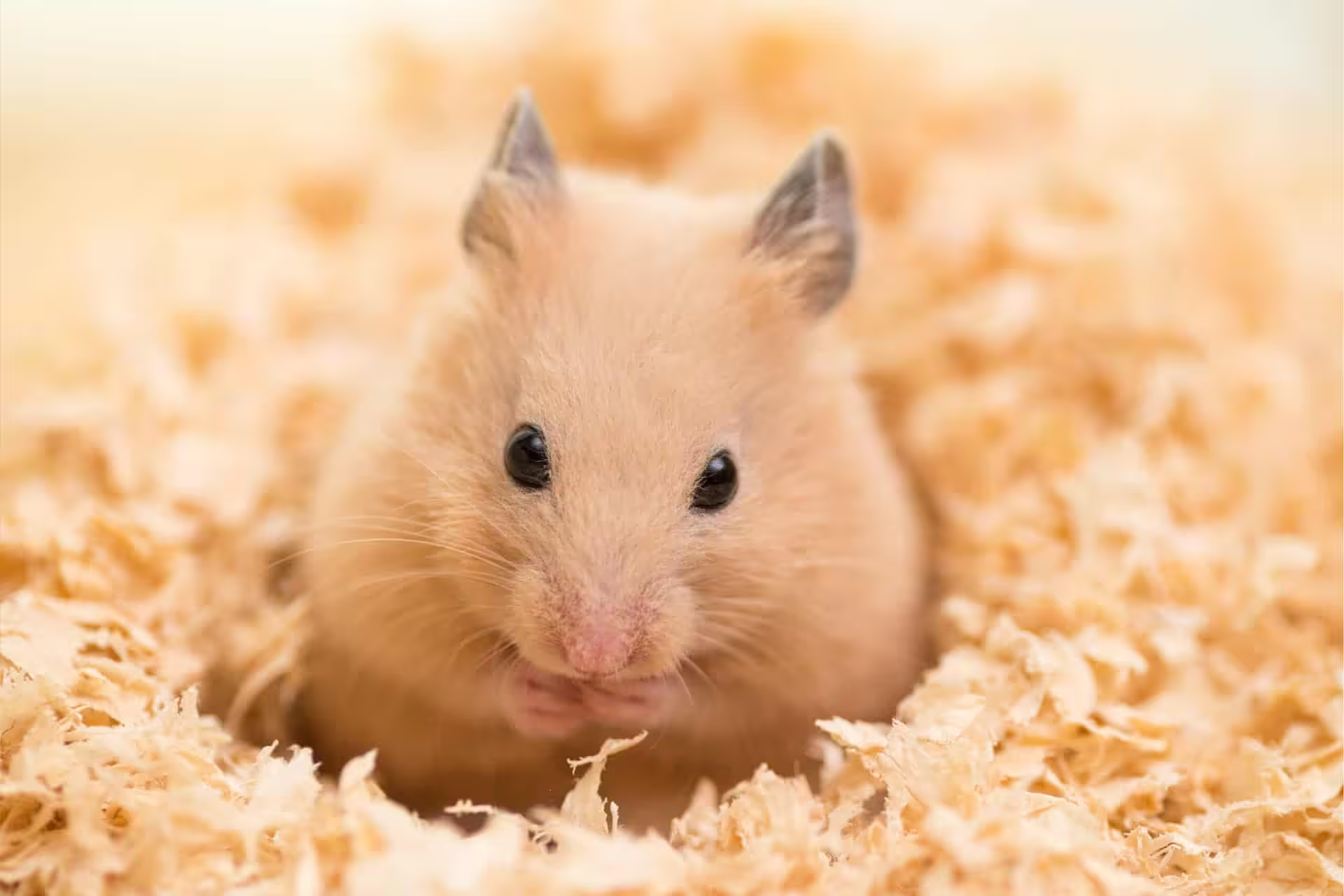
Syrian hamsters are stout little rodents with soft fur, dark, bright eyes and a gentle nature. Thanks to their appealing looks and charming ways, Syrian hamsters are extremely popular pets and, when given the correct care, their characterful personalities will come shining through.
Our Syrian hamster care guide will provide you with all the answers to your Syrian hamster queries so you can help your little hamster pal live their best life:
- Where do Syrian hamsters come from?
- Do Syrian hamsters need a friend for company?
- Are Syrian hamsters only awake at night?
- What do Syrian hamsters eat?
- What sort of home does a Syrian hamster need?
- How often do Syrian hamsters need cleaning out?
- How long do Syrian hamsters live?
- Are Syrian hamsters good pets for children?
- How do you make friends with a Syrian hamster?
- How should you handle a Syrian hamster?
- How can you tell if a Syrian hamster is healthy and happy?
Where do Syrian hamsters come from?
Back in 1930, a zoologist called Israel Aharoni led an expedition in search of hamsters in Aleppo, Syria. He returned with a family of them, and offspring were sent to various universities and institutions, including London Zoo. From the mid-1930s to the mid-1940s, they started to become popular pets in the UK.
Wild hamsters are found throughout much of Europe and Asia and like to live in warm, dry areas, such as the edges of deserts. All hamsters are excellent diggers, constructing burrows with one or more entrances, with galleries connected to chambers for nesting, food storage, and other activities. They carry what they forage for in their specially designed cheek pouches so they can eat it later in the safety of their burrow, away from potential predators – a natural behaviour our pet hamsters retain.
Do Syrian hamsters need a friend for company?
In the wild, adult Syrian hamsters generally live alone in their own burrow, fiercely defending their territory and food resources against other hamsters. As pets, unlike many small animals, Syrian hamsters retain this natural solo-living behaviour and must be housed on their own. However, once they’ve got to know you and feel safe and comfortable around you, they’ll learn to enjoy human company.
Are Syrian hamsters only awake at night?
Wild hamsters come out of their burrows mainly at night or during twilight to avoid predators. Although pet hamsters don’t have predators to worry about, they follow the same chronobiological patterns, meaning they’ll usually be asleep during the day. Keep your Syrian hamster in a room where the lights are not left on, as they’ll be waiting for darkness to venture out and play.
What do Syrian hamsters eat?
The best hamster diet should replicate what they’d eat in their natural environment. Wild hamsters eat grasses, seeds and grain. And although they’re often thought of as herbivores, hamsters are actually omnivores and need protein in their diet to keep them healthy.
To make feeding time more rewarding, scatter their hamster nuggets around the cage to encourage foraging, bury some deep in their bedding to encourage digging behaviour and hide hay, pellets and little bits of fresh food inside paper bags and cardboard tubes. Your Syrian hamster will love hunting out their food!
Your hamster feeding plan should feature:
- Hamster nuggets The ideal healthy hamster food should consist of smooth, small nuggets, designed for little mouths. Added linseed can be beneficial to support a healthy skin and coat, along with a good source of natural protein, such as peas. As a guide, feed around a tablespoon of hamster nuggets a day. It’s best to avoid ‘muesli-style’ hamster food mix varieties as these can encourage selective feeding, where hamsters pick out the bits that are high in sugar and discard the more nutritious elements, leading to an imbalanced diet.
- Feeding hay Your Syrian hamster will benefit from a little top-quality feeding hay to nibble on, which will help keep their continually growing teeth in good shape.
- Water Fresh drinking water should be provided in a sipper bottle, placed at the right height, so your Syrian hamster can drink from it comfortably.
- Fresh food You can also treat your Syrian hamster to a tiny amount of fresh food a couple of times a week. Give fruits and vegetables a thorough wash first and keep portions tiny – a slender slice or compact cube is enough. Veterinary charity PDSA advises that the following vegetables, herbs and fruit are suitable for hamsters: Veg: Carrot, broccoli, cabbage, cauliflower, chicory, spinach, sweet peppers, cucumber, cress and courgette. Fresh herbs: Basil, sage, parsley and coriander. Fruits: Apple, pear, peach and melon.
- Foods to avoid Never feed citrus fruits, rhubarb or grapes to your Syrian hamster.
What sort of home does a Syrian hamster need?
Your Syrian hamster’s home should provide them with an environment that enables them to exhibit all their natural hamster behaviours and be as spacious as possible, so they have lots of different areas to explore.
PDSA advises: “In the wild, hamsters make burrows, climb and walk for miles each day. Most hamster cages sold in shops aren’t big enough to meet a hamster’s most basic needs. We recommend providing them with a much larger space or a homemade enclosure.”
“Avoid accommodation with elaborate tube systems for all hamsters,” adds animal wellbeing charity Blue Cross. “Tube systems do not have enough ventilation and are often too narrow for Syrian hamsters to travel through comfortably.”
When creating a happy hamster home, here are some important things to consider:
- Plenty of space A Syrian hamster should be kept in a large enclosure with a solid, plastic base. It should be at least 100cm x 50cm with a secure lid and doors – hamsters are great escape artists!
- Zoned living A multi-level cage with different platforms will make the most of the available space, giving your hamster more areas to investigate. Your Syrian hamster will set up their own toilet area, nesting area, eating area and playing area, so their hamster housing will need to be big enough to accommodate all of this.
- Digging opportunities In the wild, hamsters construct deep, dark, underground burrows. Your Syrian hamster will appreciate a thick layer of soft hay topped with paper bedding (around 25cm deep) in which they can dig and burrow to their heart’s content.
- A cosy sleeping spot Your Syrian hamster needs a nesting box or shelter to retreat to, keep warm, feel safe and sleep in. This should be big enough for your hamster to store food, make a cup-shaped nest and comfortably move around. Don’t give your hamster any fluffy or fleece bedding. This could get caught in their legs or cause issues if they eat it.
- Toys for enrichment Syrian hamsters need lots of fun items to stop them getting bored, such as cardboard tubes and boxes to crawl through, hide inside and chew, untreated softwood branches and gnawing blocks to help keep their teeth a healthy length, and an exercise wheel. This needs to have a solid surface to run on (avoid slats or bars that could trap your hamster’s legs) and should be at least 30cm in size, so your Syrian hamster can run comfortably. They’ll also appreciate a sand bath – a shallow tray filled with chinchilla sand – your Syrian hamster will enjoy digging in it and rolling in it as a natural way to keep their coat clean.
How often do Syrian hamsters need cleaning out?
Getting into a regular cleaning routine will benefit your Syrian hamster’s wellbeing and happiness.
- Every day, do a quick spot check, throwing away wet or dirty materials, including bedding and uneaten food, as this will quickly become rotten and mouldy.
- Weekly, remove and replace all their litter and bedding materials.
- Once a month, give your hamster’s enclosure a really thorough, deep clean. Place them carefully in a cardboard box or pet carrier with some of their bedding so they can snuggle down and feel safe. Wipe down the whole of their accommodation using pet-friendly, non-toxic cleaning products. Replace with clean bedding, soft, sweet-smelling hay, and fresh water. Make sure housing is dry before returning your hamster. Keep a bit of their old bedding (dry and not soiled) back and put it in with the new bedding so their cage still smells like home. Place all nests, toys, and bowls back in their original positions. Hamsters are creatures of habit and like everything to be in its usual place.
How long do Syrian hamsters live?
Syrian hamsters generally live for two to three years. Like all pets, hamsters benefit from regular check-ups from a vet.
“The best way to ensure your Syrian hamster leads a full, happy and healthy life is to understand their needs and provide them with everything they need to thrive,” advises Burgess in-house vet Dr Suzanne Moyes. “That means providing them with the correct nutrition, environment, and veterinary care. Syrian hamsters are prey animals, so they will hide signs of pain or ill health, as, in the wild, this would make them vulnerable. Regular check-ups with a vet specialising in exotic pets are an essential part of their care.”
Are Syrian hamsters good pets for children?
Larger in size and calmer than dwarf hamsters, Syrian hamsters can be super pets for older, patient children who are interested in understanding their needs. However, the responsibility for any animal’s wellbeing lies with adults. Small animals are often more complex to feed and care for than a cat or dog and require more looking after than a child can offer.
How do you make friends with a Syrian hamster?
Handfeeding is a great way to build a closer bond with your Syrian hamster, helping them to associate you with good things – and to learn to feel safe and confident when you handle them.
However, it will take time and patience – but once your small pet pal is happily accepting a tasty treat from your hand, it’s incredibly rewarding. The key is to take things slowly, so that your Syrian hamster begins to place their trust in you.
- Am I in danger? Small pets are prey animals, which means they think anything approaching is a potential predator – even you. Don’t loom over them (as a predator in the wild might), but crouch down to meet them at their level.
- What’s happening? Keep your approach slow and steady – hamsters can be easily startled and will simply run for cover. Speak to them in a soft, happy voice as you gradually get closer.
- That looks like it could be tasty! Offer some food, so they learn to associate your approach with something good happening. If your hamster won’t come close enough to take food from your hand, lightly toss the food to them whenever they come in your direction. Wait until they come a little closer each time before offering food again, while continuing to talk to them in a soothing voice.
- I think I’ll risk it... If your pet does take the food, sit beside them and continue chatting to them. Then, offer them another treat. If your pet looks comfortable and doesn’t back off, you could try giving them a gentle stroke. Do this every day, and your pet will begin to approach you, creating some magical animal moments.
- On my own terms Every pet is an individual, and it’s essential that they choose to interact with you on their own terms – and it’s that which makes it so rewarding. When your Syrian hamster decides that he or she trusts you enough to want to engage in some hand-feeding time with you, it’s a great result!
How should you handle a Syrian hamster?
Once you’ve made friends with your Syrian hamster, they can slowly learn to enjoy being handled, as long as you do it in a way that they feel comfortable. Rehoming charity Woodgreen shares these top tips:
- Cup your hands under the hamster and gently lift them towards your body. Syrian hamsters can be gently picked up by placing one hand behind their front legs and supporting their rear end with the other. This should only be done once your hamster feels comfortable being picked up regularly using the cupping method.
- For the first few weeks, sit on the floor and allow your hamster to walk over each hand or sit in your lap.
- Always try to place them back in the cage whilst they are still relaxed and happy with the situation, rather than when they become irritable. Otherwise, this will become a learned behaviour of how to get you to leave them alone.
- Once they’re happy with you, you can slowly practice picking them up from your lap and placing them back down again. After one to two weeks of this calm and patient approach, you’ll find your hamster is quite happy to be picked up and handled.
How can you tell if a Syrian hamster is healthy and happy?
If you’re wondering if your hamster is happy, check out their body language. A yawning hamster is pleasantly sleepy and comfortable. Relaxed grooming, stretching, burrowing in the bedding, collecting food, and lively acrobatics in the cage are all signs that life is good for your hamster pal. Leaping into the air signals high spirits and reveals he or she is in a very good mood indeed!
Why do hamsters carry food in their pouches? Are hamsters friendly? How intelligent are hamsters? Will my hamster bite me? We answer some popular hamster queries >>
NEED SOME EXPERT HAMSTER FEEDING TIPS?
If you are at all unsure about the best way of feeding your hamster, or have any concerns about specific nutritional requirements, ask your local veterinary practice for advice. You can also call our expert team on 44 (0)0800 413 969 who’ll be happy to help. They’re available 9am-5pm, Monday to Friday. Alternatively, you can use our online form to get in touch.
True or false? How well will you score in our fun hamster quiz? >>
SERVE UP ONLY THE VERY BEST DINNER FOR YOUR SMALL PETS!
Our small pets deserve a high-quality diet that’s created just for them. At Burgess, all our pet foods are made at our factory in the heart of Yorkshire, using only ingredients that meet our stringent specifications.
With a long tradition of supporting British farmers, we actively source all our ingredients as close to our mill as possible and have launched many innovations.
*It’s no surprise that 92% of UK vets recommend our Burgess Excel small pets range!*
Our customers are happy too! This is what they’ve told us:
* “Burgess brand foods for small pets – makes quality products with the correct nutrients for your pet.” * “Good food, my boy seems to really enjoy it.” * “Our hammie loves this!! This is our hammie's favourite food.” * “Queen Boudecea, my hamster, loves it – it doesn't take her long to empty her bowl and look for more. I have tried other food, but this is the one she seems to like.” * “Since buying my hamsters, they have been on this food as recommended. They love it, easy to clear up, with no mess with it. They even take it out of your hands, which is brill for the little ones.” * “Really good – I like it because my hamster loves it!” *
CARE MORE Find lots of useful advice on caring for your hamster from Burgess, the pet experts. Health, housing, feeding and hamster behaviour. It’s all here >> Join the Burgess Pet Club for exclusive offers, competitions and expert advice from our in-house vet, Dr Suzanne Moyes.


Blog categories

Dogs

Cats

Rabbits

Guinea pigs