

Arthritis in dogs is a common problem – and it doesn’t just affect older canines. The causes can be various, and symptoms of arthritis often develop slowly and aren’t always easy to spot. Find out how to detect signs of arthritis in dogs, and what you can do to make life a little easier for your canine chum.

Expert approved
Dr Suzanne Moyes MVB, MRCVS
10th March 2026
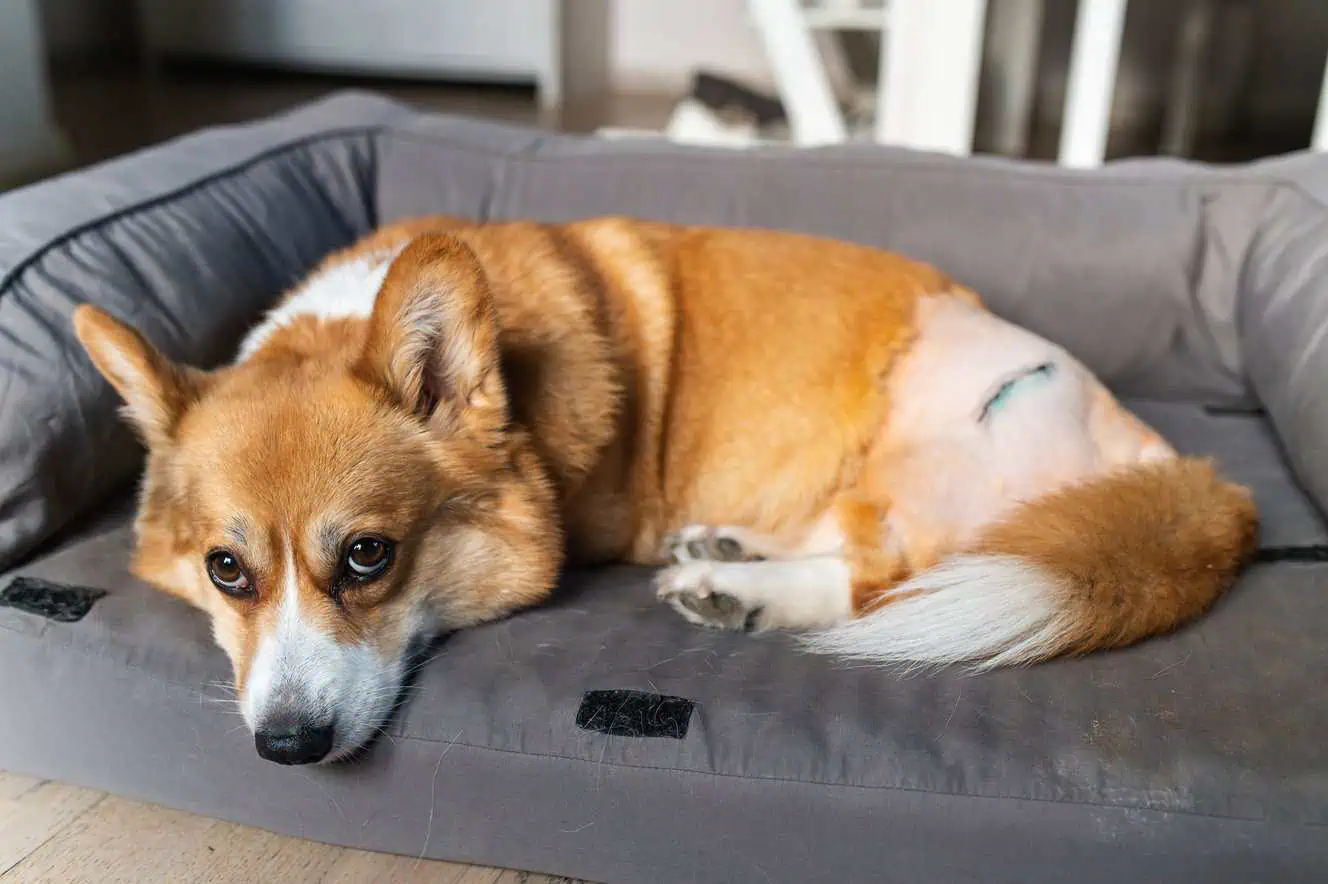
Just like us, our dogs develop aches and pains as they age, which often signal that they are developing arthritis – a condition that causes inflammation in the joints, making movement painful and difficult. Thankfully, if the signs of arthritis are spotted early, there are plenty of things you can do to help make life easier for your canine companion.
Keep scrolling to find answers to these common questions about arthritis:
- What is arthritis in dogs?
- How does arthritis in dogs develop?
- Does arthritis only affect older dogs?
- How do you identify arthritis in dogs’ symptoms?
- What treatments are available for dogs with arthritis?
- What can I do to help my dog?
WHAT IS ARTHRITIS IN DOGS?
“Arthritis (osteoarthritis) is a condition that affects joints and causes them to become swollen and painful,” explains veterinary charity PDSA. “Bones in a healthy joint have a smooth surface, which allows them to glide past each other when moving around. A joint with arthritis has an uneven and worn surface, which means that instead of gliding, the bone surfaces rub against each other, causing swelling and pain. Over time, arthritic joints become gradually thickened and stiff because they start to produce new bone that isn’t needed. The extra bone causes more pain when your dog moves around.”
Feeding your dog with specially formulated mature dog food can help to ease the effects of ageing >>
HOW DOES ARTHRITIS IN DOGS DEVELOP?
There are a variety of things that can lead to arthritis developing in dogs – from ageing and genetics to lifestyle.
“Arthritis in pets can stem from various factors,” notes the University of Bristol’s Langford Veterinary Hospital. “The first is general wear and tear, which can be normal over the course of your pet’s lifetime, especially as they move into their senior years. Activities like repeated ball throwing or high-impact exercises can accelerate this wear and tear. Additionally, injuries can pave the way for arthritis. Lifestyle choices, including weight management and exercise also play a part in the likelihood of a pet developing arthritis, as well as genetics.”
DOES ARTHRITIS ONLY AFFECT OLDER DOGS?
While it’s often believed that arthritis only affects senior canines, experts advise that it can affect young dogs, too, with certain breeds being particularly susceptible.
“Arthritis can affect dogs of any age, from very young to old, and susceptibility is related to genetics and/or acquired factors such as obesity, joint trauma or infection, musculoskeletal injury or a combination of any of these factors,” says Canine Arthritis Management, a vet-led information service.
“Larger breeds, such as Labradors or German Shepherds, are more susceptible to arthritis than smaller ones,” adds insurer Petplan. “A common cause of early-onset arthritis in bigger dogs is elbow dysplasia (symptoms often begin between 5-18 months old) or hip dysplasia (where one or both hip joints develop abnormally while a puppy is growing), which occurs when these joints haven’t formed properly.”
“Unfortunately, some breeds of dog are born with an increased risk of developing arthritis,” says PDSA. These include Labradors (hips and elbows), Springer Spaniels (hips and elbows), German Shepherds (spine, hips, elbows), Golden Retrievers (hips), Rottweilers (hips and elbows), and Bernese Mountain Dogs (hips and elbows).
Another factor to consider is the age at which your dog is neutered. “Neutering before the growth plates have closed may increase the risk of joint diseases in some large and giant breeds,” advises educational organisation Arthritis AWARE. “Talk to your vet about the optimal timing for neutering your dog to minimise any potential risks.”
HOW DO YOU IDENTIFY ARTHRITIS IN DOGS’ SYMPTOMS?
“Arthritis is a progressive disease with symptoms that gradually develop and worsen over time,” says animal welfare charity Blue Cross. “In the early stages, you may notice your dog starting to slow down. They may be reluctant to play, go up the stairs or be less active out on walks.”
PDSA outlines these common symptoms of arthritis to look out for:
- Stiffness (especially after rest or after walks)
- Limping/lameness
- Narrowing of the hips and back end (weak muscles in the back legs)
- Slowing down on walks
- Being quiet, grumpy or sleeping more
- Low energy (lethargy)
- Saliva-stained fur around painful joints
- Reluctance to jump or climb stairs
- Enlarged or swollen joints
Arthritis AWARE adds: “Dogs are experts at hiding their pain, and it can be challenging to recognise the subtle early signs of arthritis. Some dogs may develop a limp when their joints hurt, while others may adjust their movements to minimise their pain so they can keep up with you on walks. They might hesitate before jumping onto furniture or into the car, or change the way they walk, run, sit, or stand to continue with their daily activities.”
Do you recognise any of these behaviours in your dog? Arthritis AWARE advises that these are tell-tale signs that your dog could have arthritis:
- The 'spinal sway': also known as the 'butt wiggle’ – If your dog is avoiding bending their hips, they may display a slight sway or wiggle in their hindquarters. This is a clear indicator that their hips are painful.
- The 'bunny hop': taking the weight off inflamed hips – When your dog has painful, inflamed hips, they may opt for a hopping motion when climbing stairs, maintaining their usual speed. By doing so, they lighten the load on their hips, reducing the pain.
- The one-sided 'sloppy sit': a sign of knee pain – If your dog extends one of their back legs while sitting, it may be because they are reluctant to bend their knee. This is often an indication of knee pain, but may also be a sign of hock or back pain.
- The 'small dog skip': repositioning a dislocated kneecap –If you notice your dog intermittently lifting and repositioning one of their hind legs, or taking a few hopping strides every now and then, they might be trying to correct a frequently dislocating kneecap.
- The 'duck feet' pose: indicating elbow pain – Watch out for your dog's front feet when they are sitting down. If their feet turn outwards and their elbows are tucked in, it could be a sign of elbow pain.
- The 'head bob': taking weight off a painful front leg – When your dog is experiencing pain in their front leg, they may throw their head up slightly as they walk, to reduce the pressure on the affected leg.
WHAT TREATMENTS ARE AVAILABLE FOR DOGS WITH ARTHRITIS?
“While arthritis caused by wear and tear can’t be reversed, there’s a lot that can be done to ease the symptoms and slow down its progress,” advises Petplan. “Pain relief is important, and there are various options, including analgesics, which are well tolerated, or anti-inflammatory drugs.”
Supplements are also available, which aim to reduce joint pain. “There are many joint supplements of varying quality on the market. Your vet will be able to advise on a suitable product,” says PDSA. “Joint supplements aren’t a replacement for medications, and don't work for all dogs.”
There is also a range of canine therapy treatments, which can really make a difference to your dog’s quality of life.
“You may also want to consider other therapies for arthritis, such as physiotherapy, hydrotherapy or acupuncture to relieve stiffness and increase your dog’s range of movement,” adds Petplan. “Modern high-tech treatments include therapeutic laser therapy, which can help reduce inflammation in tendons and ligaments and improve stiffness, or pulsed electromagnetic field therapy (PEMF), which is getting more popular in veterinary medicine after originally being used to treat people. Owners are often surprised at the change in demeanour once their pet has been treated for arthritis. Your vet will be able to help you come up with a treatment plan tailored to your individual pet’s needs.”
WHAT CAN I DO TO HELP MY DOG?
From keeping your dog slim and feeding them an age-appropriate food throughout their life, to adapting your exercise routine and making a few adjustments around your home – such as supplying supportive memory-foam beds and access ramps – there are lots of things you can do which will have a positive impact on your dog’s health and wellbeing.
“As a responsible dog owner, there are steps you can take to minimise the risk of arthritis and support your dog's joint health,” advises Arthritis AWARE. “Prevention begins early, starting with maintaining your puppy's healthy weight and promoting a lean physique. Feeding them an age-appropriate, nutrient-balanced diet is crucial for the development and maintenance of healthy joints. Your vet can advise you on the ideal food and portion size for your dog. Additionally, providing consistent low-impact exercise tailored to your dog's breed, age, and fitness level is essential for supporting healthy joints.”
These expert tips can make a big difference:
- Ensure your dog is a healthy weight – “Being overweight puts extra strain on painful joints, so making sure your dog is a healthy weight should be the number one priority,” urges Petplan. “Your vet may recommend putting your dog on a diet to help them shed excess pounds and minimise further joint damage.”
- Choose food specially created for senior dogs – “Dogs are classed as ‘seniors’ when they’re around seven or eight years old, although this depends on their breed. When they reach this stage of their life, dogs can benefit from a specially formulated food for older dogs, with ingredients that help ease the effects that ageing can bring,” advises Burgess Pet Care’s in-house vet Dr Suzanne Moyes. “The best senior dog food is carefully formulated with all the essential nutrients an older dog needs, such as added glucosamine, which supports ageing joints, helping your dog stay mobile.”
- Keep your dog moving – “Unless your vet advises otherwise, encourage your dog to get up and move around throughout the day. Lying down for hours can cause joints to become stiff, a little bit of movement every now and then can help,” recommends PDSA.
- Adapt your exercise regime – “Unless your vet advises otherwise, make sure your dog has regular short walks each day,” says PDSA. “Allow your dog to walk and run a little, but don’t let them jump, skid, chase balls, or run on uneven ground.” Blue Cross adds: “Stick to firm flat terrain and low-impact exercise such as walking or gentle trotting. Swimming can also be a great low-impact exercise if your dog enjoys it.”
- Make some adaptations to your home – “Providing a soft, comfortable bed will help to take pressure off your dog’s joints when they are resting,” advises Blue Cross. “You should support them if they need to climb stairs, get on and off the sofa or beds, or into the car – using a ramp where possible can be a big help.” PDSA adds: “Dogs with arthritis have weak muscles, which means they are prone to slipping and struggle to get up. Slipping can cause further injury. Use rugs, carpets or anti-slip mats to make floors around the house less slippy.” “Through adapting your dog’s environment, you will not only improve their physical comfort levels and reduce the risk of injury, you will likely slow the progression of the disease, and positively influence their emotional state through reducing stress and anxiety,” notes Canine Arthritis, which has lots of practical tips on its website.
- Keep your dog warm – “Heat soothes painful joints – a heat pad under your dog’s bed may give them extra comfort, especially on cold days,” says PDSA. “Always dry your dog after wet walks. You can warm individual joints by using a hot water bottle wrapped in a blanket or towel, but never leave your dog alone with a hot water bottle.”
Arthritis AWARE adds: “By recognising the signs and taking action, you can make a positive impact on your dog’s quality of life.”
When the time comes to move your dog to senior dog food, you want to be sure you’re making the best choice for your canine chum. Discover Burgess Pet Care’s full range of high-quality dog food, carefully crafted for happy, healthy dogs of all ages!
PREMIUM DOG FOOD FOR SENIOR DOGS WITHOUT THE PREMIUM PRICE!
Feeding your senior dog with a specially formulated dog food for older dogs can help to ease the effects of ageing.
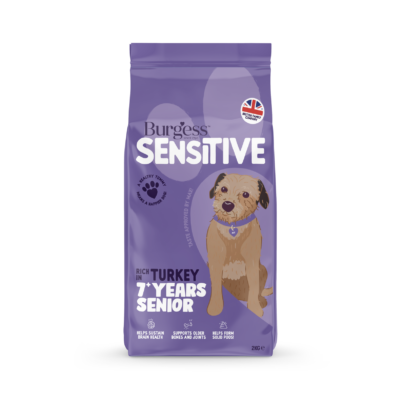
Why choose Burgess Sensitive Senior? Suitable for all breeds from 7+ years, our unique, nutritionally balanced recipe for senior dogs with sensitive tummies includes:
- High-quality protein to support healthy muscles
- Calcium and minerals to support older bones and teeth
- Glucosamine for joint mobility. This is a naturally occurring chemical that plays a key role in building cartilage – the tough connective tissue that cushions the joints
- Essential vitamins to sustain brain health and support skin health and a glossy coat
- Antioxidants to support the immune system
- Prebiotics to support good bacteria in the gut
- Yucca, a traditional medicinal plant that helps make poos less smelly
- Highly digestible ingredients to support digestive health and help form solid poos
- No artificial flavours, colours or added preservatives
BURGESS SPECIAL BUYS Order Burgess Sensitive Senior online today and save 15% with Subscribe & Save!
GOOD TO KNOW
- COMPLETE NUTRITION All of our senior dog food, such as the classic Burgess Supadog Mature Dog with Chicken and Burgess Sensitive Senior – a senior dog food for sensitive stomachs – is a complete food. This means it contains all the nutrients an older dog needs, in the correct balance.
- PORTION CONTROL With dry food, it’s easy to measure out the right-sized portion to help your dog maintain a healthy weight.
- HEALTHY AND SAFE The thorough cooking process ensures that any harmful bacteria, such as salmonella, and viruses are destroyed, and the dry food stays fresh inside the pack.
- TEETH-FRIENDLY Dry dog food has the added benefit of exercising your dog’s chewing muscles and provides a mild cleaning effect on the teeth.
- MADE IN BRITAIN Crafted at Burgess Pet Care’s own factory in the heart of Yorkshire, Burgess Dog Food contains high-quality ingredients that meet stringent specifications, locally sourced wherever possible to support British farmers.
With a whole host of *5 STAR REVIEWS*, our customers have told us:
* “The dogs enjoy it and are doing well.” * “My two dogs enjoy the taste of the food. They seem happy and have more energy and bounce. Their coats are glossy and sleek. The end products are easier to pick up. After trying lots of other foods – I'm impressed.” * “Two dogs, both about 12, enjoy the food and the health benefits.” * “Our senior dog has been enjoying this food for the last couple of years.” * “Our 12-year-old Labrador really loves this food.” * “It’s ideal for the older dog.” * “We’ve used Burgess dog products for years, and they really are the best.” *
NEED MORE ADVICE?
If you’re at all unsure about the best way of feeding your dog or have any concerns about specific nutritional requirements, ask your local veterinary practice for advice. You can also call our expert team, available 9am-5pm, Monday to Friday, on +44 (0)1405 862241 who’ll be happy to help. Alternatively, use our online contact form to get in touch.
CARE MORE Find lots of useful advice on caring for your dog from Burgess, the pet experts.
Is your dog a Burgess dog? Join the Burgess Pet Club for exclusive offers, competitions and expert advice from our in-house vet, Dr Suzanne Moyes.
You may also like to read...
Blog categories

Dogs

Cats

Rabbits

Guinea pigs