

Are Labradoodles good family dogs? How much exercise do Labradoodles need? Do Labradoodles need lots of grooming? Are Labradoodles hypoallergenic? How big can Labradoodles get? How well do Labradoodles handle being left home alone? We have all the answers to your Labradoodle questions!

Expert approved
Dr Suzanne Moyes MVB, MRCVS
29th May 2026
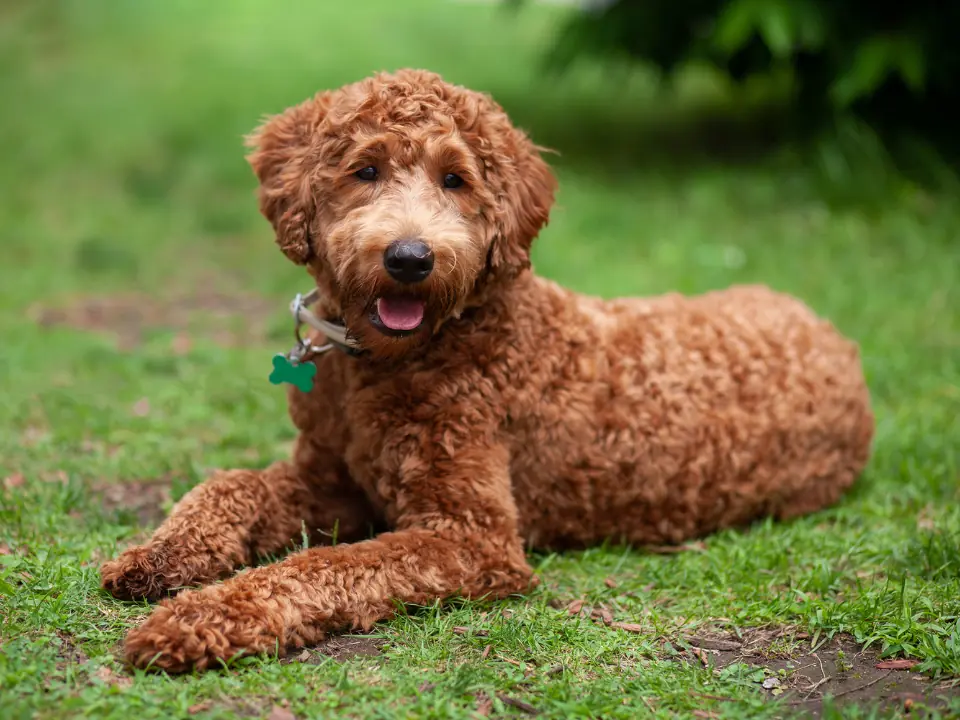
A large, lolloping, fun-loving dog, the Labradoodle is a cross between the universally popular Labrador and sociable, non-shedding Poodle. And all sorts of people – from owners to ‘doodle’ experts – have plenty of praise for this curly-coated crossbreed.
“The Labradoodle temperament is, without doubt, as good as it gets in the dog world,” enthuses Your Dog. “Variously described as confident, clever, loving and lovable, vivacious, loyal, affectionate, joyful, sociable, friendly, comical, intuitive, totally non-aggressive and devoted, they clearly have everything going for them!”
“The Labrador Retriever is known to be a tolerant, fun-loving, active breed. And the same can be said for the Standard Poodle, which is typically outgoing. This mix results in a well-balanced, family pet,” adds rehoming charity Woodgreen’s Dog Behaviour and Training Specialist, Sue Ketland.
“They really are the most fantastic, versatile dogs,” reports Labradoodle devotee Kate Singer in Countrylife. “I would absolutely recommend them, even to someone who has never owned a dog before. They’re so amenable and friendly.”
What’s the best food for a Labradoodle puppy? >>
Where do Labradoodles come from?
This charming crossbreed originated in Australia. “The first Labradoodles were bred in 1989 when a guy named Wally Conron – who worked as breeding and puppy manager for the Royal Guide Dogs Association in Victoria – came to hear of a blind woman who was in desperate need of a guide dog that wouldn't trigger her husband's allergies,” explains rescue charity the Doodle Trust. “Conron came up with the idea of crossing one of their best Labrador bitches with a Standard Poodle.”
Are Labradoodles hypoallergenic?
With their curly, low-shedding coats that come in varying shades of cream, chocolate, and black, Labradoodles are often hyped as hypoallergenic. However, there’s no guarantee that someone with pet allergies won’t suffer a reaction to these dogs.
The Doodle Trust says: “UK Labradoodles coats are very unpredictable, with many shedding to varying degrees and are rarely hypoallergenic. They can be anything from wiry to soft, straight, wavy, or curly. They can shed a little, a lot, or not at all.”
Insurer Petplan advises: “Bred to be hypoallergenic, Labradoodles may be a good pet for someone with allergies, as they shed less than other dogs.”
How big can Labradoodles get?
Depending on the breed mix, Labradoodles have quite a varied size range.
“Standard Labradoodles tend to be big dogs – 23-29 inches to the shoulder and weighing anything from 19 to 40+kg – and take up to 18 months to achieve their full growth. Miniatures (14-22 inches to the shoulder and 12 to 22+kg in weight) average around 18 inches in height,” states the Doodle Trust.
“If you buy from a breeder, it’s essential that you ask about the size of the Poodle parent – so you know what to expect!” advises Sue Ketland. “Poodles come in three sizes: Toy, Miniature, and Standard. A Labradoodle can be a cross between the two breeds, a combination of two Labradoodles or a mix of Labradoodle and one of the parent breeds. Their size and weight vary a lot, but one thing they all share in common is their adorable teddy bear looks!”
What’s the best food for Labradoodles? >>
Understanding what makes your Labradoodle tick will help you give them everything they need to love life!
Read on to discover more about:
- LABRADOODLE PERSONALITY PROFILE
- IS MY HOME SUITABLE FOR A LABRADOODLE?
- HOW MUCH EXERCISE DOES A LABRADOODLE NEED?
- WHAT SHOULD I FEED A LABRADOODLE?
- HOW MUCH GROOMING DOES A LABRADOODLE NEED?
- WHAT’S THE BEST WAY TO TRAIN A LABRADOODLE?
- GETTING A LABRADOODLE
LABRADOODLE PERSONALITY PROFILE
If you want an active, clever dog that loves to play, will accompany you on all your adventures and wants to make friends with everyone, then a Labradoodle could be your canine of choice.
“Big in size and personality, the Labradoodle needs a lot from its human to thrive – but you’ll get so much back,” says Sue Ketland. “This is a smart dog that enjoys active walks and having lots of fun, without being overly demanding. There’s a goofy side to their personality that will keep you entertained, too!”
Petplan likens the Labradoodle’s characteristics to those of a small child: “Playful, busy, eager to please and curious about the world around them,” recommending them as a good fit for confident first-time owners or families with some dog experience.
Sue Ketland describes them as born entertainers: “They’re also very social dogs, so they need to be socialised well to ensure they have good manners around people. This means not jumping or barking in excitement too much. Like all dogs, Labradoodles need your time, care, and attention to live their best life.”
“Labradoodles are easy-going, adaptable dogs that will suit most lifestyles, but they are big, energetic dogs who need mental and physical stimulation to stop them getting bored,” adds Petplan. “Labradoodles are very playful and can remain puppy-like well into their senior years.”
And, with a pretty laid-back approach to life, a happy Labradoodle will be a loving and loyal companion, devoted to their family.
“Whilst they’re not exactly guard dog material, they’ll let you know when someone knocks on your door. Just don’t expect intruders to be scared away,” notes Sue Ketland. “They’re also partial to a good snuggle on the sofa, or even on your bed – if allowed! These dogs show their affectionate nature by following you around, nuzzling or leaning on you for strokes.”
Crate training a Labradoodle puppy – make it their special place >>
While each breed has certain identifiable traits, it’s important to remember that every dog is unique. Dogs Trust advises: “Just like you, every dog is an individual with their own personality and prior experiences. As dogs grow from puppies, they learn all about the world. They develop their own likes and dislikes and learn to respond to situations in different ways. For example, some dogs might like meeting other dogs, and some may not. Some might like new experiences, and others may need to go slowly.”
Want just YOUR dog to come when you call them? Choose their name wisely! >>
IS MY HOME SUITABLE FOR A LABRADOODLE?
To create a perfect canine/human partnership, it’s vital to think about what kind of energy and temperament you’d like your four-pawed friend to have so you’re a good match for each other – and that you can provide a suitable environment. Labradoodles are a good fit for active families with older children, where someone is around most of the time, and there’s a secure garden to play in.
“Labradoodles need plenty of outside space to stretch their legs, ideally a well-fenced, secure garden,” says Petplan. “High energy, these active dogs are best suited to families who can take them for long, interesting walks of up to an hour a day.”
“A good-sized garden is great for play, as well as daily access to open green spaces,” adds Sue Ketland. “It’s vital they get the opportunity to run around and have some fun!”
And while they’re a low-shedding breed, their curly coat hangs on to whatever they’ve been investigating outdoors. “Most Doodles love water and can be mud magnets, bringing in an enormous amount of dirt into your home. They are certainly not a breed for the house proud,” notes the Doodle Trust.
Labradoodles don’t like to be left home alone
Be aware that these people-loving dogs will pine if left alone for big chunks of the day and can get up to mischief if they’re bored.
“Labradoodles do not like being left on their own for any length of time, and crave contact with their 'family',” says Your Dog. “Labradoodles can tolerate being alone for short periods but can suffer from separation anxiety,” adds Petplan. “If you do have to leave your Labradoodle alone for a few hours, make sure they have plenty of toys and games to keep them occupied and consider having someone check in on them.”
“They want nothing more than to please their people, but if left on their own for long periods, these intelligent dogs tend to find their own entertainment. If you are out at work all day, these are not the dogs for you,” advises the Doodle Trust.
Labradoodles, children and other pets can get along well
While a bit on the boisterous side for very small children, older kids will find Labradoodles to be great playmates. “They make wonderful companions for slightly older children who have the stamina to keep up with them!” says Sue Ketland. “Whilst they’re probably too strong for children to handle on a lead, running and playing in fields with them is fine – and great fun!”
“Dogs can find children very exciting, and your children will need to be taught how to behave around dogs so that accidents are not caused by the dog becoming unruly and overstimulated,” advises the Doodle Trust.
Be aware that with Labradoodles, there could be an issue with children’s toys! Sue Ketland adds: “Both the Labrador and the Standard Poodle have gundog (hunting) roots, so they may steal soft toys if given half a chance. Labradors are prone to chewing, which means valuable toys need to be kept out of reach.”
The family dog – making it work for pets and children >>
Petplan states that Labradoodles are suitable for households with other pets, recommending: “It’s best to introduce your Labradoodle to your cat carefully and from an early age, to make sure both animals are happy in each other’s company.”
Can cats and dogs be friends? >>
Meeting your Labradoodle’s needs will make for a contented dog
If you’re prepared to commit to regular training and thinking up lots of games to entertain your Labradoodle, you’ll have a very happy, contented dog. “They can easily become bored and must have sustained, structured training, to which they will respond with an eagerness to please,” says Your Dog.
“They love to use their noses for sniffing and finding treats, along with chasing and retrieving toys,” notes Sue Ketland. “The Standard Poodle and the Labrador Retriever have gundog (hunting) roots, so it’s in these dogs’ nature to use their nose and have things in their mouth.”
Which breed of dog is the right fit for you and the place that you live? >>
HOW MUCH EXERCISE DOES A LABRADOODLE NEED?
Both Labradors and Poodles are high-energy dogs who need plenty of exercise, so it’s no surprise that Labradoodles are often described as big bundles of energy. If you take on a Labradoodle, you’ll need to enjoy taking long walks every day, whatever the weather!
“They need at least 90 minutes of exercise a day,” advises Sue Ketland. “This can be divided into two short walks, but daily off-lead exercise is also a must. Both of the parent breeds are excellent swimmers, which is a great form of exercise.”
How much exercise do different dog breeds need? >>
WHAT SHOULD I FEED A LABRADOODLE?
While Labradors are renowned for loving their food, Poodles can be on the fussy side, which makes for an interesting appetite combination – although experts agree that choosing high-quality food and monitoring food portions is the best way to keep your Labradoodle in great shape.
“Your Labradoodle may not be fussy, but it is still important to feed them a high-quality diet that meets all of their nutritional requirements,” recommends Petplan, stressing that it’s essential to keep a close eye on your Labradoodle’s weight by using portion control and limiting snacks.
Burgess in-house vet, Dr Suzanne Moyes MVB MRCVS, who oversees recipe development and product production, advises: “When choosing food for Labradoodles, bear in mind that the optimum diet for your dog should supply the correct number of calories and balance of nutrients for their life stage and lifestyle. This means calculating the nutrient content and dietary components such as protein, fat, carbohydrate, vitamins and minerals required. All Burgess Dog Food is a complete food. This means, whatever variety you choose for your Labradoodle, it will contain all the nutrients they need in the correct balance.”
The benefits of feeding a diet specially developed for dogs who suffer from allergies
Labradoodles can be prone to allergies, so choosing a food that’s specially designed for dogs with sensitivities could be beneficial.
“All dogs can develop allergies, and Labradoodles are no exception,” advises Petplan. These can be contact allergies (a result of your dog coming into contact with an allergen, such as a specific substance or fabric), food allergies (caused by something in their diet) or environmental allergies (a reaction to airborne allergens, such as pollens from grasses, weeds and trees).
Dr Moyes adds: “Dogs with delicate digestions or who suffer from allergies need sensitive dog food that’s made without ingredients known to cause upset tummies and skin issues. These ingredients can include beef, eggs, dairy, wheat, maize, and soya. For many canines with allergies, switching to a sensitive or hypoallergenic variety, depending on what your vet recommends, can make a world of difference to them.”
Choose a diet tailored to your dog’s life stage
Your Labradoodle will also benefit from feeding a variety of food that’s designed to meet their nutritional requirements throughout their life. Puppies need extra energy and other nutrients to support rapid growth. For adult dogs, providing a nutritionally balanced, complete diet will help keep them in tip-top condition during the prime of their life. Many older dogs, including Labradoodles, develop specific conditions, such as arthritis – some of which can be eased by feeding a diet designed just for them.
Labradoodle feeding tips
- Split your Labradoodle’s daily allowance into two meals and try to feed your dog at the same time every day, as canines like routine.
- Measure out precise portion sizes. Recommended feeding amounts can be found on dog food packaging, but always ask your vet if you’re not sure.
- Giving your dog a little more than they need means they could become overweight. If you don’t feed enough, your dog will not get all the nutrients they need and will become underweight.
- Remember to leave a gap after eating and before exercising. This is particularly important with Labradoodles as they can be at risk of bloat – an extremely serious condition that happens when a dog’s stomach expands and then twists around itself.
- If you give your dog the occasional treat or use treats for training, remember to take this into account and reduce their daily allowance. Treats shouldn’t make up more than 10% of their daily calorie intake, as this can unbalance their diet.
Human food that you should never give to dogs >>
HOW MUCH GROOMING DOES A LABRADOODLE NEED?
While you may not need to contend with cleaning up clumps of dog hair around your home, that gorgeous coat your Labradoodle sports will require time and money to keep it looking its best.
“Whatever the parentage of your Labradoodle, they’ll need lots of time spent on their coats, which can be curly, wavy, fleecy, or straight. This crossbreed isn’t a heavy shedder, but daily grooming is still important,” advises Sue Ketland. “Their curly coat will still need maintenance every day to prevent knots. You’ll need to allow around 30 minutes for grooming every day. It’s also advisable to visit a professional groomer every six to eight weeks for a proper pamper, including a bath, groom, trim, ear clean and nail clipping. Keeping your dog’s coat looking fabulous is a cost you’ll need to consider.”
And, while this is a dog that loves to get wet and muddy, Petplan recommends only bathing them when they are visibly dirty or smelly: “Bathing too frequently could dry out their skin and cause them to become itchy.”
Getting into a regular grooming routine is a good way to check for lumps, bumps and parasites. Petplan adds: “Brush your Labradoodle’s teeth as often as possible to prevent gum disease and associated issues.”
WHAT’S THE BEST WAY TO TRAIN A LABRADOODLE?
When it comes to training any dog, it’s all about creating a positive learning experience, so they’re keen to learn and grow in confidence. And, when it comes to Labradoodles, you’ll have a bright, eager-to-please pupil who’s always up for learning a new trick or two.
“Poodles are one of the brightest dog breeds. The Labrador Retriever ranks pretty highly when it comes to intelligence, too. So, the Labradoodle picks up training quickly,” says Sue Ketland. “The Labradoodle loves to learn new things, with food and toys being their main sources of motivation.”
“A high intelligence level combined with an eagerness to please makes Labradoodles a very trainable breed,” adds Petplan. “Learning the basics is generally an easy task, and Labradoodles also tend to be quick learners when it comes to more complex tricks.”
“As with all dogs, they need to be treated with respect and need to be given firm, fair training and handling from a very early age, or they will try to outsmart you,” advises the Doodle Trust. “They can sometimes be too intelligent for their own good – but ask any Labradoodle owner – these dogs are worth their weight in gold.”
“With their Poodle and Labrador ancestors both bred as gundogs, it’s only natural that Labradoodles have strong retrieval instincts. Try ‘magic tricks’, like hiding a treat under one of three cups, mixing them up and letting your dog guess where the treat is hiding,” suggests Petplan.
“Socialisation and habituation training is essential for all puppies, and the Labradoodle is no exception,” adds Sue Ketland. “Socialisation is teaching a dog to interact in an appropriate way with people and other dogs. Habituation is teaching a puppy to ignore some people, other dogs, traffic, noises, livestock, etc. Teaching these big, strong dogs recall is essential. This means they can enjoy off-lead exercise, as well as loose-lead walks.”
“It’s all about positive learning,” says Dogs Trust. “So, find out what your dog loves so you can use this to reward them after a success. Whether it’s treats, toys or lots of praise, training with rewards is the best way for your dog to learn. Learning useful life skills such as recall, loose lead walking and settling are just as important. This ensures that you and your dog can spend enjoyable time together, both at home and out and about.”
For expert advice and practical training guidance, visit Dogs Trust Dog School >>
GETTING A LABRADOODLE
As Labradoodles continue to grow in popularity, look for a reputable breeder whose priority is the dog’s health and wellbeing rather than making a profit.
“Be fussy about the Labradoodle breeder you choose if you’re buying a puppy. ‘Lucy’s Law’ dictates that new puppies or kittens must be bought directly from a breeder or adopted from rescue. Third party sellers are illegal,” advises Petplan.” Choose a licensed and reputable breeder who will be able to provide proof of genetic testing, like hip and elbow scores, for both parents to help you choose a healthy dog. Any good breeder will want to ensure that their puppies are going to good homes – so expect to be ‘interviewed’ so they can assess your suitability as Labradoodle parents.”
Dogs Trust advises: “Whatever the breed, all dogs need basic preventative health care like vaccinations and flea and worming treatments. You’ll also need insurance to help cover the cost of vet bills.”
The comprehensive puppy checklist >>
Alternatively, there are a number of rescue organisations around the country, including Dogs Trust, Woodgreen and Battersea, who would love to hear from you. Staff will seek to match you with the right dog for your home and lifestyle and provide you with support and useful information. Also check out the Doodle Trust, Doodle Aid, Doodle Rescue and the UK Labradoodle Rescue/Adoption Facebook page.
By choosing a rescue Labradoodle, you’ll be giving one of these loyal, affectionate, life-enhancing dogs a second chance at a happy and fulfilling life.
The best breed of dog is rescue >>
NEED MORE ADVICE?
If you’re at all unsure about the best way of feeding your dog or have any concerns about specific nutritional requirements, ask your local veterinary practice for advice. You can also call our expert team, available 9am-5pm, Monday to Friday, on +44 (0)1405 862241 who’ll be happy to help. Alternatively, use our online contact form to get in touch.
CARE MORE
Find lots of useful advice on caring for your dog from Burgess, the pet experts >>
Is your dog a Burgess dog? Join the Burgess Pet Club for exclusive offers, competitions and expert advice from our in-house vet, Dr Suzanne Moyes.
SOMETHING TASTY FOR EVERY DOG – PREMIUM DOG FOOD WITHOUT THE PREMIUM PRICE!
Every dog deserves a first-class dinner from puppy to adult and senior. Burgess Pet Care is a British, family-owned company, and all our dog foods are made using only ingredients that meet our stringent specifications.We’ve also developed foods to meet the specific nutritional needs of sporting and working dogs, Greyhounds and Lurchers and dogs with sensitivities.
GOOD TO KNOW
- COMPLETE NUTRITION Each of the recipes in the Burgess Dog Food range are complete, providing all the nutrients dogs require in the right proportions.
- PORTION CONTROL With dry food, it’s easy to measure out the right-sized portion to help your dog maintain a healthy weight.
- HEALTHY AND SAFE The thorough cooking process ensures that any harmful bacteria, such as salmonella, and viruses are destroyed, and the dry food stays fresh inside the pack.
- TEETH FRIENDLY Dry dog food has the added benefit of exercising your dog’s chewing muscles and provides a mild cleaning effect on the teeth.
- MADE IN BRITAIN Crafted at Burgess Pet Care’s own factory in the heart of Yorkshire, Burgess Dog Food contains high-quality ingredients that meet stringent specifications, locally sourced wherever possible to support British farmers.
With a whole host of *5 STAR REVIEWS*, our customers have told us:
* “An excellent dog food, definitely a market-leading brand. My dog thrives on it, no upset stomach ever.” * “Our dogs just love it, and it keeps them happy.” * “Good value, wholesome food.” * “Edward (dog) is in raptures over this, he just can't get enough of it.” * “Our Ruby loves this food. In fact, she tries to open the food bin to steal it. That’s proof enough.” * “My dogs love it, it satisfies them, so it makes them happy and contented which makes me happy as they are thriving on it.” * “A leader amongst dog foods.” *
Lamb? Turkey? Salmon? Your dog can try them all with our Burgess Sensitive Bundle >>
You may also like to read...
Blog categories

Dogs

Cats

Rabbits

Guinea pigs