
Bringing your new puppy home is a thrilling moment that you’ve been longing for – but what happens next? Our expert tips on how to settle your new pup in will get your puppy journey off to a great start.


Expert approved
Dr Suzanne Moyes MVB, MRCVS
22nd September 2026
Puppies are mischievous, curious, playful bundles of fluff that we humans can’t help but fall in love with. They can also be demanding and exhausting to care for in their first few weeks of life. However, these early days are a crucial time for a young pup, as the experiences they have and the lessons they learn during this time shape the way they handle life as an adult dog.
“A puppy will become a new family member, and they will be completely dependent on you to meet all of their essential needs in order for them to be happy, fit and healthy. This will include good nutrition, veterinary care, socialisation, training and regular exercise,” says animal wellbeing charity Blue Cross. “If raised in the right way, a new puppy will make a wonderful companion, but you have to put the time and effort in.”
This important, precious process of bringing up your puppy successfully begins the moment you welcome them into your home – so you want to make sure things get off to a good start.
“Planning ahead and taking things slowly are key to making them comfortable while they settle into their new surroundings,” advises Dogs Trust.
Keep reading to find out more about:
- Welcoming your new puppy – the importance of taking it one step at a time
- Ensuring your home is puppy-proofed and puppy-friendly
- Planning your puppy’s first day
- Coping with your puppy’s first night
- How to tell if your puppy is settling in
WELCOMING YOUR NEW PUPPY – TAKE IT ONE STEP AT A TIME
Remember that everything and everyone in your home will be unfamiliar and strange for your new puppy, and, unsurprisingly, they can feel rather daunted.
“This is probably their first time away from mum, and new experiences can be scary for your little pal,” advises Dogs Trust. “Don’t have too much planned in the first few days to give them a chance to settle in before going on any adventures.”
The charity advises letting your pup explore one room at a time so they can process all the sights, smells and sounds of your home without becoming overwhelmed: “Don’t rush or force them to do anything – gently guide them but wait until they are ready. With a bit of patience, they’ll be trotting around the house and lounging about like they own the place in no time.”
Show them where all their important stuff is
“When you bring your puppy home, the best thing to do first is to take them to their toilet area (especially if you’ve had a long journey!). When you take your puppy inside for the first time, try to take them to their space first. A new home will be a lot for your puppy to take in, so it’s best to introduce them to each room slowly,” adds veterinary charity PDSA. “Showing them where their bed and food/water bowls are straight away will help them get used to their new surroundings and learn where the important things are!”
Keeping everything calm (including excited children) is also key so that your puppy doesn’t find all the new people and experiences too much to cope with.
“We’d recommend avoiding giving your puppy access to your whole house on day one. Too much too soon can get them over-excited or stressed,” advises PDSA. “Make sure you keep your home (and everyone in it!) nice and calm. It’s probably best to avoid visitors for a few days while your puppy adjusts.”
Have you got everything you’ll need for your new puppy? >>
TOP TIP! FEEDING YOUR PUPPY
From when you bring your puppy home at eight weeks until they are four months old, it’s best to feed them four meals a day. At four months, reduce this to three meals a day, and when they turn six months, reduce to two meals. Continue a morning and evening meal for your pup’s life. Your puppy should have access to fresh water at all times.
Source: Blue Cross
IS YOUR HOME PUPPY-PROOFED AND PUPPY-FRIENDLY?
Just like looking after an inquisitive toddler, you’ll need all eyes on your new puppy in the early days to keep them safe from harm. Dogs Trust and PDSA have these top tips:
- Move anything you don’t want them to chew on or play with out of sight.
- Cover anything dangerous, such as electric wires, and keep anything else that could be harmful, such as poisonous plants, human food that is toxic to canines, and household cleaning products, well out of paws’ reach.
- Putting in baby gates can be a great way to slowly introduce your puppy to the rest of the house and keep them out of rooms they’re not allowed in. It can also help to keep your puppy away from potential hazards, like stairs, before they’re ready to deal with them.
- Create a doggy den, where your puppy’s bed and personal space will be. This will be an area they can take naps in, chill out in when they want a bit of alone time and generally feel safe and comfortable in. All the family needs to know that this is the puppy’s space, and to leave them alone when they are in it.
- Your puppy’s food and water area should be somewhere they can easily get to at all times. Growing is thirsty work, after all! Ideally, you want this near their quiet area and bed.
- If you decide to get your puppy a crate, remember they might not be used to one, so you will need to take your time introducing them to it to make sure they are comfortable and happy with it.
- Set some ground rules. Before your puppy comes home, you have some decisions to make. Will your puppy be allowed on the sofa? Are there certain rooms they can’t go in? Are they allowed on the bed? Set some rules and make sure everyone knows what they are and sticks to them. Imagine how confusing it will be for your puppy if they’re sometimes allowed to do things like sit on the sofa but other times not! Just like for us, it’s much harder for your puppy to break a habit than make a new one.
TOP TIP! VACCINATIONS AND WORMING
If any vaccinations have been done, ask for the vaccination record or certificate, which should also show brand and batch numbers. You will need this to continue vaccinations, and it is likely to be required if the pup has to go into kennels later on in life. Regular vaccination boosters will be needed throughout life, as will regular worming and flea treatments.
Source: Blue Cross
PLANNING YOUR PUPPY’S FIRST DAY
Your puppy will learn to settle in more quickly if you start as you mean to go on, with a regular routine that your young dog learns to recognise and can quickly adapt to. PDSA suggests the following:
- Stick to your puppy’s normal food times. The breeder or rehoming centre can let you know when and how much your puppy normally eats.
- Offer lots of toilet time. Give your puppy the chance to go out to the toilet regularly and give them lots of praise when they go in the right place. It’s especially important to take them out after mealtimes and naps.
- Playtime can be OK. Puppies are playful and curious, with a lot of energy (when they’re not napping). Playtime sessions are absolutely fine, but remember that your pup will tire out quickly, so keep them short and sweet.
- Naps are important. Puppies are still growing, which is tiring! Some can sleep 18-20 hours a day, so don’t be surprised if your new addition prefers to nap, especially after playtime.
- Avoid walks. Your puppy is unlikely to be fully vaccinated when you first get them. Until they’ve had their full primary course of vaccinations (usually at 12 weeks), it’s important to keep them in places where no other unvaccinated dogs have been, so they don’t pick up any nasties. Stick to supervised playtime in a secure garden, keeping them away from water sources and thick undergrowth where wild animals could have visited.
- Spend lots of time together. Your puppy is always learning, so make sure you spend lots of time with them so they know they can be happy and safe around you.
TOP TIP! TOILET TRAINING
For most dogs, house training is relatively straightforward. Consistency is key. Your puppy is likely to need the toilet after eating and sleeping, so encourage them out into the garden after every meal and nap (even if they’ve only been asleep for 10 minutes!). Look out for them sniffing, circling or wandering towards the back door, as this could mean they need to go. If you’re struggling, keep a toilet diary. This will help you predict when they might need the toilet, so you can make sure your puppy is in the right place at the right time.
Source: Woodgreen
COPING WITH YOUR PUPPY’S FIRST NIGHT
The first few nights with a new puppy can be a little challenging. “They’re used to sleeping with their siblings and mum, so not having them there is a really big change and can be upsetting at first,” says PDSA.
“Dogs are a social species with a similar range of emotions to us. When you first bring a puppy home, don’t shut them away by themselves overnight, as they’re likely to be very scared and cry for reassurance. Puppies won’t have been taught that it’s okay to be alone, and shutting them away will feel like a punishment,” advises Sue Ketland, behaviour and training specialist at rehoming charity Woodgreen.
“Remember, company makes for a contented puppy. So, for the first few nights, your puppy should sleep where you sleep. This can either be in your bedroom, or you could camp downstairs with them if you prefer. Our advice is to keep them in a puppy playpen to give them a secure, cosy space. They’re likely to sleep much better knowing their most trusted person is nearby, giving you a better night’s sleep, too. You can then gradually wean yourself away at night when they’re not as scared.”
PDSA has these helpful tips:
- Stick to a set bedtime. Pets love routine, so get your puppy into a regular routine as soon as possible.
- Keep bedtime as calm as possible for your pup. Give them gentle praise (such as a few strokes) when they settle where you want them to.
- Remind them of mum. Breeders will usually give you something that smells of the pup’s mum to take home (such as a blanket). Pop this where they sleep every night, as it will help to comfort them and keep them calm.
- Night-time toilet breaks may be needed. Puppies have little bodies and little bladders. For the first few weeks, you might find they need a toilet break during the night.
- It’s OK to comfort them. If your puppy is worried during the night, they might cry or bark. This is completely normal as they adjust to a new home and environment. Don’t worry about teaching them that they’ll get attention whenever they cry or bark – leaving them (even if they seem to settle) can cause a lot more stress. When your puppy is scared, comforting them will help, but being ignored will make them feel isolated and even more frightened. It’s OK to go and comfort your pup until they get more confident sleeping alone.
“In the morning, take your puppy straight out to go to the toilet and praise when the pup performs. Do not be angry, upset or frustrated if your pup has toileted overnight. House training is a delicate process, and puppies are more likely to learn what is required of them if they are not frightened or confused,” advises Blue Cross.
“Pop them into the garden when they wake from sleep, after they have eaten, after play or any moments of high excitement. Also, sniffing the floor and circling are clues that they may need to go, so when you see this, stop what you’re doing and take them to the garden. If you see your puppy about to go to the loo inside, distract them from continuing by making a noise and then take them to the garden, and praise them when they go. Do this in a calm and positive way. Remember, distracting your puppy is very different to punishing. Young puppies are just like human babies that need potty training.”
HOW CAN YOU TELL IF YOUR PUPPY IS SETTLING IN?
The signs that your pup is getting settled in their new home will all be there if you know what to look for. Dogs Trust has this advice:
- A growth in confidence, which will be shown by their body language becoming more relaxed and fewer signs that they are stressed, such as a lack of appetite, hiding and avoiding interaction.
- Playing, exploring, eating, and resting while their body is in a relaxed position are all signs that a dog is comfortable.
- They will explore more and become curious to investigate their environment.
- They will start anticipating their daily routine. This might include going over to their food bowl at dinner time or approaching the front door when it’s time for a walk.
- They will become more responsive to their name and your voice.
- They will engage with you more and want to spend more time with you. You want to make sure they are comfortable on their own, though, so they don’t develop separation anxiety – you can do this by providing enrichment in a different room from you at various points during the day.
FEED YOUR PUPPY PREMIUM PUPPY FOOD WITHOUT THE PREMIUM PRICE!
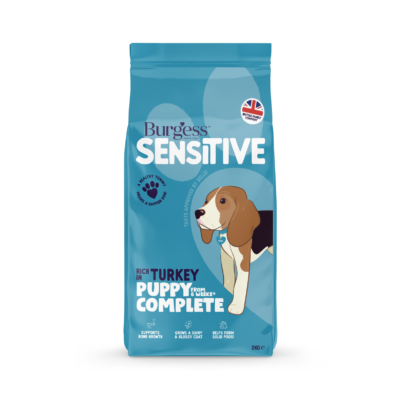
Burgess Sensitive Puppy has been developed by vets for puppies from 6 weeks to 12 months. This high-quality, complete, nutritionally balanced food contains everything puppies need to thrive. Rich in turkey for protein, with rice as an easily digestible source of carbohydrate and fibre, Burgess Sensitive Puppy Food is made without ingredients that can typically cause upset tummies and runny poos. Our tasty, hypoallergenic recipe features highly digestible protein to support growing muscles, and calcium and minerals to support developing bones and teeth.
Suitable for all breeds, our unique recipe includes:
- 30% protein to support developing muscles
- Calcium and minerals to support bone growth and healthy teeth
- Essential vitamins to support skin health and a glossy coat
- Antioxidants to support developing immune systems
- Prebiotics to support good bacteria in the gut
- Yucca, a traditional medicinal plant that helps make poos less smelly
- Highly digestible ingredients to support digestive health and help form solid poos
- No artificial flavours, colours or added preservatives
- Smaller nuggets, specially created for puppy-sized mouths and teeth
BURGESS SPECIAL BUYS Order Burgess Sensitive Puppy Food online today and save 15% with Subscribe & Save. You can also get free delivery when you spend over £25!
GOOD TO KNOW
- COMPLETE NUTRITION Each of the recipes in the Burgess Dog Food range are complete, providing all the nutrients dogs require in the right proportions.
- PORTION CONTROL With dry food, it’s easy to measure out the right-sized portion to help your dog maintain a healthy weight.
- HEALTHY AND SAFE The thorough cooking process ensures that any harmful bacteria, such as salmonella, and viruses are destroyed, and the dry food stays fresh inside the pack.
- TEETH-FRIENDLY Dry dog food has the added benefit of exercising your dog’s chewing muscles and provides a mild cleaning effect on the teeth.
- MADE IN BRITAIN Crafted at Burgess Pet Care’s own factory in the heart of Yorkshire, Burgess Dog Food contains high-quality ingredients that meet stringent specifications, locally sourced wherever possible to support British farmers.
With a whole host of *5-STAR REVIEWS*, our customers have told us:
* “My very fussy puppy loves it!!” * “This has really settled my puppy's stomach down as she has such a sensitive tummy... have just ordered more.” * “I’m absolutely over the moon with this dog food. My dogs are so much happier on this food. Thank you.” * “This food has really helped firm up my puppy’s poop!!! Plus, she loves it!!!” * “Excellent puppy food for delicate tummies, great service!” * “Very happy, puppy enjoys the kibble and is always excited at mealtimes.” * “Works well for my puppy and has made a great difference to his digestive system.” * “My Lab puppy has a sensitive stomach, and this food is ideal for him.” * “Perfect purchase, delivery and product. Very impressed.” * “Stopped the soft poo and made it much easier to clean up!” * “Great puppy food, our dog loves it, and it’s a reasonable price. The subscription service is great too.” *“An excellent dog food, definitely a market-leading brand. My dog thrives on it, no upset stomach ever.” * “A leader amongst dog foods.” *
NEED MORE ADVICE?
If you’re at all unsure about the best way of feeding your dog or have any concerns about specific nutritional requirements, ask your local veterinary practice for advice. You can also call our expert team, available 9am-5pm, Monday to Friday, on +44 (0)1405 862241 who’ll be happy to help. Alternatively, use our online contact form to get in touch.
CARE MORE Find lots of useful advice on caring for your dog from Burgess, the pet experts >>
Is your dog a Burgess dog? Join the Burgess Pet Club for exclusive offers, competitions and expert advice from our in-house vet, Dr Suzanne Moyes.

Blog categories

Dogs

Cats

Rabbits

Guinea pigs