
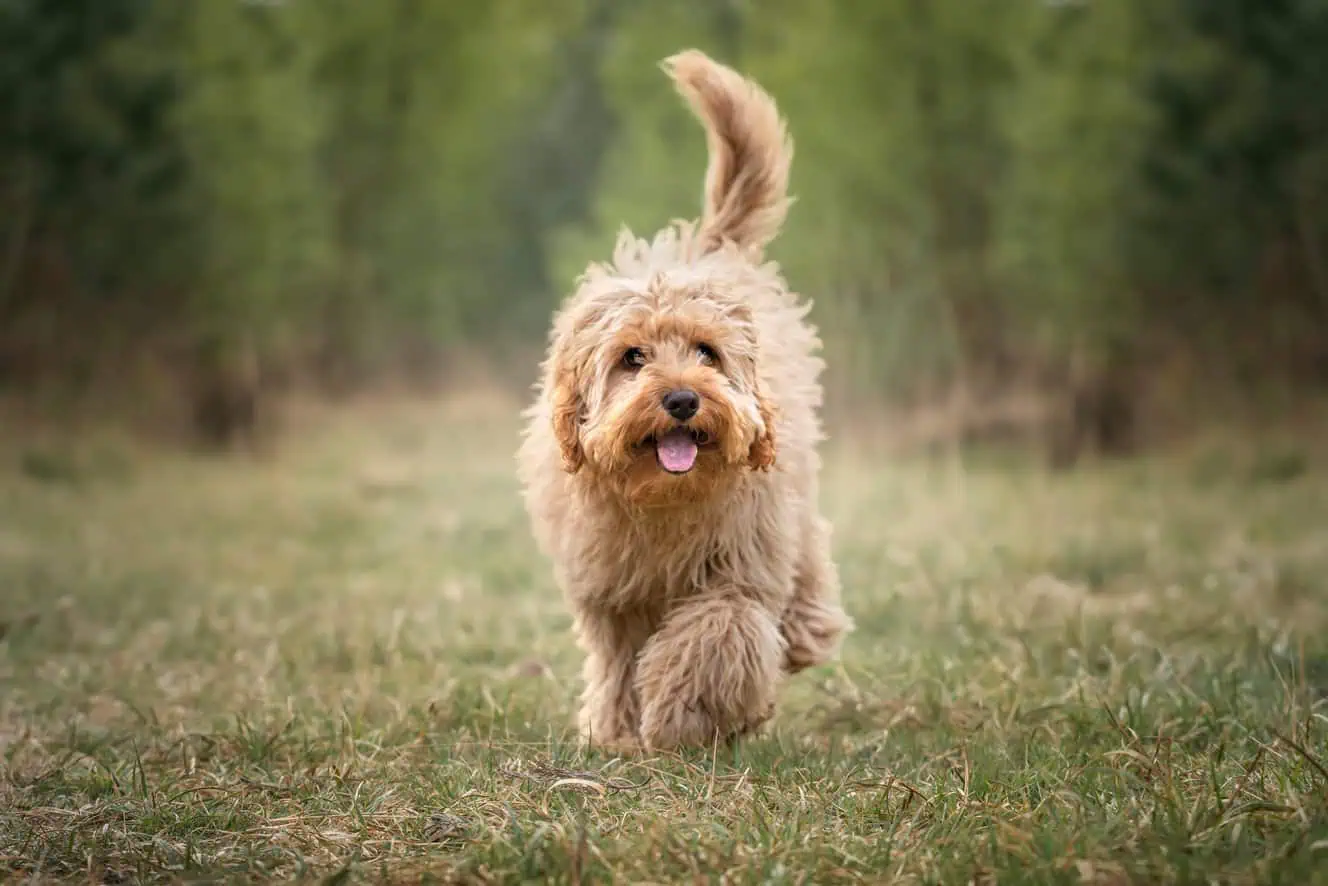
When it comes to training your eager young dog, what’s the best way to go about it? Dog training has come a long way with the focus now on building two-way communication rather than issuing commands. Help your puppy’s training get off to a great start with our expert tips and advice.

Expert approved
Dr Suzanne Moyes MVB, MRCVS
25th September 2026
When you see a well-trained, confident dog out and about, you may look at their owner and wonder – how did they do that? How did an over-excited, bundle of energy and mischief transform into a model canine citizen who sits for a treat, has a nice lie down when their human stops for a chat, and always comes when they’re called?
“It may be common knowledge that puppies are the most adorable creatures to ever grace the planet. But, owning and training one is no walk in the park,” says rehoming charity Dogs Trust.
Once you’ve made it through the various puppy milestones – from settling them in to their new home, introducing them to the big, wide world and attempting some short on-lead walks with everyone wanting to stop and say hello – it’s time to think about training. But what’s the best way to go about it?
Puppies love learning!
“Most owners dream of their puppy growing into a well-behaved adult dog, but sometimes it can be difficult to know where to start,” notes veterinary charity PDSA.
While basic training for your young pup may seem a daunting task, remember that puppies love learning and, once you know some tricks of the trade, training can be lots of fun and you’ll be super proud of what you’ve achieved together. Keep reading, as we’ll be covering:
- How to teach ‘sit’
- Why teaching ‘touch’ is really useful
- Teaching the ‘down’ move
- Helping your puppy learn to come back!
Feed your puppy premium puppy food without the premium price! >>
But, before you start, it’s good to have an overview of what canine behaviour experts agree is the right way to approach puppy training, using the latest thinking and techniques, rather than trying out outdated methods:
- Every puppy is an individual with their own likes, dislikes and personalities, so it’s only to be expected that your pup will pick up certain aspects of training quite quickly but may struggle with others. With patience and practice, they’ll get there in the end!
- Rather than issuing commands, today’s dog training is all about giving cues, which act as an invitation, informing the dog that a specific behaviour is available to be performed for a reward. This promotes problem solving and empowers the dog to choose to participate and earn a treat, toy, or praise, building a cooperative, two-way communication system between canine and human.
- Consistency is key – make sure everyone in the family is on board with using the same cues – “sit”, “down”, “stay”, “come”, and “yes!” when they’re successful – so your puppy doesn’t get confused.
- Keep puppy training sessions very short – 2 to 10 repetitions of a learning task or one minute or less of total training time is plenty – your pup can’t concentrate for longer than this.
- Puppy training should be fun – incorporate treats, toys, and plenty of praise to discover what motivates your pup best.
- Always go at your pup’s pace and praise and reward them when they get things right. Don’t tell them off or you risk your puppy becoming nervous of you – the human they love and trust.
Every experience impacts your young dog
It’s really important to know that puppies between the ages of 4-16 weeks enter an intense learning period where they’re figuring out what’s safe and what’s scary, what’s enjoyable and what’s not. The experiences they have during this time affects what kind of dog they become.
“In this period, what a puppy experiences and learns will not only stick with him for life, but will shape who he becomes as an adult,” advises dog behaviour expert Victoria Stilwell, presenter of It’s Me or the Dog, on Positively, her on-line training resource. “Will he be confident? Trusting? Fearful? Calm? Excitable? Optimistic? In other words, what your puppy learns can help him grow up to feel comfortable, relaxed, and confident in his world. This period of your puppy’s life is not open-ended and once it’s over, you can’t get it back.”
That’s why you want your young dog to have lots of positive experiences, including when you’re training them.
Positive training gets the best results
“Dogs respond far better to positive training and are more likely to pick up what you are trying to teach them faster,” advises PDSA. “It’s also worth noting that telling your dog off rarely helps with training. This is because we often find out our dog has done something they aren’t meant to when it’s already too late. If you tell them off after they’ve already chewed holes in your shoes, they really won’t understand what you’re telling them off for. It’s better to train them that good behaviour gets a reward rather than punishing the ‘bad’ behaviour.”
“Dogs taught with positive methods show fewer stress signals, show a better bond with their owner, and tend to respond more quickly to cues,” adds Victoria Stilwell, who outlines how positive training works.
- Positive training uses rewards, motivations, and guidance to train and change a dog’s behaviour. This might include the use of food, treats, toys, play, attention, and opportunities to sniff and explore.
- Positive training teaches dogs what to do, while setting up their environment so they aren’t able to practice the unwanted behaviour.
- Positive training sets the dog up to succeed, because they are guided and taught to do what the person wants.
- Positive reinforcement training helps and improves the human-dog relationship. This is done by understanding a dog’s motivations, using rewards to motivate a dog, creating a good association with people through those rewards, and never causing pain or fear.
Teaching the basics – sit, touch, down and recall
Now you know the best approach to take, it’s time for some step-by-step training guides from a range of canine behaviour experts!
How to teach ‘sit’
Useful in many situations – such as encouraging your young dog not to jump up – try teaching your puppy to sit using PDSA’s suggested method:
- Firstly, take a treat or toy to get your dog’s attention and hold it in front of their nose.
- Gently take the treat from in front of your dog’s nose to behind their head, taking the treat over the top of their head. This should get your dog to sit. Don’t push their bottom down but you can gently place your hand on their back and say ‘sit’ as they move into a sitting position – just try again if they don’t get it first time.
- As soon as their bottom hits the floor, make sure you praise your puppy and give them their reward straight away. That way they will associate the reward with sitting. Gradually, your dog should learn to respond to the cue ‘sit’ and you’ll be able to phase treats out.
Why teaching ‘touch’ is really useful
This may not be as well-known as some training cues, but it’s a super useful skill for your young dog to learn.
“Imagine being able to prompt your dog to walk next to you on the leash, move him away from the front door with a simple hand motion, or come to you when you call. The touch skill is a foundational cue for all these behaviours and is a great first cue to teach a new puppy,” advises Victoria Stilwell. “It can be used to help dogs tolerate the approach of a human hand, (something that is likely to happen many times throughout their lives) and to move dogs away from situations that might be overwhelming.”
Armed with some small food treats, this is how to teach it:
- Begin by lowering your hand to the height of your dog's nose. When your dog naturally performs the desired behaviour (touching his nose to your hand), reward that behaviour with a treat and the word “yes!” This is called ‘marking’ the desired behaviour.
- As a next step, you’ll associate a cue word – “touch” with the desired behaviour and then give a reward.
- As the association becomes stronger, you can practice the cue when there are low levels of distraction.
- As your puppy becomes more proficient, you can practice the cue starting at a farther distance. Continue to mark and reward with food.
Teaching the ‘down’ move
Learning a ‘down’, is a great way to calm an overexcited puppy in all sorts of scenarios.
“Teaching your dog to lie down is a foundational skill that supports all their future training. Most dogs learn it within a few short sessions once they understand the movement,” advises rehoming charity Battersea.
- Begin with your dog sitting in front of you. This can make it easier to lure them into the down position.
- Lure with treats Hold a treat close to your dog’s nose, then slowly move it down towards the floor and between their front paws. As their head follows the treat, their body should lower into a lying position. The moment they lie down, reward them.
- Introduce the verbal cue Once your dog is following the lure reliably, add a simple cue like “down”. Say the cue once, then lure them into position and reward.
- Phase out the hand signal Gradually make the luring movement smaller until your dog responds to the verbal cue on its own.
Helping your puppy learn to come back!
Recall training is super important as it means you can confidently let your dog off lead, knowing they will always come back to you.
You may like to start this training using a long lead until your puppy gets the hang of it. Have their favourite reward – treats or a toy – to hand and remember to give your pup plenty of praise when they run towards you. Try out PDSA’s top recall training tips:
- Practice somewhere secure and quiet, where your dog won’t get distracted, so they get used to the cue and what’s expected of them.
- Walk away from your dog, then say their name and say ‘come’. Try to make their treat/toy obvious at this point!
- It will help to get on their level. Always use a positive tone so they know coming to you when called will be a good thing.
- Reward them when they come to you and give them lots of praise.
- Keep practicing and when they’re consistently responding to ‘come’, practice in a quiet public place like a park (make sure this is secure).
- At first, start just a few feet apart and gradually increase the distance as your puppy improves.
Once your puppy has mastered the basics, you can move on to other skills
Like many canine behaviourists, Victoria Stillwell believes that there is great value in dogs learning life skills, defining them as: “Any skill that helps your dog thrive in the environment because she knows what to do in certain situations with or without being cued. Science tells us that when we provide choice to dogs, they are better adjusted to the world we're asking them to live in.”
She also sees this as a great way to build a bond with our dogs as it’s all about nurturing a two-way conversation with them: “Life skill is more than just an arbitrary term. It's representative of the degree to which we believe we owe it to our dogs to include them in the conversation as much as possible.”
Examples of really useful life skills for dogs include:
- “Wait" is a valuable skill because it can be used before the front door is opened or before crossing a road, while “come" is a cue that allows your dog to be off-leash and return to you when you call her.
- Cues like “leave it" and “take it/drop it” can help prevent your dog from resource guarding by making the exchange of food and toys a game.
- Teaching a puppy to walk on a loose leash can help prevent leash pulling in the future.
Need some expert help to get on the right training track?
Just like many things in life, dog training is constantly evolving and, even if you’ve had dogs before, it’s well worth signing up to puppy classes run by trainers that use the latest, positive techniques – you’ll probably learn as much as your dog! Ask your vet for recommended local trainers or visit the Association of Pet Dog Trainers, which is committed to promoting kind, fair and effective dog training, to find accredited dog trainers near you.
Also visit rehoming charities Woodgreen and Dogs Trust, which have lots of useful training advice and easy-to-follow videos and webinars you can explore. Happy puppy training!
Why choose Burgess puppy food?
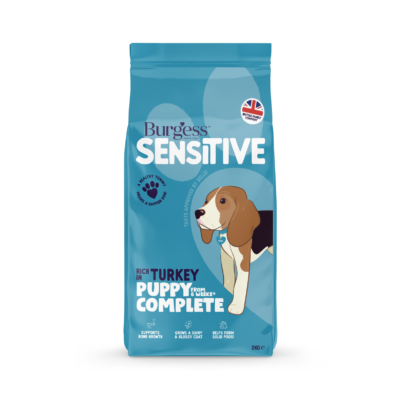
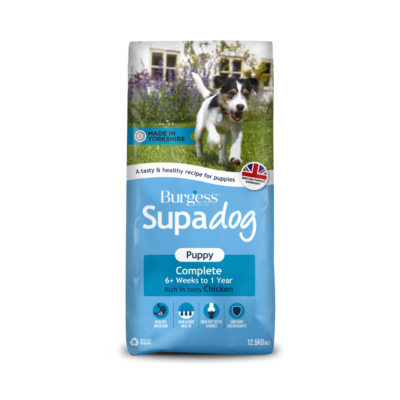
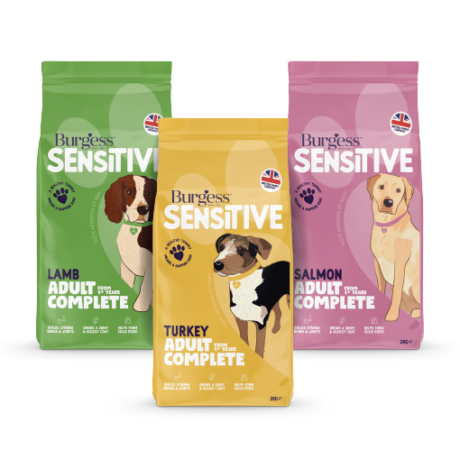
Developed by vets and animal nutritionists for puppies from 6 weeks to 12 months, Burgess puppy is a high-quality, complete, nutritionally balanced food contains everything puppies need to thrive.
Rich in turkey for protein, with rice as an easily digestible source of carbohydrate and fibre, Burgess Sensitive Puppy Food is made without ingredients that can typically cause upset tummies and runny poos. Our tasty, hypoallergenic recipe features highly digestible protein to support growing muscles, and calcium and minerals to support developing bones and teeth.
Suitable for all breeds, our unique recipe includes:
- 30% protein to support developing muscles
- Calcium and minerals to support bone growth and healthy teeth
- Essential vitamins to support skin health and a glossy coat
- Antioxidants to support developing immune systems
- Prebiotics to support good bacteria in the gut
- Yucca, a traditional medicinal plant that helps make poos less smelly
- Highly digestible ingredients to support digestive health and help form solid poos
- No artificial flavours, colours or added preservatives
- Smaller nuggets, specially created for puppy-sized mouths and teeth
BURGESS SPECIAL BUYS Order Burgess Sensitive Puppy Food online today and save up to 15% with Subscribe & Save!
GOOD TO KNOW
- COMPLETE NUTRITION Each of the recipes in the Burgess Dog Food range are complete, providing all the nutrients dogs require in the right proportions.
- PORTION CONTROL With dry food, it’s easy to measure out the right-sized portion to help your dog maintain a healthy weight.
- HEALTHY AND SAFE The thorough cooking process ensures that any harmful bacteria, such as salmonella, and viruses are destroyed, and the dry food stays fresh inside the pack.
- TEETH-FRIENDLY Dry dog food has the added benefit of exercising your dog’s chewing muscles and provides a mild cleaning effect on the teeth.
- MADE IN BRITAIN Crafted at Burgess Pet Care’s own factory in the heart of Yorkshire, Burgess Dog Food contains high-quality ingredients that meet stringent specifications, locally sourced wherever possible to support British farmers.
With a whole host of *5-STAR REVIEWS*, our customers have told us:
* “My very fussy puppy loves it!!” * “This has really settled my puppy's stomach down as she has such a sensitive tummy... have just ordered more.” * “I’m absolutely over the moon with this dog food. My dogs are so much happier on this food. Thank you.” * “This food has really helped firm up my puppy’s poop!!! Plus, she loves it!!!” * “Excellent puppy food for delicate tummies, great service!” * “Very happy, puppy enjoys the kibble and is always excited at mealtimes.” * “Works well for my puppy and has made a great difference to his digestive system.” * “My Lab puppy has a sensitive stomach, and this food is ideal for him.” * “Perfect purchase, delivery and product. Very impressed.” * “Stopped the soft poo and made it much easier to clean up!” * “Great puppy food, our dog loves it, and it’s a reasonable price. The subscription service is great too.” *“An excellent dog food, definitely a market-leading brand. My dog thrives on it, no upset stomach ever.” * “A leader amongst dog foods.” *
NEED MORE ADVICE?
If you’re at all unsure about the best way of feeding your dog or have any concerns about specific nutritional requirements, ask your local veterinary practice for advice. You can also call our expert team, available 9am-5pm, Monday to Friday, on +44 (0)1405 862241 who’ll be happy to help. Alternatively, use our online contact form to get in touch.
CARE MORE Find lots of useful advice on caring for your dog from Burgess, the pet experts >>
Is your puppy a Burgess puppy? Join the Burgess Pet Club for exclusive offers, competitions and expert advice from our in-house vet, Dr Suzanne Moyes.
Blog categories

Dogs

Cats

Rabbits
Guinea pigs