

How friendly are Cockapoos? Do they need lots of exercise? Do they have high-maintenance grooming needs? Are Cockapoos hypoallergenic? How well do Cockapoos handle being left home alone? Are they easy to train? Are Cockapoos a good choice for families with children and other pets? We have all the answers to your Cockapoo questions!

Expert approved
Dr Suzanne Moyes MVB, MRCVS
20th November 2025
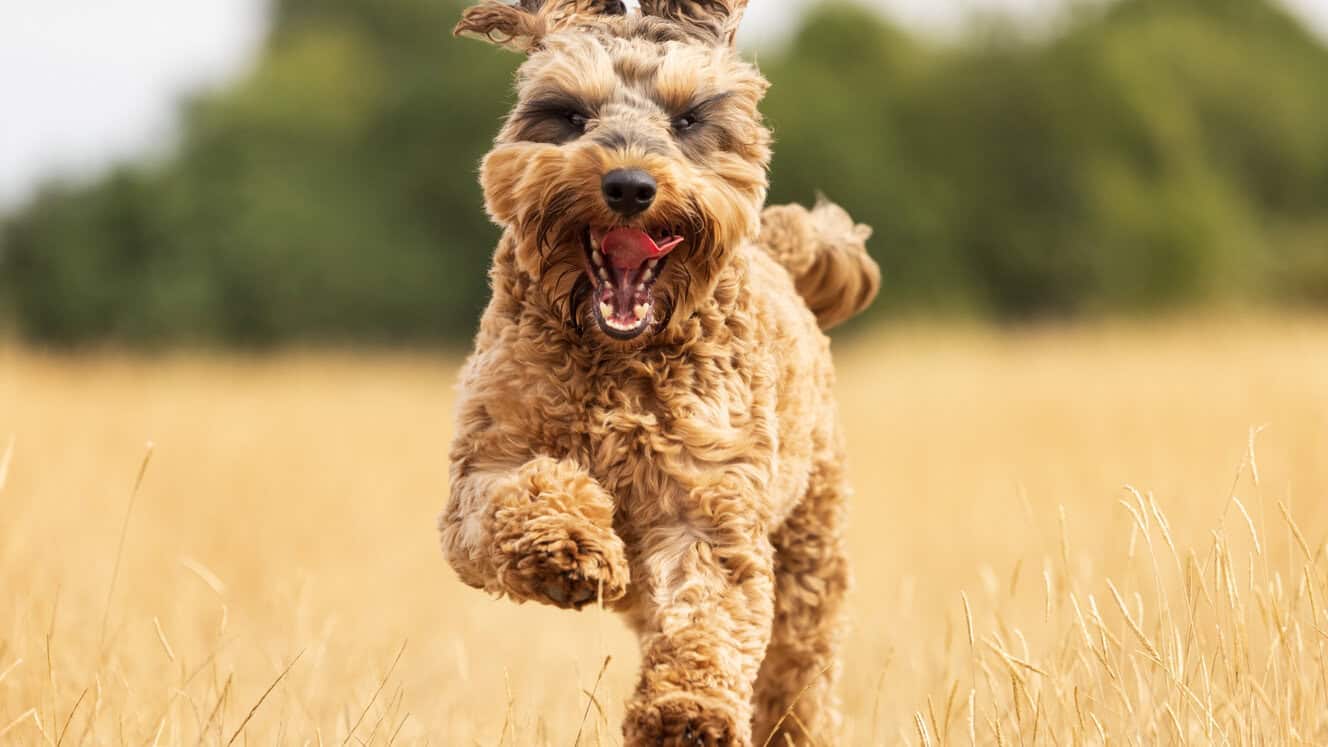
While not officially classed as a breed (yet), lively Cockapoos have soared in popularity since they first appeared in the UK in the 1990s. A cross between the ‘merry’ Cocker Spaniel and the playful Miniature Poodle, the Cockapoo, which first emerged in the US in the 1950s and 60s, was created as an active, smart, sweet-tempered companion dog that doesn’t shed their fur – although their lack of shedding means lots of trips to the groomers!
“Cockapoos blend the affectionate nature of the Cocker Spaniel with the intelligence of the Poodle, creating a breed that fits wonderfully into family life,” notes North Yorkshire-based veterinary practice Your Family Vets. “Their intelligence and versatile temperaments make them well-suited to a variety of family lifestyles, though understanding their specific needs helps you provide the best possible home for your furry companion.”
“Cockapoos are intelligent, loyal and, with good training and stimulation, make brilliant pets,” adds insurer Petplan.
Sue Ketland, Dog Behaviour and Training Specialist at rehoming charity Woodgreen, says: “Cockapoos love to show you their love. They’re touchy-feely and want to be around their people as much as they can.”
Cockapoos come in a range of sizes, shapes and coat styles
If you have a Cockapoo puppy, you may be wondering what size they’ll be once they’ve fully grown into their paws. If you’ve seen both parents, that will provide a useful size guide.
“Cockapoos can vary in size according to their parentage,” advises the Doodle Trust, a charity that rescues and rehomes Doodles (Labradoodles, Goldendoodles, Cockapoos, and other Poodle crosses) and Poodles throughout the UK. “If they have a Toy Poodle parent, they may vary between 9-10 inches tall or go up to 20 inches or more if a Standard Poodle is used. The most common Cockapoo seen is one where there are a Cocker Spaniel and a Miniature Poodle parent and that results in a dog of approximately 12-14 inches in height.”
Cockapoo coats, which come in an array of colours, including white, chocolate, cream, tan and black, can vary too. The Doodle Trust adds: “Some dogs may inherit more of the Poodle genes and so have a tight, curly Poodle type coat, while others may inherit more of the Cocker Spaniel genes and have a perfectly straight, curl-free coat that moults daily.”
The body shapes of Cockapoos also differ: “You will also find that some Cockapoos are ‘chunkier’ than others,” says the Doodle Trust. “Some may inherit more of the sleeker Poodle lines, while others will have the more solid build of the Cocker parent.”
What’s the best food for a Cockapoo puppy? >>
Are Cockapoos hypoallergenic?
For people who suffer from allergies but long for a dog, low-shedding Cockapoos may seem like the ideal breed. However, experts agree that there’s no such thing as a truly hypoallergenic dog.
“You will often see Cockapoos advertised or promoted as being HYPOALLERGENIC dogs, with claims that they are perfect for dog lovers who suffer from allergies. Unfortunately, this is not strictly true,” advises the Doodle Trust. “There is no such thing as a dog that is guaranteed not to cause an allergic reaction in some people.”
“As a low to no shedding breed, the Cockapoo is generally considered to be an allergy-friendly pet. It’s important to remember that no dog breed is truly hypoallergenic, but some breeds are better for those with allergies than others,” adds Petplan.
What’s the best food for Cockapoos? >>
When do high-energy Cockapoos calm down?
Young Cockapoos are full of beans, which sometimes takes owners by surprise, particularly when they get up to mischief!
“Cockapoos are extremely energetic and fun-loving, due to their Spaniel heritage, and often remain puppy-like well into their adult years,” advises Petplan. “Generally, Cockapoos can be expected to slow down from the age of 7 onwards. Plenty of mental stimulation, physical exercise and play times are crucial to keep this active breed happy and prevent behavioural problems.”
“The Cockapoo is a cross between a Cocker Spaniel and a Poodle. But they can also be a cross between two Cockapoos… or even a Cockapoo crossed back with a Cocker Spaniel or a Poodle. With this in mind, it can be difficult to accurately predict the exact behaviours that you might get with this incredibly popular little breed,” adds Sue Ketland.
“Both Cockers and Poodles are lively, intelligent, affectionate and sensitive. The Cockapoo is a mix of all of these! They’re bright, brainy, and bursting with energy. So, they can show their cheeky side if they don’t get enough exercise or have interesting things to do. Because they’re a playful breed, they can be quite demanding of their owner’s time. If they don’t have enough toys, they’ll find something to steal and perhaps unleash their destructive side.”
Understanding what makes your Cockapoo tick will help you give them everything they need to love life! Read on to discover more about:
- COCKAPOO PERSONALITY PROFILE
- IS MY HOME SUITABLE FOR A COCKAPOO?
- HOW MUCH EXERCISE DOES A COCKAPOO NEED?
- WHAT HEALTH ISSUES CAN COCKAPOOS SUFFER FROM?
- WHAT SHOULD I FEED A COCKAPOO?
- HOW MUCH GROOMING DOES A COCKAPOO NEED?
- WHAT’S THE BEST WAY TO TRAIN A COCKAPOO?
- GETTING A COCKAPOO
COCKAPOO PERSONALITY PROFILE
With their super-cute looks and friendly natures, owning a Cockapoo should be a breeze, right? Put your preconceptions to one side for a moment, Cockapoo experts have thoughts...
“If you think a Cockapoo is the right breed of dog for you there are a few things to bear in mind,” says the Doodle Trust. “Firstly, the ancestry of the Cockapoo is Cocker Spaniel and Poodle, both of which are active working dogs. Cockapoos are lively, intelligent, keen to learn and love being with people. They are also sensitive and can suffer from being left alone without careful preparation and training. Their lively minds mean they need mental exercise as much as physical. Training and learning are a must to keep them happy.”
Crate training a Cockapoo puppy – make it their special place >>
“Cockapoos get their high energy, intelligence, and overly affectionate nature from their mix of breeds,” adds Sue Ketland. “They can be great fun and make charming companions. They’re also a vocal breed. This can get out of hand with attention-seeking and nuisance barking if they find themselves at a loose end. If they don’t get what they need to live their best lives, they can develop behaviour issues.”
Meeting your Cockapoo’s needs helps avoid behaviour issues
This is a breed that gets bored easily, which can lead to unwanted behaviours. “They’re prone to stealing items, partly to get their owner's attention, but also because both the Cocker and the Poodle are natural retrievers, so having something in their mouth feels rewarding,” says Sue Ketland. “These behaviours are annoying for owners, but in some cases, they can turn into a much bigger problem. They may get defensive when people go near their favourite things (known as resource guarding). Owners really need to meet their Cockapoo’s needs to avoid or minimise these behaviour issues.”
A commitment to meeting their needs for training, attention, company, mental stimulation and physical exercise – will, however, pay off. “Cockapoos are sensitive to the moods of their household and respond beautifully to gentle handling and consistent training,” notes Your Family Vets. “Their natural instincts often include a strong desire for human interaction, with a tendency to be curious and playful.”
While each breed has certain identifiable traits, it’s important to remember that every dog is unique. Dogs Trust says: “Just like you, every dog is an individual with their own personality and prior experiences. As dogs grow from puppies, they learn all about the world. They develop their own likes and dislikes and learn to respond to situations in different ways. For example, some dogs might like meeting other dogs, and some may not. Some might like new experiences and others may need to go slowly.”
Want just YOUR dog to come when you call them? Choose their name wisely! >>
IS MY HOME SUITABLE FOR A COCKAPOO?
To create a perfect canine/human partnership, it’s vital to think about what kind of energy and temperament you’d like your four-pawed friend to have so you’re a good match for each other – and that you can provide a suitable environment.
“If you live a busy life and can’t commit to their emotional needs, a Cockapoo may not be right for you.” advises Sue Ketland. “Parents of young children need to have a good think about whether they have time to meet their needs. Their affectionate nature makes them ideal four-legged friends for people who work from home or those who are retired but active.”
Cockapoos and school-age children can be great friends
She recommends that this breed lends itself well to families with children old enough to join in with their playtime: “They wouldn’t be happy in a home that doesn’t have enough time to entertain them. Cockapoos need a home that offers them training and exercise. Otherwise, they won’t be happy or fun to live with. A family with school-age children who love the outdoors and playing together would be ideal.”
“It’s important to teach both children and dogs how to interact gently and safely,” advises Your Family Vets. “Supervising their playtime and encouraging calm behaviour will help ensure a positive relationship as your Cockapoo grows.”
The family dog – making it work for pets and children >>
Cockapoos and other pets can get along well
“Cockapoos are generally amicable, good-natured dogs who get on well with other pets – including cats,” says Petplan. “However, Cockapoos are extremely playful and love to chase, an activity that your cat may not enjoy. Early socialisation and good introductions are key to helping your Cockapoo and cat live happily side by side.”
Can cats and dogs be friends? >>
Cockapoos don’t like to be left home alone
If you’re out for chunks of the day, your Cockapoo may find it hard to cope.
“This breed doesn’t suit a home where they need to be left for a full working day, five days a week. Their need for love and attention would show up as frustration and distress at being alone so often,” advises Sue Ketland. “It’ll take time and patience to teach them to cope at home alone for even a few hours.
Which breed of dog is the right fit for you and the place that you live? >>
HOW MUCH EXERCISE DOES A COCKAPOO NEED?
If you’re an active type who likes to spend lots of time outdoors, whatever the weather, then a Cockapoo could be your perfect canine companion.
“Rain, hail or shine, your Cockapoo will wait each day for you to take him out, throw the Frisbee, or ball, let him wallow in the muddy puddle or wander and sniff to see what other dogs have passed that way recently,” notes the Doodle Trust. “Walking boots or wellies and waterproof coats will be needed by all owners!”
“Cockapoos may have little legs, but they need a whole lot of exercise!” adds Sue Ketland. “Their ancestors, Cockers and Poodles, are fast and busy breeds. They’ve passed down the need to run and play to Cockapoos, who also like to swim and splash in water like their Poodle family. An hour of free running and playing twice a day is needed.”
Tailor regular activity to your Cockapoo’s age and fitness levels
“Most adult Cockapoos need around 60 minutes of exercise daily, combining walks, playtime, and mental stimulation. Puppies require shorter, gentler sessions spread throughout the day to protect developing joints, so splitting walks into 10 to 15-minute bursts works well. Activities like fetch or training games are excellent for tiring them out while building your bond,” advises Your Family Vets. “Regular activity tailored to their age and fitness level supports both their body and mind, fostering a happy, well-adjusted companion tailored to your family’s lifestyle.”
Thinking up new and intriguing ways to keep your Cockapoo’s clever, inquiring mind busy, is also essential. “Cockers have a great brain, and Poodles are one of the brightest breeds on the planet, so it’s no surprise that Cockapoos are little clever clogs,” says Sue Ketland. “To help tire your adorable dog’s brain and body, try activities like obedience training, trick training, activity toys and puzzle feeders.”
How much exercise do different dog breeds need? >>
COCKAPOO HEALTH
While generally a healthy breed, Cockapoos, like all dogs, can suffer from health issues.
“Aside from typical worries like obesity – which you’ll want to monitor closely given their love of food – Cockapoos can be prone to certain inherited and lifestyle-related issues from either of their parent breeds, Cockers and Poodles,” advises Your Family Vets. “Common concerns include patellar luxation (knee joint instability), and progressive retinal atrophy, which affects vision. Some Cockapoos may also develop ear infections from their floppy ears if not kept clean. Genetic testing by responsible breeders can reduce these risks, but staying alert for early signs in your dog is a practical step you can take.”
“Like many other breeds, Cockapoos can suffer from allergies that lead to dermatitis (skin inflammation),” adds Petplan. “Allergies can be caused by many different items, including things that are inhaled (such as pollen or dust mites), items that are eaten (for example, wheat), items that the dog comes into contact with (for example, washing powders), or bites from parasites such as fleas. As allergies cannot be cured, treatment may be required for life, but is usually effective enough to ensure that the dog can enjoy a happy, normal existence.”
Dogs Trust advises: “Whatever the breed, all dogs need basic preventative health care like vaccinations and flea and worming treatments. You’ll also need insurance to help cover the cost of vet bills.”
WHAT SHOULD I FEED A COCKAPOO?
“As Cockapoos are active, energetic dogs, it’s important they receive the right levels of nutrients, vitamins and minerals,” says Petplan. “The amount of food will depend on your Cockapoo’s size, age, build and activity level.”
Burgess in-house vet, Dr Suzanne Moyes MVB MRCVS, who oversees recipe development and product production, advises: “When choosing food for Cockapoos, it’s essential to bear in mind that the optimum diet for your dog is one that supplies the correct number of calories and balance of nutrients for their life stage and lifestyle. This means calculating the nutrient content and dietary components such as protein, fat, carbohydrate and vitamins and minerals required. All Burgess Dog Food is a complete food. This means, whatever variety you choose for your Cockapoo, it will contain all the nutrients they need in the correct balance.”
Choose a diet tailored to your dog’s life stage
Your Cockapoo will also benefit from feeding a variety of food that’s designed to meet their nutritional requirements throughout their life. Puppies need extra energy and other nutrients to support rapid growth. For adult dogs, providing a nutritionally balanced, complete diet will help keep them in tip top condition during the prime of their life. Many older dogs develop specific conditions, such as arthritis – some of which can be eased by feeding a diet designed just for them.
The benefits of feeding a diet specially developed for dogs with sensitivities
And, as Cockapoos can be prone to allergies, choosing a food that’s specially designed for dogs with sensitivities could be beneficial.
Dr Moyes adds: “Dogs with delicate digestion or who suffer from allergies need sensitive dog food that’s made without many ingredients known to cause upset tummies. These ingredients can include beef, eggs, dairy, wheat, maize, and soya. For many canines with digestive issues or allergies, switching to a sensitive or hypoallergenic variety, depending on what your vet recommends, can make a world of difference to them.”
Cockapoo feeding tips
- Split your Cockapoos daily allowance into two meals and try to feed your dog at the same time every day as canines like routine.
- Measure out precise portion sizes. Recommended feeding amounts can be found on dog food packaging, but always ask your vet if you’re not sure.
- Giving your dog a little more than they need means they could become overweight. If you don’t feed enough, your dog will not be getting all the nutrients they need and will become underweight.
- Remember to leave a gap after eating and before exercising.
- If you give your dog the occasional treat or use treats for training, remember to take this into account and reduce their daily allowance. Treats shouldn’t make up more than 10% of their daily calorie intake as this can unbalance their diet
“Cockapoos commonly eat things they shouldn't!” warns Petplan. “Foods containing chocolate, grapes and raisins are common culprits and although these foods are harmless to us, they can be poisonous to dogs and often require veterinary treatment. Cockapoos are naturally energetic and playful dogs so may be more prone to helping themselves to something they shouldn't! Keeping these foods well out of reach will help you avoid a trip to the vets.”
Human food that you should never give to dogs >>
HOW MUCH GROOMING DOES A COCKAPOO NEED?
If you choose a Cockapoo because they don’t shed hair like many other breeds, you’ll still have your fair share of grooming to do. What’s more, regular professional grooming will also be required to keep your Cockerpoo neat and tidy.
“Most Cockapoos do not moult as other breeds of dogs do. This can be great for people who do not want to spend their days vacuuming up dog fur every day, but it does mean that the dog will develop matts and knots in their fur which needs daily grooming, from top to tail,” advises the Doodle Trust.
Straight, wavy or curly?
“Depending on how much Cocker or Poodle is in their genetics, a Cockapoo’s coat will either be straight, wavy, or curly. Some coats are single, others are double, so how much they shed will vary from dog to dog,” says Sue Ketland. “Whatever the coat type, they need a lot of grooming! A Cockapoo’s coat can get very matted, so expect to give them a daily groom. If mats are left, grooming can become uncomfortable or even painful for them. Cockapoos will also need regular trimming and clipping by a professional groomer. So, factor this cost into your decision about this breed.”
“They benefit from professional trimming, particularly around the eyes to increase their range of sight,” adds Petplan. “Long floppy ears mean their ear canals can easily become moist and prone to infection. Check their ears during grooming sessions for tell-tale signs of an ear infection such as a strange smell or black or brown wax.”
Regular grooming also provides you with an opportunity to check for unusual lumps and bumps. Getting into a teeth cleaning routine is also important to help to prevent plaque and tartar from building up and keep gums healthy.
WHAT’S THE BEST WAY TO TRAIN A COCKAPOO?
When it comes to training any dog, it’s all about creating a positive learning experience, so they’re keen to learn and grow in confidence. And, when it comes to Cockapoos, you’ll have a bright, eager-to-please pupil, who’s prone to being distracted...
“The ideal time to begin training is as soon as you bring your puppy home, usually around 8 weeks of age,” advises Your Family Vets. “Cockapoos typically show a strong desire to please, which makes them relatively easy to train compared to other breeds. Their intelligence and eagerness mean they pick up commands quickly, but their playful, sometimes excitable nature can lead to distractions. Consistency is key, especially in a lively environment. They respond exceptionally well to reward-based methods such as treats, praise, and play, which keep them motivated without stress. Starting young makes a big difference, helping to avoid common issues like excessive barking or separation anxiety.”
As with all young dogs, Cockapoo puppies benefit from controlled exposure to different sights, sounds, and people. “Early training focusing on impulse control and social skills helps reduce the chances of future anxiety or stubbornness, setting your dog up for a balanced, confident life,” says Your Family Vets. “Teaching basic commands like ‘sit,’ ‘stay’ and ‘leave it’ during puppy classes or short daily sessions can curb unwanted behaviours such as chewing or barking. Positive reinforcement reward schedules encourage repeated good behaviour, while gentle redirection helps handle over-excitement.”
Training helps Cockapoos feel confident in the world around them
“All puppies need to learn how to be around people, pets, and other dogs, calmly and politely (known as socialisation),” says Sue Ketland. “They also need help to feel calm, comfortable, and confident in everyday situations like travelling, the sound of traffic, and being in busy places (known as habituation). This is essential to prevent tricky behavioural problems in the future, and you'll be off to a great start with your ongoing training. If they aren’t being guided to learn good behaviours, they’ll excel at learning the naughty ones!”
Cockapoos also need to learn to only play with appropriate toys. Sue Ketland adds: “If left to their own devices, they’ll likely pinch a tea towel or a pair of socks to play with!”
Cockapoos need to learn to share nicely
These exuberant dogs also need some gentle encouragement to share their stuff. “Cockapoos are known for trying to keep their toys to themselves,” continues Sue Ketland. “So, when it’s playtime, make sure they know how to play politely and let go when asked. They might also be protective of other things, like food.”
Dog trainer Shelina Duke advises: “Because of their retrieving nature, they enjoy carrying things in their mouth. We then take it off them, which causes them to guard. To avoid this, be sure to swap their item with something good; a similar toy or a piece of something delicious. Make it worth the swap.”
“Cockapoos are naturally quite protective of personal things like beds, toys and their food,” says Woodgreen dog carer AJ, who helped look after a litter of Cockapoo puppies, featured in series two of TV show The Dog House. “We made sure there were loads of toys to play with. We never took things away from them, and we tried to make everything a nice, positive experience.”
These playful canines will always be up for a game, which is a great way to round off a training session. “Both Poodles and Cocker Spaniels have a past as retrievers, so it’s no surprise that your Cockapoo will love a classic game of fetch!” says Petplan. “Their Cocker Spaniel and Poodle ancestors have impressively strong noses, meaning Cockapoos like playing scent games,” adds Sue Ketland.
For expert advice and practical training guidance, visit Dogs Trust Dog School >>
GETTING A COCKAPOO
If you’re planning on getting a puppy, the Cockapoo Club of GB advises only buying from an Approved Breeder who has been thoroughly inspected by one of the club’s trained inspectors. ‘Lucy’s Law’, introduced in 2020, states that anyone who wants a new puppy or kitten in England must buy direct from the breeder or adopt from a rescue centre.
The Doodle Trust also recommends checking that both parents have been tested for hereditary health conditions. Make sure your puppy has been well socialised and has had all the necessary health checks and vaccinations.
The comprehensive puppy checklist >>
Alternatively, there are a number of rescue organisations around the country, including Dogs Trust, Woodgreen and Battersea, who would love to hear from you. Staff will seek to match you with the right dog for your home and lifestyle and provide you with support and useful information about the breed. Also check out the Cockapoo dogs and puppies for adoption in UK Facebook page.
By choosing a rescue Cockapoo you’ll be giving one of these super-friendly companion dogs a second chance at a happy and fulfilling life.
The best breed of dog is rescue >>
NEED MORE ADVICE?
If you’re at all unsure about the best way of feeding your dog or have any concerns about specific nutritional requirements, ask your local veterinary practice for advice. You can also call our expert team, available 9am-5pm, Monday to Friday, on +44 (0)1405 862241 who’ll be happy to help. Alternatively, use our online contact form to get in touch.
CARE MORE Find lots of useful advice on caring for your dog from Burgess, the pet experts >>
Is your dog a Burgess dog? Join the Burgess Pet Club for exclusive offers, competitions and expert advice from our in-house vet, Dr Suzanne Moyes.
SOMETHING TASTY FOR EVERY DOG
Every dog deserves a first-class dinner from puppy to adult and senior. Burgess Pet Care is a British, family-owned company and all our dog foods are made at our own factory in the heart of Yorkshire, using only ingredients that meet our stringent specifications – locally sourced wherever possible to support British farmers
We’ve also developed foods to meet the specific nutritional needs of sporting and working dogs, Greyhounds and Lurchers and dogs with sensitivities.
GOOD TO KNOW
- COMPLETE NUTRITION Each of the recipes in the Burgess Dog Food range are complete, providing all the nutrients dogs require in the right proportions.
- PORTION CONTROL With dry food, it’s easy to measure out the right sized portion to help your dog maintain a healthy weight.
- HEALTHY AND SAFE The thorough cooking process ensures that any harmful bacteria, such as salmonella, and viruses are destroyed, and the dry food stays fresh inside the pack.
- TEETH FRIENDLY Dry dog food has the added benefit of exercising your dog’s chewing muscles and provides a mild cleaning effect on the teeth.
- MADE IN BRITAIN Crafted at Burgess Pet Care’s own factory in the heart of Yorkshire, Burgess Dog Food contains high-quality ingredients that meet stringent specifications, locally sourced wherever possible to support British farmers.
With a whole host of *5 STAR REVIEWS*, our customers have told us:
* “An excellent dog food, definitely a market leading brand. My dog thrives on it, no upset stomach ever.” * “Our dogs just love it, and it keeps them happy.” * “Good value, wholesome food.” * “Edward (dog) is in raptures over this, he just can't get enough of it.” * “Our Ruby loves this food. In fact, she tries to open the food bin to steal it. That’s proof enough.” * “My dogs love it, it satisfies them, so it makes them happy and contented which makes me happy as they are thriving on it.” * “A leader amongst dog foods.” *
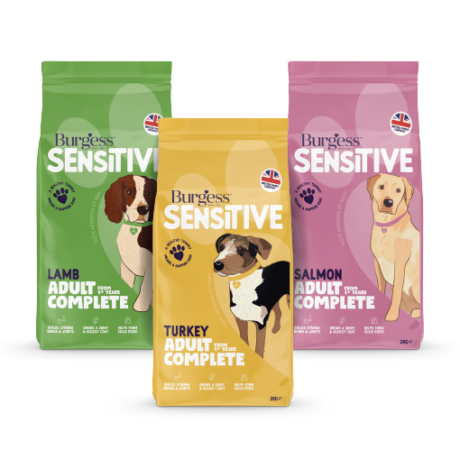
Lamb? Turkey? Salmon? Your dog can try them all with our Burgess Sensitive Bundle >>
If you found this interesting, you may also like:
OPEN UP YOUR EYES TO YOUR DOG’S WORLD Understanding how your four-pawed pal interprets the world through their five senses can help you provide them with the best, most enriching life.
GIVE THE DOG A CHOICE As humans, our lives consist of choices. Yet, how much of a say do our dogs have about what they do, how they do it and when? Could letting them make their own decisions really make them happier?
BECOME A DOG COMMUNICATION EXPERT It’s not difficult to tell if your dog is really happy – that waggy tail and soppy smile is such a giveaway. However, there are lots of other, more subtle signs that reveal how your four-legged pal is feeling and what they’re trying to tell you.
PET PERSONALITIES – NATURE V NURTURE When it comes to each of our pets’ personalities and the way they behave with us and other animals they interact with, is this down to nature or nurture? According to animal experts, it’s complicated!
DOG TRAINING MYTHS BUSTED All sorts of people have opinions on the best ways to train a canine – but it’s essential to only take advice from expert, trusted sources.
FUN AND GAMES IN THE DOG PARK Going to the park is the highlight of many dogs’ day as it’s a chance for canine chums to enjoy a meet and greet and dash about with their best buddies. However, not every dog-to-dog interaction goes to plan and there are definite rules of the game to be followed.
WHEN DOG MEETS DOG – WHAT’S THE WORST THAT CAN HAPPEN? When it comes to a dogs’ meet and greet there are essential rules of canine engagement and dog communication that we humans need to understand to ensure things go smoothly. This is even more important if you have a reactive dog who sees other canines as a potential threat.
BACK TO DOG SCHOOL Training is an essential part of dog ownership and, whatever age your dog is, training should be part of their regular routine.
BEST BEHAVIOUR – HOW TO TRAIN YOUR DOG TO MAKE A POLITE HELLO Most dogs get really, really excited when they meet a friendly human on their walk – Jumping up, twirling and barking. While this can be cute when they’re a small puppy, it’s not so good when they grow into their paws and jump all over the person in question!
BACK SOON All dogs benefit from learning to manage being on their own for short periods. Otherwise, if you have to leave your dog and they aren’t used to it, it will be very stressful for them.
HOW TO TEACH YOUR DOG THAT IT’S CHILL OUT TIME Are you struggling to find your dog’s off button? While some canines are natural couch potatoes, others need a little encouragement to learn to settle down and be calm. Our expert step-by-step training plan can help.
FAD DIETS – SHOULD DOG OWNERS BE WORRIED? Raw, grain free or home-cooked? The range of options for feeding your dog seems to be ever expanding. But what do animal nutrition experts have to say about it?
FLYING PAWS AND ROUNDS OF APPLAUSE – WOULD YOUR DOG BE GOOD AT DOG AGILITY? Do you have a dog that’s simply bursting with energy? Would you like to be involved in an activity together, that involves reward-based training, competing in shows and hanging out with lots of other lovely dogs and their owners? Then dog agility could be just right for you and your canine chum.
ARE YOU AND YOUR DOG GOOD SPORTS? One of the many things that dogs and humans have in common is that we both benefit from physical activity. While going for a long country walk is one way to do it, there is nothing like a fun, teamworking activity to keep your dog fit, mentally stimulated and to build that special bond between you.
ARE YOU READY FOR A DOG? Taking on a dog is a huge decision. It requires money, time and commitment. Here are some of the things you’ll need to consider...
PET INSURANCE EXPLAINED Can you get pet insurance for pre-existing conditions? Can you get pet insurance for older pets? Can you get multi-pet cover? We answer some of the most commonly asked questions to help you make an informed decision about pet insurance.

Blog categories

Dogs

Cats

Rabbits

Guinea pigs